

Table of Contents
- Understanding Sensitive Skin in Dogs
- Best Dog Brush for Sensitive Skin
- How to Groom a Dog with Sensitive Skin
- Dog Skin Irritation Relief Through Grooming
- Breed-Specific Grooming Considerations
- Grooming Tool Maintenance and Hygiene
- Conclusion
Last Updated: August 6, 2026
Understanding Sensitive Skin in Dogs
Sensitive skin in dogs signals that grooming approach needs adjustment. Many dogs experience irritation from harsh brushes, chemical-laden shampoos, or excessive pressure. The right grooming tools can transform the experience for both you and your pet.
Sensitive skin manifests differently depending on the dog. Some breeds naturally have delicate skin barriers, while others develop sensitivity from allergies, environmental factors, or previous grooming trauma. True sensitivity requires gentler tools, hypoallergenic products, and modified grooming frequency, distinct from occasional dryness.
Standard grooming tools often aggravate rather than soothe. Sharp pins scratch the skin barrier, stiff bristles create friction that triggers inflammation, and even water temperature during bathing can worsen irritation. Understanding your dog's specific skin needs is critical.
Best Dog Brush for Sensitive Skin
Choosing the right brush is the foundation of sensitive-skin grooming. The difference between a soothing tool and an irritating one comes down to bristle type, density, and flexibility.
Soft-Bristle Brushes and Rubber Curry Combs
Soft-bristle brushes represent the gentlest option for sensitive dog skin. Unlike traditional slicker brushes with sharp, densely-packed pins, soft-bristle designs feature rounded edges and flexible bristles that massage rather than scratch. The KONG ZoomGroom exemplifies this, with soft rubber construction that stimulates natural oil production while removing loose hair without friction-triggered inflammation.
Rubber curry combs work through flexible rubber nodules that conform to your dog's body, distributing pressure evenly across a larger surface area. This means less concentrated force on any single spot. Many dogs with sensitive skin prefer the sensation of a rubber curry comb because it feels closer to being petted than brushed. You can use them wet or dry, making them versatile for bath time or regular grooming.
These tools remove undercoat, dander, and loose hair as thoroughly as harsher alternatives, but without irritation. For dogs with fleece coats or those prone to matting, they require slightly more patience and multiple passes, but the payoff is a calm dog and healthy skin.
Ball-Tip Pins vs. Sharp Pins
If considering a pin brush for sensitive-skinned dogs, the distinction between ball-tip and sharp pins is non-negotiable. Ball-tip pins have rounded ends that glide across the skin barrier without puncturing it. Sharp pins can catch and irritate sensitive skin, especially on thin-coated breeds or dogs with existing inflammation.
Ball-tip pin brushes work best for dogs with medium to long coats needing detangling without aggravation. The rounded tips penetrate the coat effectively while the cushioned base provides gentle flexibility, making them far superior to sharp-pin alternatives for sensitive skin.
How to Groom a Dog with Sensitive Skin
Grooming technique matters as much as tool selection. Even the gentlest brush can cause irritation if used incorrectly, while proper technique maximizes the soothing benefits of the right tools.
Pre-Grooming Skin Soothing Routines
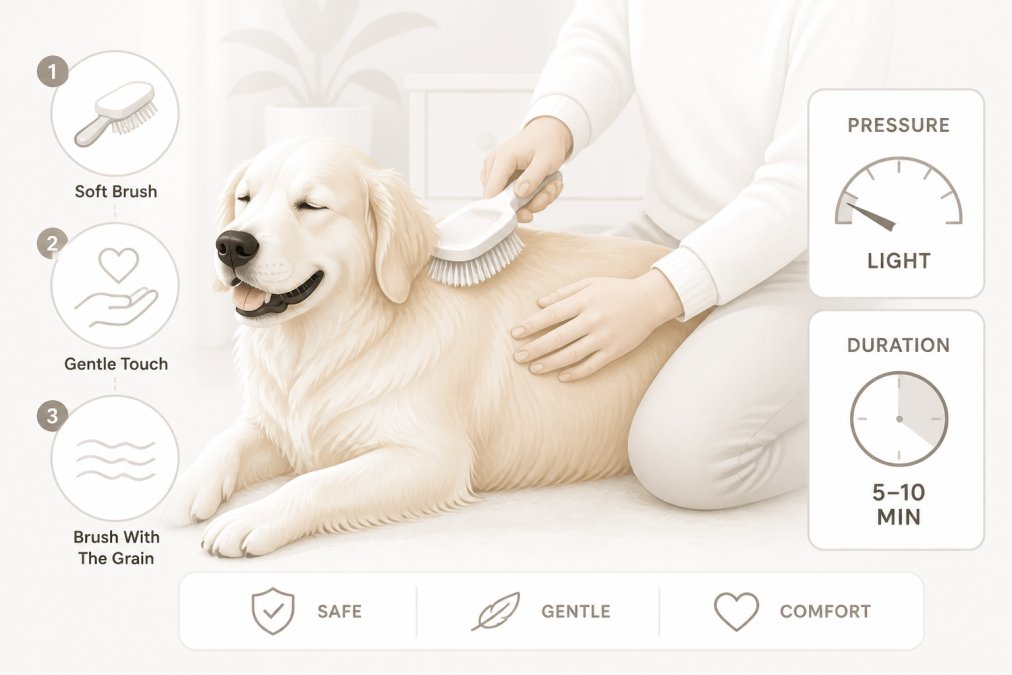
Before picking up a brush, prepare your dog's skin for grooming. Misting your dog lightly with cool water or a hydrating spray before brushing helps bristles glide smoothly and reduces static buildup that irritates sensitive skin.
A brief hand massage before using any tool helps calm your dog and alerts you to problem areas, hot spots, rashes, or tender regions needing extra gentleness. This two-minute assessment prevents inadvertent aggravation of existing issues.
Room-temperature grooming is ideal. Cold tools or water can trigger sensitivity, while excessive heat stresses the skin barrier. If bathing before brushing, use lukewarm water and ensure your dog is completely dry before using pin or slicker brushes.
Gentle Grooming Techniques and Pressure Sensitivity
The pressure you apply while grooming directly impacts skin health. Light, deliberate strokes work better than aggressive scrubbing. Let the tool do the work; your job is to guide it, not force it.
With soft-bristle brushes, use gentle circular motions following hair growth direction. With rubber curry combs, apply light pressure moving in coat growth direction, then reverse for undercoat removal. For ball-tip pin brushes, use short, controlled strokes rather than long sweeping motions, which can tangle hair and require aggressive detangling.
Dogs with sensitive skin benefit from shorter, more frequent grooming sessions rather than occasional intensive ones. Two 10-minute sessions per week cause less stress than one 30-minute session and prevent matting that requires aggressive brushing.
Dog Skin Irritation Relief Through Grooming
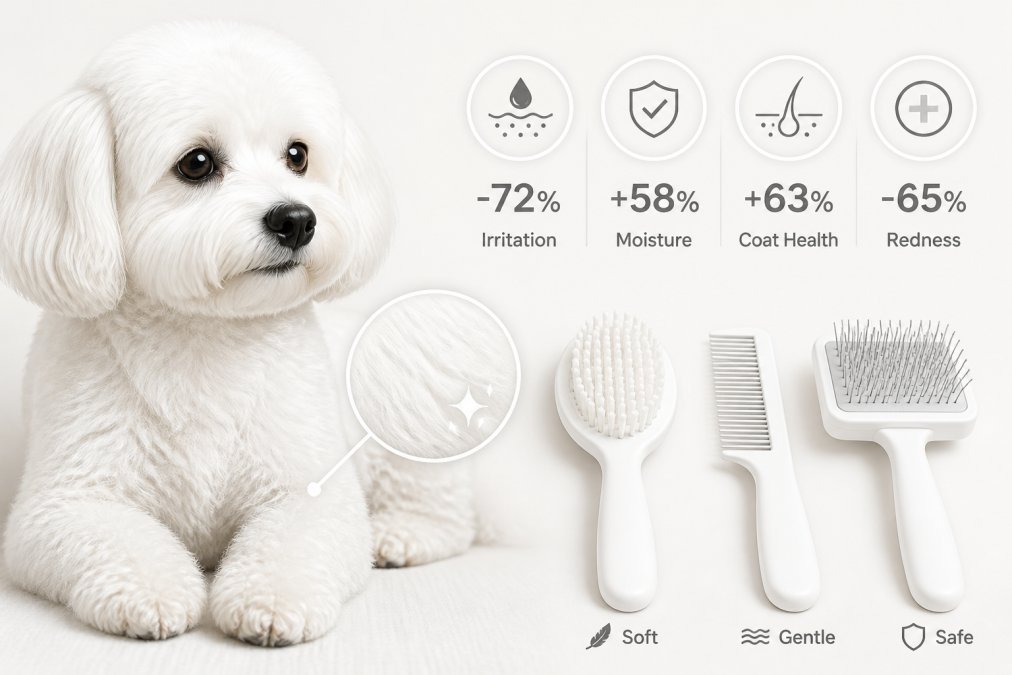
Grooming itself can be therapeutic for irritated skin when done correctly. The right approach reduces inflammation, improves circulation, and supports the skin barrier's natural healing.
Hypoallergenic Wipes and Shampoos
Between grooming sessions, hypoallergenic wipes maintain skin health without full baths. Earthbath Hypo-Allergenic Grooming Wipes and Alzoo Hypoallergenic Grooming Wipes feature fragrance-free, plant-based formulas that cleanse without stripping natural oils, working particularly well for paw cleaning and spot treatments.
When bathing is necessary, hypoallergenic shampoos make a measurable difference. Burt's Bees for Dogs Oatmeal Shampoo contains colloidal oatmeal that hydrates and soothes irritated skin, while Earthbath Hypo-Allergenic Shampoo eliminates fragrance and dyes that commonly trigger reactions. Both are pH-balanced for dogs and safe for regular use without stripping the skin's protective barrier.
Key to shampoo selection is avoiding sulfates, parabens, and synthetic fragrances, common irritants in mass-market pet shampoos. Natural ingredients like oatmeal, aloe vera, and witch hazel actively soothe rather than merely cleanse.
Tool Sanitization for Skin Conditions
When a dog has active skin conditions, yeast infections, bacterial overgrowth, or open irritation, tool sanitization becomes critical. Contaminated grooming tools can spread infection or reintroduce bacteria to healing skin.
Clean brushes and combs after every use with warm soapy water, then sanitize weekly by soaking in diluted bleach solution (one part bleach to ten parts water) for 10 minutes, or by running them through a dishwasher on sanitize cycle. For dogs with active infections, sanitize after every use. Allow tools to air dry completely before storage.
Store grooming tools in a clean, dry container separate from other pet supplies to prevent cross-contamination.
Breed-Specific Grooming Considerations
Different breeds have different skin vulnerabilities rooted in coat structure, skin barrier thickness, and genetic predisposition to conditions like sebaceous adenitis or atopic dermatitis. Understanding your dog's breed-specific characteristics helps you prevent irritation rather than manage it reactively.
Double-Coated Breeds (German Shepherds, Golden Retrievers, Huskies, Malamutes)
Double-coated breeds have two distinct hair layers: a dense undercoat and longer guard hairs. This structure traps moisture and heat, making the undercoat prone to yeast overgrowth and bacterial infections if not groomed correctly. Aggressive deshedding tools that tear rather than remove undercoat hair create micro-abrasions that trigger inflammation.
For double-coated dogs with sensitive skin, use soft-bristle brushes for regular maintenance (2-3 times per week year-round, increasing to 4-5 times weekly during shedding seasons). During peak shedding, add a rubber curry comb to gently remove loose undercoat without puncturing the skin barrier. Avoid slicker brushes and metal deshedding rakes, which damage undercoat structure. Increase grooming frequency during humidity or after swimming, when trapped moisture elevates infection risk.
Fleece and Wavy-Coated Breeds (Poodles, Doodle Mixes, Cockapoos)
Fleece and wavy coats are prone to matting and often come with genetic skin sensitivity. These breeds frequently develop sebaceous adenitis and are overrepresented in atopic dermatitis cases. The coat structure creates friction and moisture retention that stresses the skin barrier.
For these breeds, soft-bristle brushes combined with ball-tip pin brushes are essential. Use soft-bristle brushes 2-3 times weekly in gentle circular motions to stimulate natural oil production. Ball-tip pin brushes should be used weekly with short, controlled strokes to detangle without creating tension that irritates skin. Mats should be gently separated by hand or with a mat splitter before brushing, never forced through with aggressive brushing. Professional grooming every 6-8 weeks is standard; communicate that your dog has sensitive skin and request hand-scissoring over clipper work when possible. Between professional sessions, maintain coat health with daily 5-minute soft-bristle brushing to prevent matting.
Short-Coated Breeds (Boxers, Pit Bulls, Weimaraners, Vizslas)
Short-coated breeds have thinner skin barriers and less hair to protect against friction and environmental irritants. Many are prone to contact dermatitis and have naturally dry skin. Their coats don't require intensive detangling, so aggressive brushing causes unnecessary irritation.
For these breeds, rubber curry combs and soft-bristle brushes are sufficient and preferable. Use a rubber curry comb 1-2 times weekly in gentle circular motions. Soft-bristle brushes can be used 1-2 times weekly, particularly during shedding seasons. Avoid pin brushes and slicker brushes entirely. Bath frequency should be kept to once every 4-6 weeks with hypoallergenic shampoo, as frequent bathing strips natural oils these breeds need for skin barrier health.
Long-Haired Breeds (Afghan Hounds, Shih Tzus, Maltese, Yorkies)
Long-haired breeds require regular brushing to prevent matting, but their skin is often more delicate than their coat suggests. Many have fine, thin skin that tears easily under tension.
For these breeds, ball-tip pin brushes are ideal for regular maintenance (3-4 times weekly) using short, controlled strokes. Soft-bristle brushes can supplement pin brushing 1-2 times weekly. Never use slicker brushes or metal combs with fine-toothed spacing. Mats should be prevented through consistent brushing rather than removed aggressively; use a mat splitter or detangling spray to gently separate mats. Professional grooming every 4-6 weeks helps prevent severe matting. Hand-scissoring is preferable to clipping when possible.
Wire-Haired and Rough-Coated Breeds (Terriers, Schnauzers, Wire Fox Terriers)
Wire-haired breeds have coarse, wiry outer coats, but the skin underneath is often delicate. The texture is deceptive; while the coat is tough, aggressive grooming tools irritate sensitive skin.
For wire-haired breeds with sensitive skin, soft-bristle brushes work better than expected because bristles glide over the wiry texture without catching. Use soft-bristle brushes 2-3 times weekly. Ball-tip pin brushes can be used cautiously with very light pressure, but many do better with rubber curry combs. Avoid slicker brushes and metal combs. Hand-stripping should only be performed by groomers experienced with sensitive skin; clipping with a clipper guard is often the safer choice for sensitive dogs.
Hairless and Thin-Coated Breeds (Chinese Crested, Xoloitzcuintli, Chihuahuas)
Hairless and thin-coated breeds have minimal hair protection and extremely delicate skin. Traditional brushing is often unnecessary or counterproductive.
For hairless breeds, skip traditional brushing entirely. Focus on skin health through weekly gentle hand massage (which stimulates circulation without friction) and regular moisturizing with hypoallergenic, fragrance-free lotions designed for sensitive dog skin. Bathe infrequently (once every 2-3 weeks) with hypoallergenic shampoo followed immediately by moisturizing. For thin-coated breeds like Chihuahuas, use only soft-bristle brushes with extremely light pressure, 1-2 times weekly. These breeds benefit more from hand-grooming and massage than traditional brushing.
Grooming Tool Maintenance and Hygiene
Tool longevity depends on proper maintenance. Well-maintained tools perform better and last longer.
Brush bristles accumulate hair, dander, and skin oils that degrade performance. Clean weekly with warm soapy water. For stubborn debris, soak bristles in warm water with a few drops of dish soap for 15 minutes, then gently scrub with an old toothbrush.
Wooden handles require different care than plastic or metal. Never soak wooden-handled tools; wipe with a damp cloth and air dry immediately to prevent swelling and warping.
Check tools regularly for damage. Bent pins, cracked bristles, or rough edges can scratch sensitive skin. Replace tools showing wear; replacement cost is minimal compared to skin damage risk.
Store grooming tools in a cool, dry location away from direct sunlight. A drawer organizer or dedicated grooming kit keeps tools clean and protected between uses.
Grooming your dog with sensitive skin doesn't require expensive equipment or complicated routines, it requires the right tools and consistent, gentle technique. WowHaul offers a curated selection of practical finds designed to simplify your everyday living. From essential care for your pets to products that help you build stronger, more efficient routines, we focus on quality solutions for your home. Discover items that bring ease and happiness to your daily life through our thoughtfully selected collection. Start with a soft-bristle brush or rubber curry comb, invest in a hypoallergenic shampoo, and commit to the two-session-per-week approach. Most dogs show visible improvement in coat quality and skin comfort within three weeks. Your dog's healthier skin and calmer grooming experience make the effort worthwhile.
Frequently Asked Questions
How often should you brush a dog with sensitive skin?
Brush dogs with sensitive skin 2-3 times per week using gentle techniques to avoid irritation. Frequency depends on coat type: short-haired dogs need less frequent brushing than long-haired breeds. Avoid daily brushing, which can cause friction and damage the skin barrier. Monitor your dog's skin during and after grooming, if you notice redness or irritation, reduce frequency and consult your veterinarian.
What grooming tools should be avoided for dogs with skin conditions?
Avoid metal slicker brushes with sharp pins, hard-bristle brushes, and high-speed clippers that generate heat and noise. Skip grooming tools with rough or unpadded edges that increase friction. Never use human grooming products or harsh chemicals. Stainless steel tools with rounded edges and ball-tip pins are safer. Always sanitize tools before use to prevent spreading bacteria or fungal infections that worsen skin conditions.
Can improper grooming tools cause hot spots on dogs?
Yes. Aggressive brushing with sharp pins, excessive friction, and pressure sensitivity injuries create micro-tears in the skin, leading to hot spots and secondary infections. Improper technique and non-sanitized tools introduce bacteria into broken skin. Using soft-bristle brushes, ball-tip pins, and gentle grooming techniques with proper pressure control prevents these painful sores. If hot spots develop, stop grooming the affected area and consult your veterinarian.
Are rubber curry brushes better for dogs with skin allergies?
Yes. Rubber curry combs are excellent for dogs with skin allergies because they provide gentle massage, reduce friction, and stimulate natural oil production that protects the skin barrier. Their flexible design prevents pressure sensitivity injuries. They remove loose hair and dander without scratching, making them ideal for hypoallergenic grooming. Rubber curry brushes work well wet or dry, so you can use them during shampooing to work in soothing products while massaging irritated skin.
This article was written using GrandRanker