

Table of Contents
- Essential Grooming Tools for Beginners
- Best Dog Clippers for Home Use
- Types of Brushes and Combs for Different Coats
- DIY Dog Nail Trimming Guide
- How to Groom a Dog at Home for Beginners
- Tool Storage and Organization Solutions
- Safety Tips for At-Home Grooming
- Conclusion
Last Updated: August 8, 2026
Essential Grooming Tools for Beginners
Starting a home grooming routine requires just five core items: a slicker brush for detangling, a deshedding tool for shedding management, nail clippers, a basic clipper for sanitary trims, and styptic powder for accidents. Everything else is refinement.
Most beginners buy full professional kits before understanding what they actually need, ending up with tools gathering dust. Start with basics and add specialized equipment only when you hit specific problems, matting that won't come out, nails too thick for basic clippers, or shedding genuinely out of control.
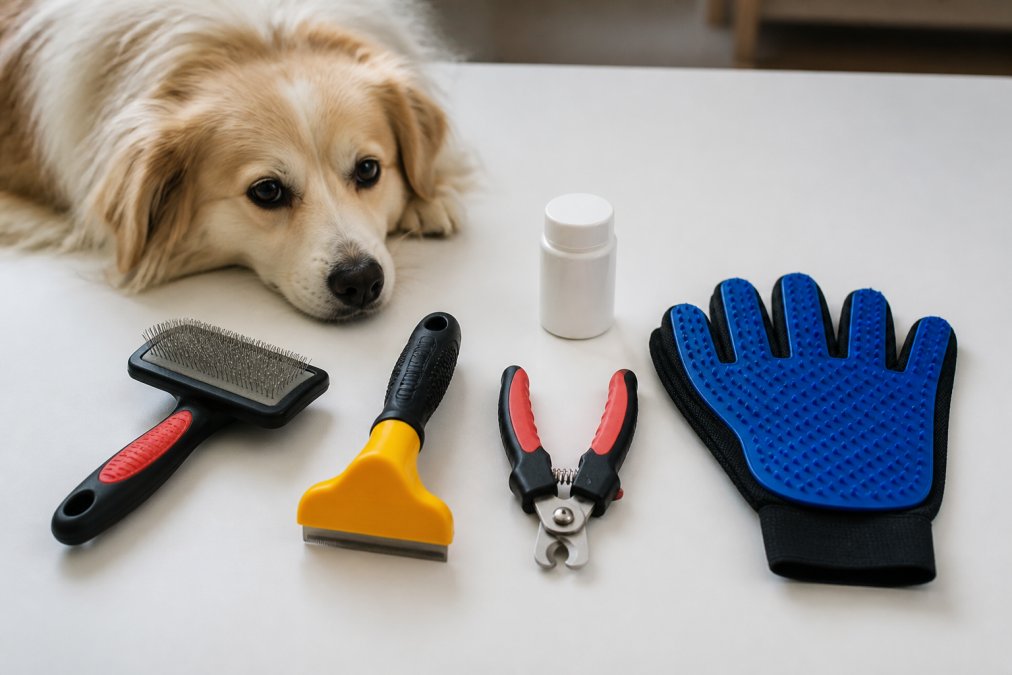
Budget matters less than matching tools to your dog's coat type. A $15 deshedding tool works as well as a $40 one if used correctly. Price differences reflect durability and ergonomics, how long blades stay sharp and whether your hand cramps after 20 minutes of brushing.
WowHaul offers a curated selection of practical grooming solutions designed for home use, focusing on tools that balance effectiveness with ease of handling. Their selection emphasizes everyday care products that simplify your routine without requiring professional training.
Best Dog Clippers for Home Use
Dog clippers fall into two camps: corded and cordless, each solving different problems.
Corded clippers deliver consistent power. The Wahl Pet Pro Clipper Kit runs on a heavy-duty motor that cuts through thick coats without bogging down. You get a power cord tethering you to an outlet, but never worry about battery drain mid-groom. This matters when working on double-coated breeds where you might spend 45 minutes on one dog.
The Andis ProClip AGC2 represents professional-grade corded equipment with two-speed settings (2,700 and 3,400 strokes per minute) depending on coat density. The detachable blade system lets you swap blades in seconds without tools. Quiet operation reduces pet anxiety, a real advantage with nervous dogs.
Cordless clippers trade some power for mobility. You move freely without managing a cord, and setup takes seconds. Most cordless units run 60-90 minutes before needing a charge, which is fine for spot trims but tight for full-body grooming on large dogs.
Corded vs. Cordless Clippers
Choose corded if grooming dogs with thick undercoats or doing full-body work regularly. Consistent power matters when pushing through matted sections or dense double coats. Battery-powered units slow down under pressure, leaving uneven cuts.
Choose cordless if doing sanitary trims, spot work, or grooming single-coated breeds. The convenience outweighs the power difference for lighter work.
Most beginners underestimate grooming time. If doing full-body work monthly, corded is the safer bet. If doing 15-minute touch-ups, cordless wins.
Blade Maintenance and Safety
Clipper blades dull faster than expected. A blade sharp yesterday can pull hair instead of cutting cleanly by next week if grooming multiple dogs. Pulling causes irritation and stress.
Clean blades after every use. Hair and skin oils accumulate in blade teeth and cause drag. Wipe with a dry cloth, then use blade cleaner spray, this takes 30 seconds and extends blade life by weeks.
Sanitize between dogs to prevent skin infections. Replace blades when they start pulling instead of cutting. You'll feel the difference immediately; the clipper requires more pressure and the dog gets restless. Dull blades also generate heat, which burns sensitive skin.
Types of Brushes and Combs for Different Coats
Brush selection depends entirely on your dog's coat structure.
Double-coated breeds (Labs, Golden Retrievers, German Shepherds, Huskies) need deshedding tools. The FURminator deShedding Tool uses a stainless steel blade that slides under the topcoat to remove loose undercoat without cutting guard hairs. It reduces shedding by up to 90% with regular use.
Single-coated breeds (Poodles, Yorkies, Maltese) need slicker brushes for detangling and maintenance. The Hertzko Self Cleaning Slicker Brush has fine, angled bristles that work through tangles gently. The self-cleaning button retracts bristles to release collected hair without picking out matted fur by hand.
Short-haired breeds (Boxers, Pit Bulls, Beagles) need less frequent brushing but benefit from regular grooming gloves. The Pet Neat Pet Grooming Glove removes loose hair while providing a massage that dogs enjoy. You can use it during bathing, which doubles as a bonding moment.
Slicker Brushes for Detangling
Slicker brushes work best on fine, curly, or long coats prone to matting. Use gentle, short strokes; aggressive brushing irritates skin and breaks hair.
Start at the ends of hair and work toward the skin to prevent pulling. If you hit a tangle, work it gently with the brush tip rather than forcing through. Replace slicker brushes every 18-24 months of regular use, as worn bristles damage the coat.
Deshedding Tools for Heavy Coats
Deshedding tools manage seasonal shedding in double-coated breeds, not everyday maintenance. Use 2-3 times weekly during heavy shedding seasons, weekly during light shedding. The DakPets Deshedding Tool offers a 4-inch stainless steel blade that reaches the undercoat without cutting topcoat guard hairs, reducing shedding by up to 95%.
Never use a deshedding tool on a matted coat. The blade will cut mats instead of removing loose hair, leaving bald patches. Dematting comes first.
DIY Dog Nail Trimming Guide
Nail trimming intimidates beginners because one mistake causes bleeding. It's straightforward once you understand nail anatomy.
Dog nails have a blood vessel running through the center (the quick). Cut too far and you hit the quick, causing bleeding and pain. Cut conservatively and you'll never hit the quick.
Choosing Between Scissor and Guillotine Clippers
Scissor-style clippers like the Safari Professional Nail Trimmer work like regular scissors, giving you precise control and working on all nail sizes. Most beginners find them less intimidating because you can see exactly where the cut happens.
Guillotine clippers have a small hole where you insert the nail, then squeeze to trigger a blade that cuts horizontally. They're faster once you develop technique, but harder to control.
Start with scissor-style clippers. The control matters more than speed when learning.
Step-by-Step Nail Trimming Process
Step 1: Restrain your dog comfortably. Have someone hold your dog or use a grooming restraint. Movement causes accidents.
Step 2: Identify the quick. Light-colored nails show the quick as a dark circle in the center. Dark nails are harder; look for a small dark dot in the center when viewing from underneath.
Step 3: Trim conservatively. Cut 2-3mm away from the quick. If uncertain, trim less. You can always trim more.
Step 4: Watch for the nail cross-section. As you cut, you'll see the nail's cross-section change from solid to showing a small dark dot in the center. That dot is the quick approaching. Stop before reaching it.
Step 5: Use styptic powder if bleeding occurs. Have styptic powder on hand. If you hit the quick, apply powder immediately and hold pressure for 30 seconds.
Step 6: Trim all four feet. Front nails grow faster than back nails. Trim all four to prevent uneven wear.
Trim nails every 3-4 weeks. Nails that click on hardwood floors are overdue.
How to Groom a Dog at Home for Beginners
Home grooming requires preparation. Most failures happen because people skip setup and jump straight to grooming.
Preparing Your Pet and Workspace
Create a grooming station. Use a table, elevated surface, or grooming table. Working at waist height prevents back strain and keeps your dog still. A grooming restraint or loop prevents jumping mid-groom.
Bathe before grooming. Clean, dry coats are easier to work with than dirty ones. Bathing softens the undercoat, making deshedding more effective. Let your dog dry completely; damp coats tangle more easily.
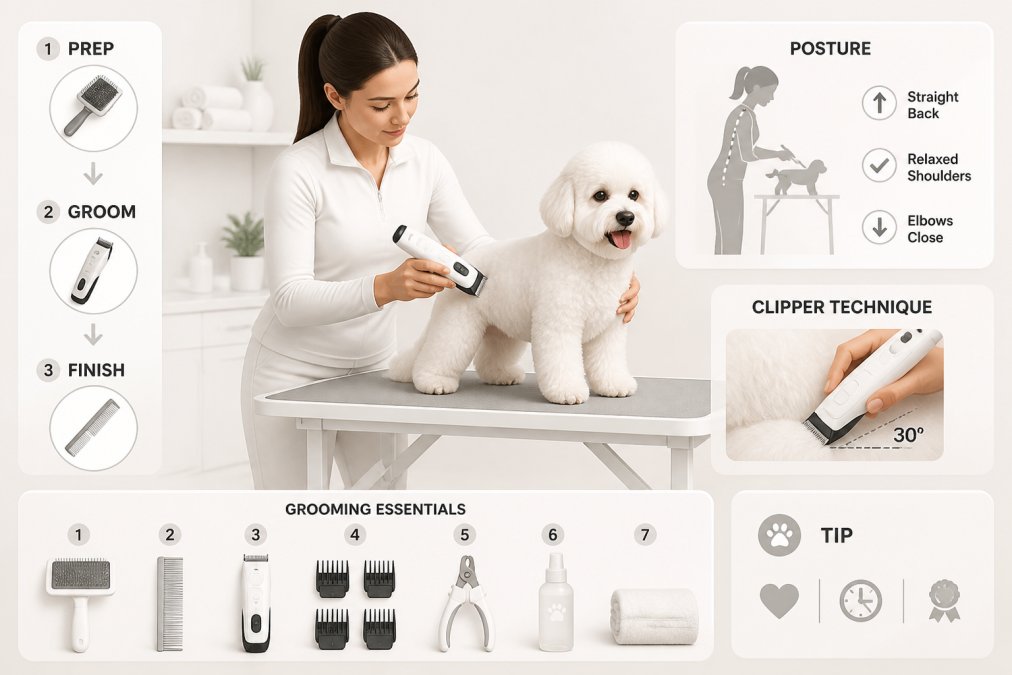
Brush thoroughly before clipping. Remove all tangles and mats before using clippers. Clippers skip over mats and leave them behind, creating bald patches. A slicker brush handles most tangles; a dematting comb works on stubborn mats.
Have all tools within reach. Grabbing supplies mid-groom means letting go of your dog. Organize clippers, blades, combs, styptic powder, and towels within arm's reach.
Keep your dog calm. A stressed dog moves constantly, making clean cuts impossible. Some dogs respond to treats, others to a calm voice. Desensitize nervous dogs by letting them see and smell the clippers before using them.
Common Grooming Mistakes to Avoid
Mistake 1: Grooming a matted coat. Matted hair pulls painfully. Always dematting before clipping. If mats are severe, bathe first to soften them.
Mistake 2: Using dull blades. Dull blades pull hair instead of cutting, causing irritation and stress. Replace blades when they start pulling.
Mistake 3: Grooming an anxious dog without preparation. Rushing into grooming with a nervous dog creates lasting negative associations. Desensitize them to clippers, brushes, and the grooming environment first.
Mistake 4: Cutting too close to the skin. Clipper guards exist for a reason. Using the wrong guard size or removing the guard causes clipper burn. Start with longer guards and work shorter only after developing control.
Mistake 5: Ignoring coat direction. Always clip in the direction hair grows. Clipping against the grain causes irritation and uneven cuts. For most dogs, this means clipping downward and outward from the spine.
Mistake 6: Skipping nail maintenance. Trim every 3-4 weeks, even if not doing a full groom. Nails that click on floors are overdue.
Tool Storage and Organization Solutions
Grooming tools deteriorate quickly without proper storage. Humidity dulls blades, dust clogs mechanisms, and disorganized tools get lost or damaged.
Store clippers in a dry place away from humidity. A bedroom closet or living room drawer works better than bathroom medicine cabinets, where steam corrodes metal. Store clippers with blade guards on to protect edges.
Use a dedicated grooming kit or toolbox. A small plastic organizer with compartments keeps everything together and protects tools from damage. This also means you grab one container instead of hunting for scattered supplies.
Clean and dry all tools before storage. Wipe clippers dry after use, and store brushes bristle-side up so water drains away. Replace blade guards when they crack or break. Keep nail care tools separate from clipper tools in their own small pouch.
Safety Tips for At-Home Grooming
Home grooming carries risks if you skip safety fundamentals. Most injuries are preventable with basic precautions.
Never groom a wet dog with electrical clippers. Water and electricity don't mix. Always ensure your dog is completely dry before using corded clippers.
Use appropriate guards. Clipper guards protect skin from blade contact. Never use a clipper without a guard on sensitive areas like the face, ears, or genital area.
Secure your dog properly. A restraint or grooming loop prevents jumping and sudden movement. A grooming table with a restraint is essential if grooming alone.
Keep styptic powder accessible. Have it within immediate reach, not in another room.
Watch for signs of stress. Excessive panting, trembling, or resistance means stop and rest. Break sessions into shorter chunks if your dog shows stress.
Never groom near the eyes without protection. Hair clippings can irritate eyes. Use a grooming shield or have someone hold the skin taut.
Check skin condition before grooming. If your dog has open sores, severe rashes, or skin infections, skip grooming until the condition improves.
Conclusion
Home grooming becomes manageable once you understand your dog's coat type and invest in appropriate tools. Start with basics, a slicker brush, deshedding tool, nail clippers, and a quality clipper, then expand your toolkit as you develop skill and confidence. Regular grooming keeps your dog healthy, reduces veterinary visits, and strengthens your bond through hands-on care.
Frequently Asked Questions
What grooming tools do I really need to get started at home?
Start with a slicker brush for detangling, a deshedding tool to manage loose undercoat, nail clippers with a safety stop, and a gentle shampoo suited to your pet's skin type. These four essentials cover bathing, coat maintenance, and nail care. Add a grooming glove for sensitive pets or those anxious about traditional tools. You can expand your kit over time based on your dog's coat type and grooming needs.
Is it safe to groom your dog at home without professional training?
Yes, basic grooming at home is safe when you follow proper techniques and use the right tools. Start with simple tasks like brushing and nail trimming before attempting full-body clipping. Keep styptic powder nearby to stop bleeding from accidental nail nicks. Always trim nails at a 45-degree angle, avoid the quick, and use clippers with a safety stop. If your dog has a thick or matted coat, consider professional help for the first full groom to learn proper technique.
What's the difference between best dog clippers for home use versus professional-grade clippers?
Home-use clippers prioritize ease and safety with features like adjustable taper levers, multiple guard combs, and quieter motors. Professional-grade clippers have more powerful motors, detachable blade systems, and higher stroke rates for thick coats, but they're heavier and require more maintenance. For beginners, corded clippers with self-sharpening blades and included accessories provide the best balance of power and user-friendliness without the investment of professional equipment.
How often should I groom my pet at home?
Brush your dog 2-3 times per week to prevent matting and reduce shedding. Deshed heavy-coated breeds weekly during shedding season. Trim nails every 4-6 weeks or when they click on hard floors. Bathe your dog every 4-8 weeks depending on coat type and activity level. Short-haired dogs need less frequent bathing, while long-haired or double-coated breeds benefit from weekly brushing and regular deshedding to manage undercoat buildup and prevent mats.
This article was written using GrandRanker