

Table of Contents
- Best Tools for Efficient Household Management: Quick Comparison
- 1. Cozi Family Organizer: Centralized Family Coordination
- 2. Tody: Smart Cleaning Schedules and Routines
- 3. You Need a Budget (YNAB): Financial Management and Budgeting
- 4. Any.do: Organizing Household Tasks and Chores
- 5. Evernote: Home Inventory and Document Management
- 6. The Home Edit Storage Solutions: Physical Organization Systems
- Apps vs. Physical Systems vs. AI Tools: Choosing the Right Approach
Best Tools for Efficient Household Management: 2026 Guide
Last Updated: July 24, 2026
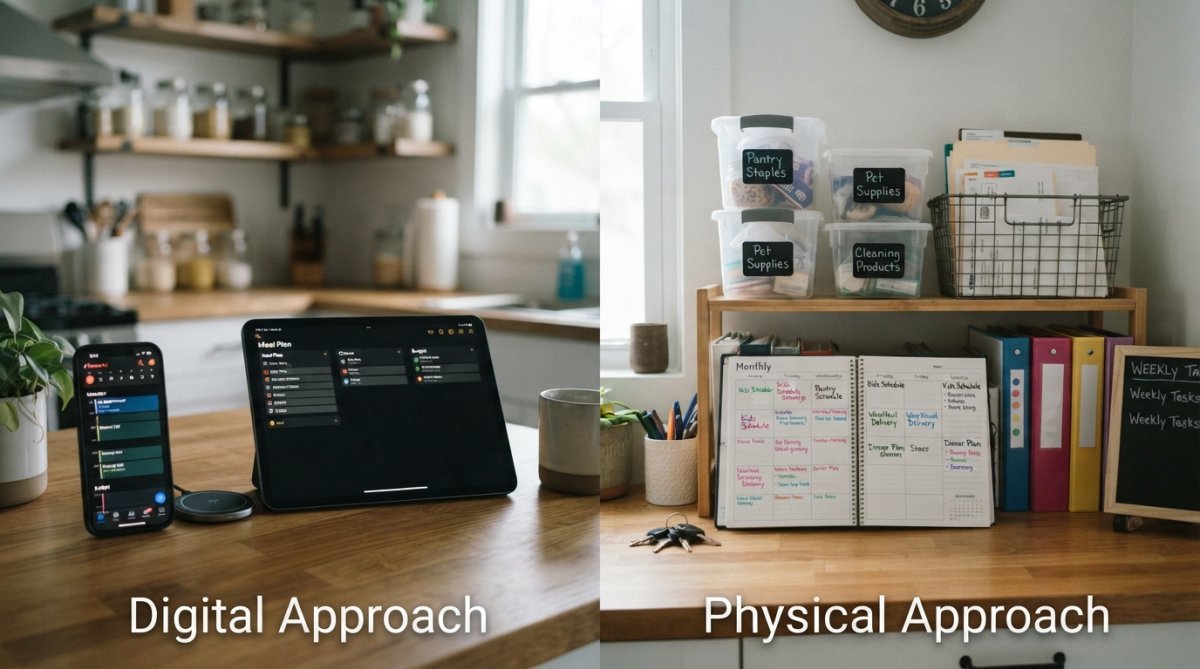
Managing a household involves juggling dozens of moving parts, from scheduling family activities and tracking finances to organizing cleaning routines and meal planning. Families using dedicated tools report spending 40% less time on administrative tasks compared to those relying on paper systems or scattered apps. This guide covers the best tools for efficient household management, helping you find the right solutions for your household's unique needs. At WowHaul, we've curated practical finds designed to simplify your everyday living.
The challenge isn't finding tools, it's choosing the right combination that actually sticks. This guide examines what actually works, from centralized family calendars to automated cleaning schedules and budget trackers.
Best Tools for Efficient Household Management: Quick Comparison
| Tool | Type | Best For | Starting Price | Key Strength |
|---|---|---|---|---|
| Cozi Family Organizer | Digital App | Family coordination | Free | Shared calendars & meal planning |
| Tody | Digital App | Cleaning routines | Free | Smart scheduling & gamification |
| You Need a Budget (YNAB) | Digital App | Financial management | $14.99/month | Zero-based budgeting methodology |
| Any.do | Digital App | Task management | Free | Cross-platform accessibility |
| Evernote | Digital App | Document storage | Free | Powerful search & OCR |
| The Home Edit Storage Solutions | Physical Products | Organization | Varies by item | Aesthetic & functional design |
1. Cozi Family Organizer: Centralized Family Coordination
Cozi serves as the command center for busy households, combining a shared color-coded family calendar, to-do lists, shopping lists, and a recipe box into one interface that syncs across all family members' devices. The free version includes shared calendars with automatic notifications, synced grocery lists, and basic recipe storage. Premium tiers unlock AI-powered meal planning that suggests recipes based on dietary preferences and generates shopping lists automatically.
What makes Cozi stand out is simplicity. Family members download the app, join your household, and start seeing shared events within minutes. Set up recurring events for standing commitments like soccer practice or piano lessons, Cozi's notification system reminds everyone 24 hours before events, reducing last-minute scrambling.
The main limitation: the free version displays only a 30-day calendar view and includes ads.
2. Tody: Smart Cleaning Schedules and Routines
Tody tackles cleaning management by building an intelligent prioritization system that tells you exactly what to clean today, based on how long it's been since each task was last completed. Rather than assigning arbitrary daily or weekly tasks, Tody learns your home's actual cleaning needs through its "dueness" system, visualized with color-coding: green means not urgent, yellow means due soon, red means overdue.
Tody's gamification features appeal to households with children. The "Dusty challenges" system rewards completion streaks and assigns points for finished tasks. The free version is genuinely useful and ad-free, with the premium version adding multi-user collaboration and sync across multiple homes.
3. You Need a Budget (YNAB): Financial Management and Budgeting
YNAB addresses household finances through zero-based budgeting: you assign every dollar of income to a specific purpose before spending anything. This approach forces conversations about priorities and prevents the "where did all our money go?" problem.
YNAB integrates with your bank through Plaid, automatically importing transactions. You review transactions, assign them to budget categories, and YNAB immediately shows how you're tracking against your plan. The app includes goal tracking, net worth tracking, and spending reports that reveal patterns over time. Couples using YNAB together report fewer money arguments because the system creates transparency and shared decision-making.
YNAB costs $14.99 per month or $109 annually, with a generous 34-day free trial. Account sharing allows up to five people to manage the same budget without additional fees.
4. Any.do: Organizing Household Tasks and Chores
Any.do combines to-do lists, calendar integration, reminders, and shared family spaces. Its strength is cross-platform accessibility: add tasks on your iPhone, check them on your Mac, see them on your Android tablet, and manage them on the web. Sync is instant, so when one person marks a task complete, everyone sees it immediately.
Any.do includes voice entry and AI-powered features that understand natural language. Say "remind me to buy milk on Friday at 5 PM" and the app creates a task with the right date, time, and category. The family plan supports up to four members and includes shared family spaces, grocery lists, and collaborative task management.
5. Evernote: Home Inventory and Document Management
Household documents scatter everywhere: warranty cards, insurance policies, receipts, medical records, pet vaccination records, home maintenance logs. Evernote centralizes this by storing any document type in searchable notebooks.
The app's killer feature is optical character recognition (OCR). Photograph a receipt, warranty card, or insurance document, and Evernote extracts the text, making it searchable. Need to find your water heater warranty? Search "water heater" and Evernote returns the photo you took years ago.
Create a "Home Inventory" notebook with photos and descriptions of major appliances, furniture, and systems. Include purchase dates, serial numbers, and warranty information. This becomes invaluable for insurance claims after damage or theft.
6. The Home Edit Storage Solutions: Physical Organization Systems
Digital tools manage invisible work, but physical organization addresses the tangible chaos of stuff. The Home Edit's product line, clear acrylic bins, stackable drawers, turntables, and canisters, creates systems where you can see everything at a glance.
The design philosophy emphasizes visibility and accessibility. Clear materials mean you know what's inside without opening containers. Modular designs stack and nest together, adapting to different spaces. Individual items range from approximately $13 to $40, with complete room systems costing $200-$500 depending on size and scope.

Apps vs. Physical Systems vs. AI Tools: Choosing the Right Approach
The best tools for efficient household management combine digital and physical solutions. Digital apps handle invisible work: coordination, planning, and tracking. Physical systems create visible order and reduce decision fatigue. AI-powered tools handle the most repetitive tasks, freeing time and mental energy for what matters.
The right combination depends on your household's priorities and pain points. A family drowning in scheduling conflicts needs Cozi. A household that can't find anything in the pantry needs The Home Edit's storage system. A couple fighting about money needs YNAB. Most households benefit from at least two tools addressing different problems.
Digital Apps for Families and Shared Households
Apps work best when everyone actually uses them. This requires low friction: the app must be easier than the alternative. Cozi wins here because adding an event to a shared calendar is faster than texting the family group chat. Any.do's voice entry removes typing friction. YNAB's bank integration eliminates manual data entry.
Adoption struggles when apps require too much setup or maintenance. Start simple and add complexity only when the basic version feels limiting. Someone needs to maintain the system, reviewing transactions, updating calendars, and adjusting task assignments. Without a designated owner, apps become abandoned.
Physical Storage and Organization Products
Physical organization systems require maintaining habits: putting things back where they belong and not letting clean systems devolve into chaos. This is easier when the system is intuitive. The Home Edit's approach works because clear bins and labels make the "right" choice obvious.
For households with limited space, organization systems become more important. A small apartment needs ruthless organization to function. Even large homes benefit from systems: you find things faster, waste less money on duplicate purchases, and feel less overwhelmed.
AI-Powered and Smart Home Integration
AI tools are evolving in household management. Smart home systems that learn your patterns and automate routine tasks reduce cognitive load. A robot vacuum handles floor cleaning without you thinking about it. A smart thermostat adjusts temperature based on time of day and occupancy.
Home Management Tips and Strategies
Efficient household management isn't about having perfect systems, it's about having systems you actually maintain.
Start with one problem. Identify your biggest pain point and pick one tool that addresses it. Use it for 30 days before adding another.
Assign clear ownership. Someone needs to be responsible for each system. This doesn't mean one person does all the work, but they monitor health and make adjustments.
Make it visible. The best systems are ones you see every day. A shared calendar on your kitchen wall works better than one buried in an app.
Review and adjust weekly. Set aside 15 minutes each week to review systems and make small adjustments.
Involve everyone. Household management only works when everyone participates. Kids old enough to understand can help maintain systems.
Organizing Household Tasks and Chores
The mental load of household management falls disproportionately on one person. Distributing this load requires explicit systems.
Create a chore rotation rather than assigning permanent tasks. This prevents one person from owning all unpleasant tasks and builds skills across the household. Make chores visible with a whiteboard in the kitchen listing weekly tasks. People can see what needs doing and grab tasks rather than waiting to be assigned.
For households with multiple people and competing schedules, task management apps handle complexity better than paper lists. Celebrate completion with positive reinforcement, especially for kids.
Meal Planning and Grocery Lists
Meal planning prevents the 5 PM panic that leads to expensive takeout and poor nutrition. Cozi's recipe box and meal planner handle basic planning. The premium version's AI-powered meal planning suggests recipes based on dietary preferences and ingredients you already have.
Shopping lists work best when they're shared and accessible. Digital lists sync in real-time, so when one person buys milk, it disappears from everyone's view.
Financial Management and Budgeting
Money is the source of stress in many households, yet many couples don't have explicit conversations about finances. YNAB's zero-based methodology is the most effective approach for households that overspend or lack visibility.
Couples managing joint finances need shared access and regular check-ins. Monthly money dates (30 minutes to review budget, discuss spending, and plan ahead) prevent surprises and resentment.
Cleaning Schedules and Routines
Cleaning feels overwhelming without a system. A clean house requires maintenance, not occasional deep cleaning. Tody makes this manageable by breaking cleaning into small, frequent tasks rather than large, infrequent ones.
For households without kids or with limited cleaning needs, a simpler system works. A basic weekly checklist provides structure without requiring an app. The key is consistency.
Home Inventory and Document Management
Most households lose important documents or can't find them when needed. Evernote centralizes documents and makes them searchable, invaluable for insurance claims, warranty service, and medical records.
For physical documents you want to keep (original insurance policies, property deeds), store them in a fireproof safe. Use Evernote for digital backups and easy reference.
Shared Family Calendars and Communication
The shared family calendar is the single most important tool for household coordination. When everyone knows the schedule, conflicts decrease and forgotten appointments disappear.
Cozi's color-coded calendar makes it easy to see at a glance who's doing what. For households that prefer a physical calendar, a large wall calendar in the kitchen serves the same purpose. The key is visibility.
Addressing the Invisible Work and Mental Load
The mental load of household management falls disproportionately on one person. Externalizing this work to apps and systems reduces mental load significantly. When a calendar app reminds you about appointments, you don't need to remember them. When a cleaning app tells you what to clean today, you don't need to decide.
The key is distributing ownership. When multiple people contribute, adding events to the calendar, checking task lists, and reviewing budgets, the load distributes.
Long-Term Sustainability and Adaptability of Systems
The best household management system is one you maintain long-term. Sustainability requires systems that are easy to maintain, not just easy to set up. Systems also need to adapt as your household changes. Review systems annually and adjust as needed rather than waiting until they break completely.
Security and Privacy Considerations
Digital household management tools handle sensitive information. Choose tools from reputable companies with strong security practices. Enable two-factor authentication on all accounts. Use strong, unique passwords.
For highly sensitive information (insurance policies, property deeds, medical records), consider whether digital storage is appropriate. Some people keep originals in a fireproof safe and digital backups in encrypted apps.
Integration with Broader Life Goals
Household management isn't an end in itself, it's a means to broader goals like financial independence, minimalism, or simply having more time for what matters. An efficient household system frees time and mental energy for priorities.
The most effective households align their management systems with their values. If family time is a priority, a shared calendar ensures you're actually together. If financial independence is a goal, a budgeting app keeps you accountable. If health matters, a meal planning system supports nutrition.
Choosing Your Best Tools for Efficient Household Management
The best household management system is the one you'll actually use. Start with assessment: what's your biggest pain point? Pick one tool that addresses that problem. Use it consistently for 30 days. Once it becomes habit, consider adding another tool.
Digital tools excel at managing invisible work, coordination, planning, and tracking. Physical systems create visible order and reduce decision fatigue. The combination of both approaches creates the most effective household management.
Managing a household is complex work that often goes unrecognized. The right tools make this work visible, distribute the load, and free time and mental energy for what matters. WowHaul's curated collection of practical finds, from organizational products to tools that support stronger routines, complements digital systems by creating tangible order in your home. By combining efficient apps with physical organization solutions, you create a household that runs smoothly, reduces stress, and supports your family's well-being.
Frequently Asked Questions
What is the best tool for efficient household management for a busy family?
The best tool depends on your household's primary pain point. Cozi Family Organizer works well for families needing shared calendars and meal planning. Tody excels at cleaning routines with gamification. For comprehensive household management, many families use a combination: Cozi for coordination, YNAB for budgeting, and physical storage solutions like The Home Edit products for organization. Start by identifying whether you need help with scheduling, finances, cleaning, or task organization, then choose accordingly.
Should I use apps or physical systems for household organization?
Both serve different purposes. Digital apps like Any.do and Cozi excel at managing shared tasks, reminders, and family coordination across devices. Physical systems like The Home Edit storage solutions are essential for decluttering and visual organization of pantries, closets, and bathrooms. The most effective household management combines both: apps for scheduling and communication, physical products for visible, accessible storage. Your household size and available storage space should guide this decision.
How do household management tools help reduce the mental load?
Household management tools automate reminders, centralize information, and distribute task visibility, reducing cognitive burden. Shared calendars eliminate the 'invisible work' of remembering everyone's schedules. Cleaning apps prioritize tasks so you don't mentally track what needs doing. Budget apps remove the stress of financial tracking. However, tools alone don't eliminate mental load, clear communication about shared responsibility and consistent system use are equally important for sustainable household management.
Are household management tools secure for storing sensitive information?
Security varies by tool. Password managers like LastPass use zero-knowledge encryption, meaning even the company cannot access your data. Apps like YNAB and Cozi encrypt data in transit and at rest. For sensitive documents (warranties, receipts, insurance info), Evernote offers OCR scanning but review their privacy policy. Always enable two-factor authentication, use strong passwords, and avoid storing highly sensitive information (like Social Security numbers) in shared apps. Check each tool's security dashboard for vulnerability alerts.
How can I make household management systems sustainable long-term?
Sustainability requires matching tools to your household's actual habits, not aspirational ones. Start with one or two tools rather than adopting everything at once. Choose systems that require minimal setup and maintenance, Tody's automated scheduling beats manual checklists. Build in regular reviews (monthly or quarterly) to adjust systems as your household's needs change. Involve all household members in system design so everyone feels ownership. Most importantly, simplify over time rather than adding complexity, and be willing to abandon tools that aren't working.
This article was written using GrandRanker