

Table of Contents
- Why Most Home Organization Systems Fail (And How to Fix That)
- The Zone-Based Organization Framework
- Effective Home Organization Strategies for Every Room
- DIY Home Organization Systems on a Budget
- Small Space Organization Ideas That Maximize Every Inch
- Neurodivergent-Friendly Organization Systems
- The Maintenance Routine: Keeping Home Organization Systems That Actually Work
- Conclusion
Home Organization Systems That Actually Work: 7 Proven Methods
Last Updated: August 2, 2026
Research from the National Association of Professional Organizers shows that most people who organize their homes experience system collapse within three weeks. Home organization systems that actually work don't require expensive overhauls or designer storage solutions, they require a fundamentally different approach to maintenance. Below, we'll show you exactly how to build home organization systems that actually work by addressing why systems fail in the first place.
Why Most Home Organization Systems Fail (And How to Fix That)
The biggest mistake people make is confusing organizing with building a system. You can spend a Saturday decluttering your closet and buying matching bins, but by week three, everything reverts to chaos. That's not a system, that's a one-time project.
A real system is something you maintain with minimal effort, not something that requires heroic effort every few days. This distinction determines whether you'll actually stick with it.
The psychology of maintenance: why systems collapse after week two
Most people underestimate how much mental energy organization requires. After the initial satisfaction wears off, life happens. If your system demands that you make the "right choice" every single time, you'll eventually choose the easy option instead.
This is where habit stacking becomes critical. Rather than creating a separate "organization maintenance" task, tie organization habits to things you already do. File papers when you open mail, not "later." Put items in their zones immediately after use, not during a weekly reset. The goal is to make the right choice the easy choice.
The difference between organizing and organizing systems
Organizing is a one-time activity. You sort, declutter, and arrange. A system is the ongoing structure that keeps things sorted without constant intervention. Organizing feels productive immediately. Systems feel boring until you realize you're no longer spending 10 minutes every morning looking for your keys.
The Zone-Based Organization Framework
Functional zones are the backbone of any system that actually works. Instead of asking "where should this live?" for each individual item, you assign broad functional zones to your spaces, then everything in that zone follows the same logic. This approach reduces decision fatigue dramatically.
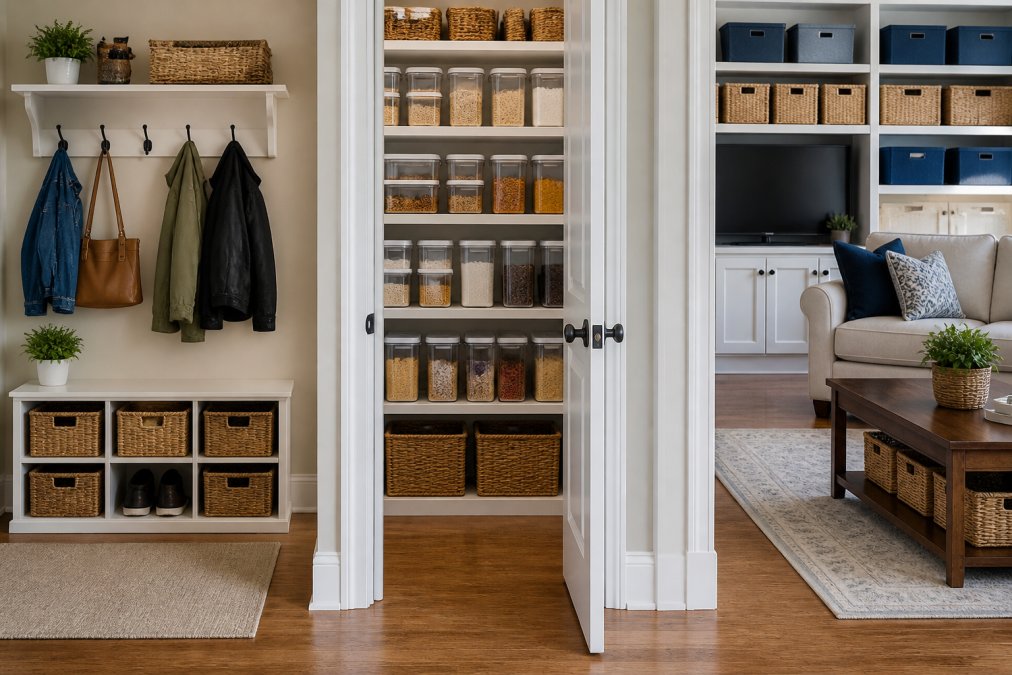
Assigning functional zones to your spaces
Start by identifying the natural workflows in your home. Where do you drop items when you come home? Where do you prepare meals? Where do you work? Assign a functional purpose to each zone based on how you actually use the space, not how you think you should use it. Your entryway might become a drop zone. Your kitchen counter becomes a mail-sorting station. Your bedroom closet becomes a seasonal storage area.
Once you've identified zones, everything in that zone serves that function. Nothing else lives there. This containment prevents visual clutter and makes maintenance automatic, if something doesn't belong to that zone's function, it doesn't belong in that space.
Drop zones and entryway command centers
The drop zone is where most home organization systems succeed or fail. This is where incoming items land: keys, mail, bags, shoes, jackets. If you don't manage this space, it becomes a catch-all that spreads chaos throughout the house.
A functional drop zone has three components: a place for each category of incoming item, a visual system that makes it obvious where things go, and a weekly reset routine that takes five minutes. Wall-mounted hooks for bags and jackets, a small basket for keys and loose items, a mail sorter for paperwork. The weekly reset involves sorting mail into actionable piles, returning items that wandered into the zone, and wiping down surfaces.
Kitchen and pantry zones for daily workflow
The kitchen is where most people experience daily friction because it's the most frequently used space. Organizing by workflow rather than category reduces steps and friction. Group items by how you use them: breakfast zone, cooking zone, baking zone, beverage zone. Everything you need for breakfast lives in one area.
Labeling becomes critical here. Clear labels reduce decision time and help anyone in the household put things back correctly. Without labels, your system gradually degrades.
Effective Home Organization Strategies for Every Room
What works in a kitchen doesn't work in a bedroom, and what works in a bedroom doesn't work in a home office. But the underlying principles are the same: reduce decision points, make the right choice the easy choice, and maintain with minimal effort.
Containerization and vertical storage for space optimization
Most people organize horizontally first, spreading items across shelves and surfaces. This creates visual clutter and wastes vertical space. Containerization solves this by creating visual boundaries and using height.
Containers serve two purposes: they define what belongs in a space, and they create visual calm by hiding contents. Vertical storage multiplies your usable space without requiring more floor area. Shelving units, wall-mounted organizers, and stackable containers let you use the full height of your walls.
Choose containers that match your actual needs, not containers that look good. Measure first, then select containers that fit your space and your items.
Labeling systems that stick (and why they matter)
Labels are the difference between a system that works and one that slowly degrades. Without labels, people make assumptions. Within weeks, your system has drifted so far from the original design that it no longer functions.
A labeling system that sticks is simple, consistent, and uses the same format throughout your home. Handwritten labels on masking tape work as well as printed labels, consistency matters more than aesthetics. For paperwork, use broad categories (taxes, medical, home maintenance) rather than granular ones. Overly specific categories create decision paralysis.
Grouping like items: categorization that reduces visual clutter
Visual clutter isn't just about the number of items; it's about how scattered they are. Ten items spread across a room look messier than fifty items grouped together in a container. The right grouping level is usually "what would I need to grab together to complete a task?"
For a craft room, grouping might be: markers and colored pencils, papers and cardstock, adhesives and tape. For a garage: fasteners, tools by type, seasonal items, cleaning supplies. Categories should match how you actually use the space.
DIY Home Organization Systems on a Budget
You don't need to buy everything new to build a system that works. Most homes contain enough containers, baskets, and storage solutions already.
Building systems without buying everything new
Start with what you have. Before buying a single container, audit your current storage. Baskets from other rooms, jars from the kitchen, boxes from deliveries often work perfectly. When you do need to buy containers, choose versatile options that work across multiple rooms. Clear plastic bins in standard sizes stack efficiently. Wire baskets work in almost any aesthetic.
The real cost-saving comes from not buying duplicates of items you already own. Keep a simple inventory of what you stored where.
Paperwork and document management the simple way
Most people's paper clutter comes from not having a system. Without a clear process, papers pile up on counters and desks.
A simple paper management system has three zones: actionable items (bills to pay, forms to complete), reference items (insurance documents, warranties), and items to file. Sort incoming mail into these three piles immediately. For filing, use broad categories that match your life: taxes (with yearly subfolders), medical, home maintenance, insurance, warranties. Avoid creating categories like "miscellaneous", these become dumping grounds.
Small Space Organization Ideas That Maximize Every Inch
Small spaces require organization systems that are more intentional than larger homes. Every inch serves a purpose, and visual clutter feels more oppressive in limited square footage.
Modular storage and drawer dividers for apartments
Modular storage adapts to your actual needs rather than forcing you to adapt to fixed furniture. Stackable bins, wall-mounted shelving, and adjustable organizers let you customize your storage as needs change.
Drawer dividers transform chaotic drawers into functional zones. A drawer that holds everything is useless. Dividers force categorization and make finding things instant. Use vertical space aggressively with wall-mounted shelving, over-door organizers, and hanging storage.
Seasonal rotation without a storage unit
Most people keep seasonal items in storage units because they don't have a system for rotating them. A seasonal rotation system works like this: identify what's truly seasonal, store these items in clear labeled bins, and swap them when seasons change. Off-season items go into high storage (closet shelves, garage rafters), and in-season items move to accessible locations.
Keep seasonal storage within your home if possible. Under-bed storage, closet shelves, and garage rafters work better than external units because you're more likely to actually rotate items.
Neurodivergent-Friendly Organization Systems
Standard organization advice assumes you have the executive function to maintain complex systems. For people with ADHD, autism, or other neurodivergent traits, systems that require memory, decision-making, or sustained attention often fail. Neurodivergent-friendly systems work with your brain, not against it.
Habit stacking for daily maintenance without burnout
Habit stacking ties new behaviors to existing routines. Instead of creating a separate "organization time," integrate organization into habits you already have. File papers when you open mail. Put items in their zones immediately after use. This approach reduces decision fatigue and prevents the buildup that makes maintenance feel overwhelming.
For neurodivergent individuals, habit stacking is more effective than willpower-based systems. You're relying on automatic behavior, not motivation or memory.
Visual systems that don't require memory
A system that requires you to remember where things go will fail. Visual systems don't require memory, they show you what to do.
Color-coding works well for visual systems. Assign a color to each family member or category, then use that color consistently. Labels are another critical visual system. Without labels, you're relying on memory or assumptions. Open shelving with clearly visible containers also supports visual systems.
The Maintenance Routine: Keeping Home Organization Systems That Actually Work
This is where most people fail. They build a great system, then don't maintain it. Within weeks, the system has drifted so far from the original design that it no longer functions.
A maintenance routine that actually works takes 15 minutes per week and follows a simple pattern: reset, sort, and verify.
Weekly and monthly check-ins that take 15 minutes
Weekly reset: Choose one zone and reset it completely. Put items back in their designated homes, wipe surfaces, and verify that labels are still visible. Rotate zones so you hit each one monthly. This prevents any single zone from becoming chaotic.
Monthly verification: Walk through your entire home and check that systems are still functioning. Are items ending up in the wrong zones? Are labels still clear? Make small adjustments before small problems become big ones.
Sustainability and eco-friendly storage practices
Organization doesn't require buying new containers constantly. Reuse what you have and buy only when you've truly exhausted other options. When you do buy storage, choose durable materials that last years, not months. Plastic bins last longer than cardboard boxes. Metal shelving lasts longer than particleboard.
Avoid single-use containers and storage solutions. Choose versatile containers that adapt to different uses as your needs change. For paperwork, digitize what you can. Photographs of important documents, scanned receipts, and digital bills reduce paper clutter and make documents easier to find.
Home organization systems that actually work share one common trait: they're designed for how you actually live, not how you think you should live. Most systems fail because they ignore maintenance, require constant willpower, or demand that you make the "right choice" every single time. The systems that stick are the ones that make the right choice the easy choice and require minimal ongoing effort.
WowHaul offers thoughtfully selected storage solutions and organization products designed to support systems that work. From drawer dividers to labeling systems to modular storage, WowHaul's curated selection simplifies the process of building systems that stick. Start with one zone, maintain it consistently, and expand from there. Small, sustainable changes beat ambitious overhauls every time.
Frequently Asked Questions
What makes home organization systems that actually work different from just tidying up?
A system is repeatable and sustainable. Tidying is a one-time event. Real organization systems include maintenance routines, labeling strategies, and functional zones designed to prevent clutter from returning. They address the daily habits that create mess, not just the mess itself. The best systems require 10-15 minutes of weekly maintenance instead of hours of reorganizing every few months.
How do I create an organization system that lasts without spending hours maintaining it?
Use habit stacking: attach organization tasks to routines you already do. For example, sort mail while your coffee brews, or reset your entryway drop zone while dinner cooks. Zone-based organization also helps because items return to the same functional location every time. Start with just one room or zone, get comfortable with it, then expand. Most people fail because they try to organize everything at once.
What are the best DIY home organization systems for small apartments?
Vertical storage, modular containers, and drawer dividers maximize limited space. Use wall-mounted shelves, over-door organizers, and stackable bins. Seasonal rotation keeps only active items accessible. Label everything so you remember what's stored where. The key is choosing furniture that serves double duty: ottomans with storage, beds with drawers underneath. Avoid decorative items that take up space without function.
Why do neurodivergent-friendly organization systems work better for some people?
These systems rely on visual cues and external reminders rather than memory or willpower. Clear labeling, color-coding, and open containers (so items are visible) reduce decision fatigue. Habit stacking connects organization tasks to existing routines, making them automatic rather than optional. These approaches benefit anyone overwhelmed by complexity, not just neurodivergent individuals. The simpler your system, the more likely you'll maintain it long-term.
How do I organize my home without buying lots of new products?
Start with what you own: repurpose jars, boxes, and containers you already have. Use drawer dividers made from cardboard or recycled materials. Implement categorization by grouping like items together without new storage bins. Vertical storage using existing shelves and wall space costs nothing. Focus first on decluttering and assigning zones, then add products only where gaps remain. Many people discover they need far fewer products once they establish functional zones and maintenance routines.
What's the most common mistake people make when organizing their homes?
Buying storage products before decluttering and defining zones. This creates expensive clutter. The second mistake is creating systems too complicated to maintain. If your labeling system requires color-coding, special fonts, and laminated tags, you won't update it when things change. Start simple: use clear containers, basic labels, and zones that match how you actually live. Add complexity only if the basic system fails.
How often should I maintain my home organization systems?
Weekly: 10-15 minutes to reset high-traffic zones like entryways and kitchens. Monthly: 30 minutes to review pantry inventory, rotate seasonal items, and update labels. Quarterly: assess whether zones still match your lifestyle and adjust as needed. The maintenance routine prevents the need for major overhauls. Most people who maintain systems weekly report that their homes stay clutter-free with minimal effort compared to those who let things slide for months.
This article was written using GrandRanker