

Table of Contents
- Why Anxious Dogs Need a Different Bathing Approach
- Signs of Stress in Dogs During Grooming and Bath Time
- Preparing Your Space and Gathering Solo-Bathing Equipment
- Step-by-Step Process for Bathing Your Anxious Dog
- How to Use a Lick Mat for Dog Baths
- Waterless Dog Shampoo Reviews and Alternatives
- Managing Post-Bath Anxiety and Building Positive Associations
- Common Mistakes to Avoid When Bathing an Anxious Dog Alone
Last Updated: August 9, 2026
Why Anxious Dogs Need a Different Bathing Approach
Bathing an anxious dog alone presents a unique challenge that standard grooming advice doesn't address. When your dog experiences genuine fear around water, the typical "just get it done quickly" approach often backfires, deepening anxiety and making future baths harder. Anxiety during grooming doesn't stay contained to bath time, dogs who experience high stress often develop separation anxiety or heightened fear responses in other contexts.
At WowHaul, we understand that pet care isn't one-size-fits-all. Bathing an anxious dog alone demands preparation, the right tools, and a methodical approach that builds your dog's confidence gradually. This guide walks you through exactly how to do it, addressing the solo-handler safety challenges that most guides overlook.
Signs of Stress in Dogs During Grooming and Bath Time
Understanding what stress looks like in your dog is the first critical step. Common stress signals include ears pinned back, tail tucked low, whale eye (excessive white showing), lip licking, trembling, and vocalization. Some dogs go silent and rigid, which many interpret as calm when it's actually learned helplessness.
Watch for displacement behaviors too, sudden interest in licking paws or excessive scratching when the bath routine begins. A dog displaying multiple stress signals simultaneously is telling you clearly that the situation exceeds their coping capacity. The distinction matters: a dog merely uncomfortable might tolerate a quick bath, but a dog experiencing genuine anxiety needs desensitization work before you introduce water.
Preparing Your Space and Gathering Solo-Bathing Equipment
Non-Slip Surfaces and Safety Setup
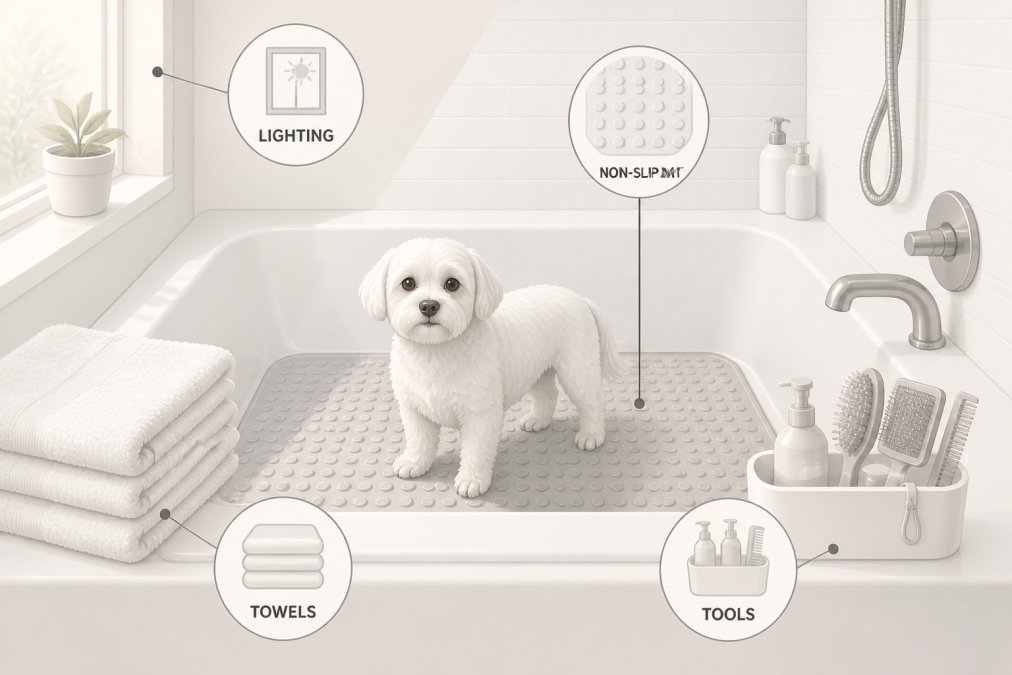
Your bathroom becomes a high-risk environment when managing an anxious dog alone. Slippery surfaces amplify fear because your dog loses footing confidence, intensifying panic. A non-slip surface is non-negotiable for safe solo bathing.
Rubber bath mats designed for dogs provide traction that helps your dog feel secure. Cover the tub floor completely and extend slightly up the walls if possible. Clear the floor of obstacles so you have space to move safely if your dog panics. Position grooming supplies within arm's reach so you're never more than a step away from your dog.
Temperature control is crucial. A cold bathroom amplifies anxiety. Warm the space beforehand and keep towels warming on a rack or in the dryer so you have warm, dry wraps ready immediately after rinsing.
Essential Equipment for Bathing Alone
Solo bathing requires specific tools that reduce physical demands and keep your dog safer. A handheld shower head gives you control over water pressure and direction, preventing unexpected water hits that startle anxious dogs.
A grooming tether or non-slip collar attachment helps keep your dog in place without requiring constant holding. This frees one hand for bathing and reduces your dog's ability to bolt. A grooming loop that attaches to the tub edge keeps your dog contained while you work.
A large, absorbent towel should be within immediate reach. A lick mat or slow feeder bowl filled with high-value treats serves as a distraction tool, covered in detail in a later section. Dog-safe shampoo formulated for sensitive skin is important if your dog has any skin sensitivities. Test water temperature on your inner wrist first, it should feel warm, not hot.
Finally, have an emergency exit plan. Keep a phone within reach in case you need help, and identify a safe space where your dog can dry off if they panic.
Step-by-Step Process for Bathing Your Anxious Dog
Step 1: Start with Gradual Desensitization
Before introducing water, your anxious dog needs to become comfortable with the bathing environment itself. Spend 3-5 days having your dog spend time in the bathroom with you. Let them explore without any expectation of bathing.
Next, introduce your dog to the tub without water. Place them in the empty tub, offer high-value treats, and let them step in and out freely. Repeat this 5-10 times over several days. Gradually increase their time in the tub, sitting beside it and hand-feeding treats.
Once your dog is comfortable in the empty tub, introduce the sounds associated with bathing. Run the faucet without directing water at your dog. Let them hear the sound and reward calm behavior. This counter-conditioning teaches your dog that water sounds precede positive things, not scary things.
This desensitization phase typically takes 1-2 weeks. It feels slow, but it compresses actual bathing time dramatically because your dog is already calm before water touches them.
Step 2: Practice Fake Baths Without Water
Once your dog is comfortable in the tub and tolerant of running water sounds, practice the bathing routine without water. Put your dog in the tub with the non-slip mat in place. Use a dry washcloth to simulate the sensation of being touched and cleaned.
Narrate your actions calmly: "Now I'm going to wash your legs. Good dog." This creates a predictable routine that reduces surprise and anxiety. Practice applying dry shampoo or a waterless product during this phase to familiarize your dog with new sensations.
Run through the entire sequence, from tether application to towel wrapping, without introducing water. Do this 3-5 times. Each fake bath builds your dog's confidence and makes the actual bathing process feel less foreign.
Step 3: Introduce Water Gradually
When you finally introduce water, start with the smallest possible amount. Wet your hand and gently touch your dog's leg, not the face or ears. Offer treats immediately after. Your dog learns: water touch equals treats.
Gradually increase the wetness. Move from hand-applied water to a small cup of warm water poured over one leg. Always follow with treats and praise. Never progress to the next level until your dog is genuinely calm.
Once your dog tolerates water on their legs, move to the body. Keep the handheld showerhead on the lowest pressure setting. Test the pressure on your own hand first. The face and ears are typically the most anxiety-inducing areas. Consider using a washcloth dampened with water rather than direct spray for the face.
Water temperature matters significantly. Lukewarm water is more tolerable than hot or cold. Test it on your inner wrist.
Step 4: Apply Shampoo and Rinse Safely
Once your dog tolerates water on their body, introduce shampoo. Use only dog-safe products formulated for sensitive skin. Apply shampoo in the direction of hair growth, working gently.
Rinse thoroughly but gently. Incomplete rinsing leaves shampoo residue that irritates skin and itching, which your dog will associate with bathing. Use the handheld showerhead on low pressure, working systematically from neck to tail.
For anxious dogs, shorter baths are often better than thorough ones. A 5-minute bath where your dog remains calm is superior to a 15-minute bath where they're panicked. After rinsing, wrap your dog immediately in a warm towel.
How to Use a Lick Mat for Dog Baths
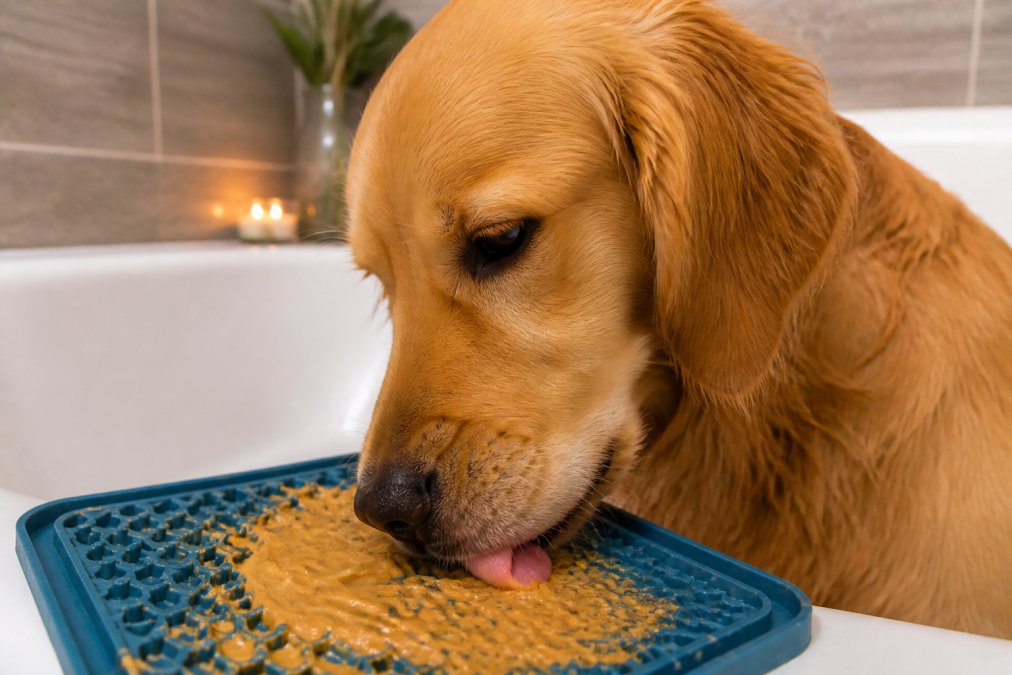
A lick mat is one of the most effective distraction tools for bathing anxious dogs alone. The frozen mat keeps your dog's focus on something rewarding while you work, reducing their ability to escalate anxiety or attempt escape.
Spread a high-value paste on the mat, peanut butter (xylitol-free), wet dog food, pumpkin puree, or yogurt work well. Freeze the mat for at least 2 hours, ideally overnight. Attach the mat to the tub wall using suction cups at a height where your dog can lick comfortably.
Introduce the mat during your fake-bath practice sessions. When you move to actual bathing, the frozen mat becomes a familiar, rewarding focus point. The distraction works best when the mat is genuinely high-value. Experiment with different pastes to find what your dog finds most rewarding.
Waterless Dog Shampoo Reviews and Alternatives
For dogs with severe water anxiety or those needing bathing between full baths, waterless shampoos and no-rinse alternatives provide viable options. Dry shampoos in powder form absorb oils and odors without water. Apply the powder to your dog's coat, work it through, and brush out the residue.
Waterless shampoo sprays offer a middle ground. These liquids are applied to the coat, worked through, and wiped away with a towel, no rinsing required. Many dogs tolerate spray application better than water immersion. Grooming wipes designed for dogs provide spot-cleaning without full bathing.
The limitation of waterless alternatives is that they don't provide deep cleaning that water-based bathing does. They're best used as supplementary tools rather than permanent replacements. For dogs with genuine water phobia, regular use of waterless products is better than forcing traumatic water baths that worsen anxiety.
Managing Post-Bath Anxiety and Building Positive Associations
The period after bathing is critical for shaping your dog's future response to baths. Immediately after bathing, provide a warm, comfortable space for your dog to dry. Some dogs benefit from being wrapped in a warm towel for 10-15 minutes.
Avoid high-energy play or excitement immediately after bathing. Your dog's nervous system is activated, and adding stimulation can escalate anxiety. Instead, offer calm activities, hand-feeding treats, gentle petting, or quiet time.
Within an hour of bathing, engage in a positive activity your dog loves. This creates a positive association: bathing leads to good things, not just stress. Track your dog's behavior after each bath to guide adjustments to future bathing approaches.
Gradually reduce the frequency of desensitization work as your dog improves. If your dog is bathing calmly after 4-5 baths, you can start spacing baths further apart. Consistency matters, bathing every 2-3 weeks maintains progress.
Common Mistakes to Avoid When Bathing an Anxious Dog Alone
The most damaging mistake is rushing desensitization. Many owners skip the gradual exposure phase entirely, assuming their dog will "get over it" once bathing starts. Anxious dogs don't overcome fear through exposure alone; they need counter-conditioning, which takes time.
Another critical error is forcing your dog into the tub against their will. A dog who panics and is physically forced learns that resistance doesn't work, which can lead to learned helplessness or escalated aggression. This damages trust and worsens anxiety long-term.
Bathing too frequently is another common problem. Unless your dog is visibly dirty or has a skin condition requiring frequent bathing, spacing baths 3-4 weeks apart is reasonable for anxious dogs.
Using water that's too hot or too cold is startling and creates negative associations. Neglecting to warm the bathroom beforehand is underestimated but significant. A cold environment amplifies anxiety.
Failing to secure your dog properly during solo bathing creates safety risks. A tether or grooming loop isn't optional; it's essential when your hands are occupied. Using human shampoo or products not formulated for dogs irritates skin and creates itching that your dog associates with bathing.
Skipping the lick mat or distraction tool is a missed opportunity. Finally, giving up too early is the most common mistake. Desensitization takes weeks, not days. Patience compounds into lasting improvement.
Bathing an anxious dog alone is genuinely challenging, but it's manageable with the right preparation and approach. The core strategy, desensitization, gradual water introduction, distraction tools, and consistent positive reinforcement, works because it addresses your dog's actual fear rather than forcing compliance. Start with foundational desensitization work, invest in proper equipment, and build your dog's confidence gradually. Your patience now prevents years of bathing stress for both of you.
Frequently Asked Questions
How do I calm my dog down before a bath?
Start calming your dog 30 minutes before bath time by reducing activity and keeping the environment quiet. Use positive reinforcement with treats and praise for approaching the bathroom. Practice gradual desensitization by letting your dog explore the tub without water for several days. Avoid sudden movements or loud noises. A short walk before bathing can help burn nervous energy. Counter-conditioning, pairing the bathroom with treats and play, teaches your dog to associate the space with positive experiences rather than fear.
What are the signs of stress in dogs during grooming?
Stressed dogs show body language changes including tucked tails, pinned-back ears, whale eye (whites showing), and lip licking. They may tremble, pant heavily, or attempt to escape the tub. Some dogs freeze or become rigid. Whining, growling, or snapping are escalated stress signals. Excessive yawning and avoidance behavior also indicate anxiety. If you notice these signs during bathing, pause, let your dog exit safely, and take a break. Pushing through stress can worsen water phobia and make future baths harder.
Can I use waterless dog shampoo instead of bathing my anxious dog?
Yes, waterless or dry shampoos are legitimate alternatives for anxious dogs and can reduce bathing frequency. Dry shampoos absorb oils and freshen the coat without water exposure. However, they don't remove dirt as thoroughly as water baths. For dogs with skin conditions or heavy soiling, occasional water baths are still necessary. Waterless options work best as a bridge during desensitization or for maintenance between full baths. Always choose dog-safe, hypoallergenic formulas. Consult your veterinarian about which option suits your dog's skin and coat needs.
How do I safely bathe my anxious dog alone without help?
Set up your space first with non-slip mats, towels, and supplies within arm's reach so you never leave your dog unattended. Use a tether or grooming loop to keep your dog in place without restricting movement. Start with shallow water and low pressure. Prepare a lick mat frozen with treats to keep your dog focused. Keep one hand on your dog at all times for safety and reassurance. Have an emergency exit plan if your dog panics. Work slowly through each step, rewarding calm behavior. If your dog becomes too distressed, stop and try again another day, forcing the process worsens anxiety.
This article was written using GrandRanker