

Table of Contents
- How Laundry Pickup and Delivery Works
- What Does the Cost of Wash and Fold Laundry Service Include?
- Wash and Fold Service Preparation Tips for Families
- Turnaround Times, Scheduling, and Service Areas
- Eco-Friendly Options and Custom Detergent Preferences
- Is Laundry Delivery Worth It for Large Families?
- Quality Guarantees, Specialized Items, and Family App Integration
- Conclusion: Choosing the Right Laundry Delivery Service
- Frequently Asked Questions
Last Updated: September 28, 2026
How Laundry Pickup and Delivery Works
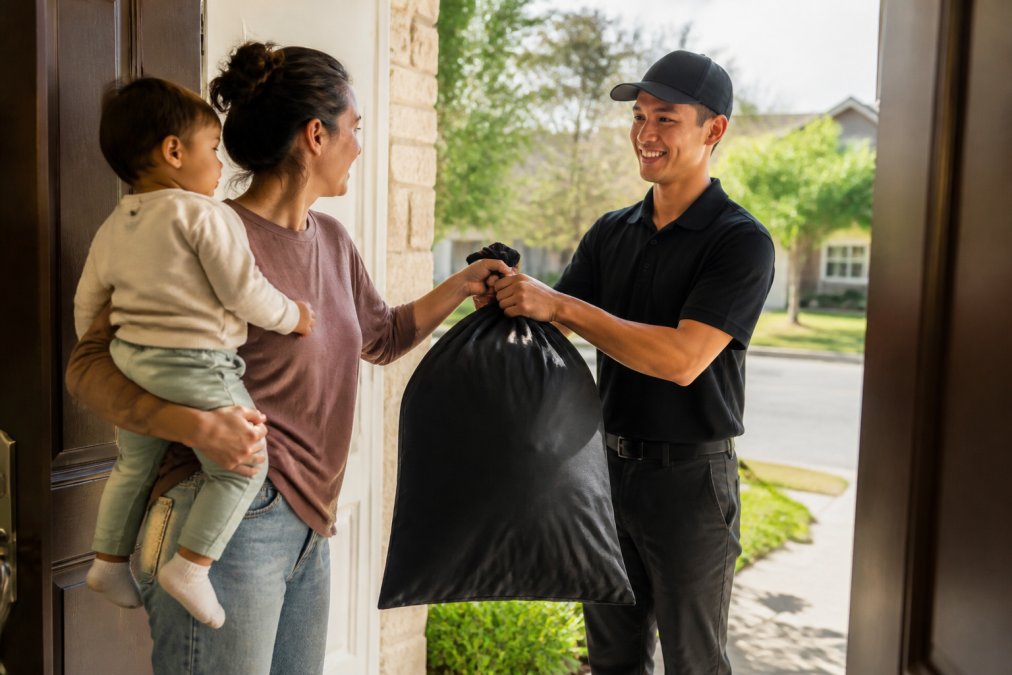
Laundry delivery services for busy families replace the weekly wash-and-fold grind with a scheduled pickup and drop-off loop. A driver collects your bags, a commercial facility washes and folds everything, and the clean clothes come back to your door. This guide walks through what these services actually cost, how to prepare for pickup, and whether the math works for a large family.
The mechanics are simpler than most people expect. You book a pickup window, leave your bags at the door or with a concierge, and the driver scans them into the system. From there, the load moves through a commercial laundry cycle: sorting, stain treatment, washing in commercial-grade equipment, drying, folding, and packaging. Most providers return items in branded bags or wrapped bundles, sorted by family member if you request it.
The one detail that surprises first-time users: everything hinges on the cutoff time. Miss the pickup window and your laundry cycle shifts a full day, which matters when you are scheduling around a week's worth of school uniforms.
What Does the Cost of Wash and Fold Laundry Service Include?
The cost of wash and fold laundry service typically bundles three things: labor, supplies, and logistics. Most providers price by the pound, with a minimum order that usually covers the first 10 to 15 pounds. A smaller group quotes by the bag, which suits families who would rather not weigh anything.
What sits inside that price varies more than the headline rate suggests. Standard detergent, fabric softener, drying, and folding are almost always included. Premium scents, hypoallergenic detergent, stain treatment for specific items, and next-day or same-day service usually carry a surcharge. Dry cleaning is a separate service with its own pricing and is rarely folded into a wash-and-fold rate.
| Pricing Model | How It Works | Best For |
|---|---|---|
| Price per pound | Charged by weight, minimum order applies | Families with steady, mixed loads |
| Price per bag | Flat rate per bag up to a size limit | Predictable weekly budgeting |
| Subscription | Fixed monthly fee for a set volume | Households with consistent volume |
| On-demand | Pay per order, no commitment | Occasional overflow or travel weeks |
Wash and Fold Service Preparation Tips for Families
Wash and fold service preparation tips come down to one principle: separate what needs special handling before the driver arrives. Sort by color and fabric weight, pull anything with a care label that says dry clean only, and pre-treat visible stains so the facility knows where to focus.
A few habits make the handoff smoother:
- Use separate bags per family member and label them clearly
- Flag delicates and items needing cold water in a marked mesh bag
- Note any hypoallergenic detergent or scent preferences in your account profile
- Photograph the bag count at pickup as a simple record
- Keep a running "do not wash" pile for items awaiting repair
Turnaround Times, Scheduling, and Service Areas
Turnaround time is the single biggest variable between providers. Standard wash and fold usually runs 24 to 48 hours from pickup to return, while next-day and same-day service cost more and often require an early pickup window. Flexible scheduling matters more than raw speed for most families, because the real constraint is matching the pickup to a school run or a work shift.
Service areas follow delivery density. Providers cluster routes so drivers cover more homes per hour, which means coverage maps can stop at a neighborhood boundary. Before committing, confirm three things: whether your address falls inside the delivery zone, which pickup windows are actually available in your area, and whether curbside pickup or a doorstep handoff is standard.
For families juggling multiple schedules, the practical move is to lock a recurring slot rather than booking on demand.
Eco-Friendly Options and Custom Detergent Preferences
Eco-friendly laundry service has moved from a niche add-on to a standard filter. Many providers now offer plant-based detergents, fragrance-free formulas, and cold-water wash cycles, and some publish a sustainability report covering water and energy use per load. If environmental impact is a deciding factor for your household, ask for that report directly rather than relying on a marketing page.
Is Laundry Delivery Worth It for Large Families?
- Detergent and additives: a mid-size jug of standard detergent runs roughly $12 to $20 and covers about 60 to 90 loads, so the per-load supply cost is small but not zero.
- Utilities: a residential washer uses roughly 15 to 30 gallons of water per load depending on the model and cycle, and the dryer is one of the largest energy draws in a home. Check your utility bill for your actual per-kWh and per-gallon rates rather than guessing.
- Machine wear and replacement: a residential washer and dryer pair typically lasts 10 to 13 years. Divide the purchase price by the number of loads you run over that lifespan to get a per-load depreciation figure.
- Your time: this is the biggest line item and the one most families undervalue. Sorting, washing, drying, folding, and putting away a single load commonly takes 45 to 90 minutes of active attention spread across the day. Multiply your weekly load count by that range, then decide what an hour of your time is worth to you.
Two patterns are worth knowing. Families with three or more children usually find the time savings justify the premium because their volume is high enough to dilute the minimum-order effect. Families running one or two small loads a week often find the opposite, the minimum order makes the service cost more per pound than it's worth, and a single overflow pickup on demand is the better fit.
Quality Guarantees, Specialized Items, and Family App Integration
Quality assurance in laundry delivery rests on three levers: a written guarantee, a documented process for specialized items, and a clear claims path when something goes wrong. Most reputable providers offer a re-wash guarantee on items that come back unsatisfactory and a reimbursement policy for damage, though the terms vary widely. Read the fine print on both before your first order, and confirm whether the guarantee covers only the wash-and-fold rate or also the value of the garment.
- School uniforms: Most uniform pieces are cotton or polyester blends and survive a standard cycle, but embroidered logos, heat-pressed names, and iron-on patches can lift or crack in a hot dryer. Flag them at intake and request low-heat drying or air-dry for those pieces.
- Sports gear: Grass-stained jerseys, padded shorts, and synthetic moisture-wicking fabrics need a warmer wash and a stain pre-treatment to come clean, but high heat damages elastic and printed numbers. Ask for a warm wash with a low-heat dry, and keep anything with a heat-pressed number out of the dryer entirely.
- Stuffed animals: Many are surface-wash only, and a full immersion cycle can mat the filling or loosen seams. Confirm the provider's policy before sending them; some facilities will surface-clean or spot-treat rather than wash.
- Delicate baby clothing: Newborn and infant garments often carry snap closures, thin knits, and organic cotton that shrink or pill in a hot cycle. Request cold water, gentle detergent, and low heat, and keep them in a separate labeled mesh bag.
- Cloth diapers: These need a specific wash routine, often a pre-rinse, a hot wash, and an extra rinse, that most standard wash-and-fold services do not run. Confirm in writing before including them.
- Heirloom quilts and hand-wash-only items: These fall outside a standard cycle entirely. Ask whether the provider handles them at all, and if not, keep them out of the bag.
Conclusion: Choosing the Right Laundry Delivery Service
The hard part is not finding a provider. It is matching the pricing model, turnaround time, and specialized-item policy to how your household actually runs. Get those three aligned and laundry delivery stops being a luxury and starts being infrastructure.
Frequently Asked Questions
How much should I pay someone to do my laundry once a week?
Most laundry delivery services charge by the pound, typically between $1.50 and $2.50 per pound for wash and fold. A family of four generates roughly 20 to 30 pounds weekly, so expect $30 to $75 per week. Some services offer flat monthly subscriptions that bring the per-pound cost down. Always confirm whether pickup and delivery fees are included in the quoted price.
How do I prepare my laundry for a professional pickup service?
Sort items by color and fabric type before bagging. Empty all pockets and remove belts, pins, or anything that could damage the drum. Pre-treat visible stains and note them on the order form. Use a sturdy, labeled bag and separate any delicates or items needing special care. Clear preparation speeds up turnaround and reduces the chance of missing or damaged pieces.
Is laundry delivery worth the cost for a large family?
For families with three or more children, the math often works out. A weekly wash and fold service at $50 to $70 replaces four to six hours of sorting, washing, drying, and folding. If your time is worth $20 per hour, you are saving $80 to $120 in labor. The service also reduces wear on your home machines and lowers utility bills, which offsets part of the cost.
What should I look for when choosing a laundry delivery service for my family?
Check turnaround time, pricing structure, and whether the service uses hypoallergenic detergents. Look for clear quality guarantees and a responsive customer support channel. Confirm they handle specialized items like baby clothes or athletic gear. Read reviews about stain removal and garment care. A no-contract option lets you test the service for a few weeks before committing to a subscription.