

Table of Contents
- What's Driving Laundry Room Cabinet Hardware Trends in 2026
- Laundry Room Cabinet Pulls: Bar, Edge, and Decorative Styles
- Modern Cabinet Hardware Finishes That Define 2026 Style
- How to Choose Cabinet Hardware for Your Laundry Room
- Cabinet Hardware Trends 2026: Design Aesthetics That Work
- Common Mistakes to Avoid When Selecting Laundry Room Hardware
- Finish Durability, Cleaning, and Long-Term Maintenance
- Frequently Asked Questions
Last Updated: October 12, 2026
What's Driving Laundry Room Cabinet Hardware Trends in 2026
Laundry room cabinet hardware has evolved from purely functional to a key design element that shapes the entire aesthetic of your utility space.
What's changed is the intersection of durability demands and design ambition. A laundry room faces constant humidity, temperature fluctuations, and frequent use. The hardware you choose must withstand that environment while also contributing to a cohesive visual style. In 2026, the best cabinet hardware balances sculptural appeal with practical resilience.
Homeowners are moving away from one-size-fits-all solutions. They're mixing finishes, choosing pulls that make statements, and prioritizing hardware that reflects their personal aesthetic, whether that's modern minimalism, farmhouse warmth, or transitional elegance. The result is laundry rooms that feel intentional and curated.
Laundry Room Cabinet Pulls: Bar, Edge, and Decorative Styles
The pull or knob you select determines how your cabinets feel to use and how they look. Three distinct styles dominate the current market: bar pulls for simplified appearance, edge pulls for subtle sophistication, and decorative hardware as focal points.
Bar Pulls and Slim Edge Pulls for Simplified Looks
Bar pulls remain the dominant choice for modern laundry rooms. These elongated pulls create clean lines that emphasize cabinet doors and drawers without competing for visual attention.
Edge pulls, sometimes called lip pulls, represent a more minimalist approach. They sit flush with the cabinet face, creating a nearly seamless profile. For laundry rooms with limited wall space or a preference for visual calm, edge pulls deliver simplified appearance without sacrificing functionality.
The practical advantage of bar and edge pulls is consistency. They work equally well on tall cabinet doors and shallow drawers, creating visual rhythm across your cabinetry. Most homeowners find them easier to grip when hands are wet or holding laundry baskets, a real consideration in a utility space.
Sculptural and Decorative Hardware as Design Focal Points
Where bar pulls fade into the background, sculptural hardware demands attention. Wrought iron handles with aged patina, brass rings, or ceramic knobs with hand-painted details transform cabinets into design statements.
Decorative hardware serves a practical purpose beyond aesthetics: it gives your eye a place to rest. In a room with multiple cabinet doors and drawers, sculptural pulls create visual interest and break up monotony. They're particularly effective in farmhouse and vintage design schemes where ornamentation signals authenticity.
The trade-off is durability and maintenance. Ornate hardware with crevices and texture traps dust and moisture. In a humid laundry room, sculptural pieces require more frequent cleaning to prevent corrosion and keep them looking intentional rather than neglected.
Ceramic and Textured Knobs
Ceramic knobs bring warmth and personality to laundry room cabinetry. Glazed ceramic resists moisture better than unfinished clay, and the variety of colors and patterns allows for personal expression. A painted ceramic knob with botanical details, geometric patterns, or solid jewel tones can anchor a design scheme.
Textured knobs, whether ceramic, wood, or composite, add tactile interest. Your hand experiences the surface when you grip it, which creates a more human connection to your everyday environment.
The limitation of ceramic is fragility. A dropped laundry basket or accidental impact can chip or crack a ceramic knob. For households with children or pets, ceramic works better as an accent than as primary hardware.
Modern Cabinet Hardware Finishes That Define 2026 Style
The finish is where durability and design converge. A hardware finish must resist corrosion in a humid environment while delivering the visual tone your design requires.
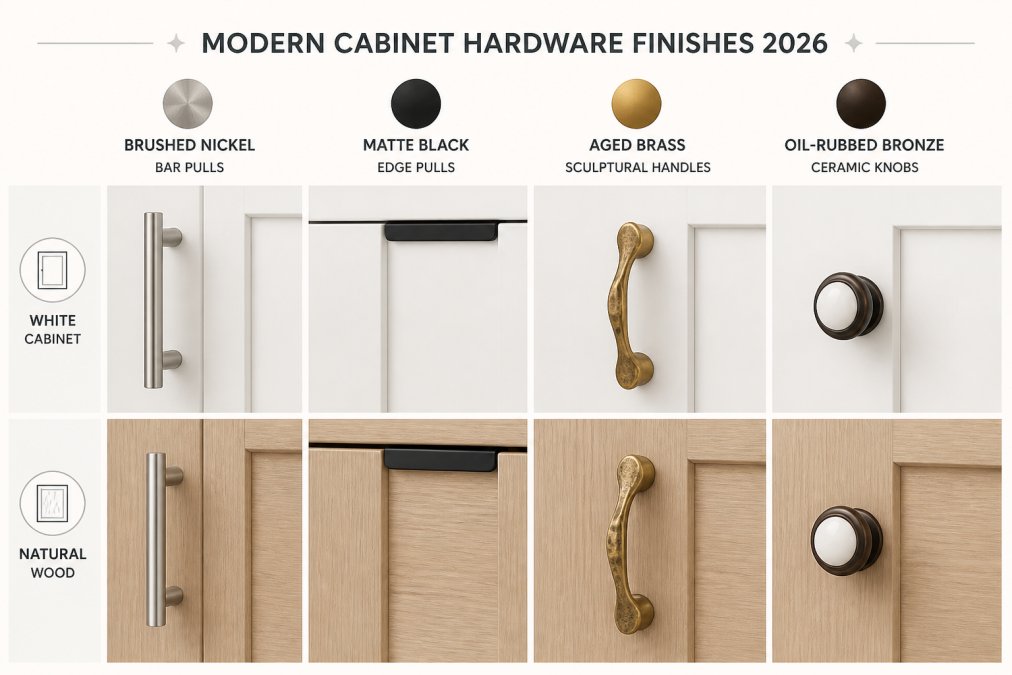
Warm Metals and Mixed-Metal Combinations
Brushed nickel and satin finishes dominated the previous decade. In 2026, warm metals, aged brass, warm bronze, and oil-rubbed finishes, have gained significant traction. These finishes develop patina over time, which many homeowners view as character rather than wear.
Mixed-metal combinations are no longer considered risky. Pairing brushed nickel pulls with aged brass accents, or combining matte black with warm copper, creates visual depth.
Warm metals pair naturally with both painted and stained wood cabinets. On white or cream painted cabinets, aged brass and oil-rubbed bronze create contrast and sophistication. On natural wood, these finishes echo the wood's warmth rather than competing with it.
Durability and Corrosion Resistance in Humid Spaces
Not all finishes perform equally in humid environments. Solid brass and bronze hardware naturally resist corrosion, developing a protective patina layer. Plated finishes, where a thin layer of one metal coats another, are more vulnerable.
Stainless steel offers reliable corrosion resistance but reads as industrial rather than residential. For modern design schemes, brushed stainless or satin stainless works better than polished, which feels clinical in a home setting.
The most durable option is solid brass or bronze hardware with a lacquered finish. The lacquer seals the metal, preventing patina development if you prefer a consistent appearance. Without lacquer, these metals will develop a darker, aged appearance, which many find desirable but requires intentional acceptance.
How to Choose Cabinet Hardware for Your Laundry Room
Selecting the right hardware involves balancing three factors: how it looks, how it feels to use, and how long it will last in your specific environment.
Matching Hardware to Cabinet Color and Material
Hardware color should either complement or intentionally contrast with your cabinet color. On painted cabinets, the contrast between hardware and paint creates visual clarity. Black hardware on white cabinets reads crisp and modern. Aged brass on cream or soft gray cabinets feels warm and transitional.
On natural wood cabinets, hardware should echo the wood's undertones. Warm wood benefits from warm metals like aged brass or oil-rubbed bronze. Cooler-toned wood pairs better with brushed nickel or stainless steel.
The material of your cabinets also influences hardware choice. Solid wood cabinets support heavier, more substantial hardware. Laminate or veneer cabinets work better with lighter pulls that don't stress the door hinges over time.
Cabinet Type, Door Size, and Practical Use Considerations
Tall cabinet doors accommodate longer bar pulls, typically 5 to 8 inches, without looking disproportionate. Smaller cabinet doors and drawers need shorter pulls, usually 2 to 4 inches. Using oversized hardware on small doors creates visual imbalance; undersized hardware on large doors looks insufficient.
Consider which cabinets you use most frequently. Doors you open daily should have comfortable, easy-grip hardware. Decorative pulls work better on cabinets you access less often or that store items you rarely need.
The height at which you mount hardware affects usability. For cabinet doors at eye level or above, center the pull vertically. For lower cabinets and drawers, mount pulls slightly higher than center to accommodate the angle at which you naturally reach.
Installation Measurements and Ergonomics
Before purchasing hardware, measure your cabinet doors and drawer fronts. The center-to-center distance between mounting holes determines which hardware will fit your existing holes. Standard measurements are 3 inches, 3.5 inches, 4 inches, and 5 inches. If your cabinets use non-standard spacing, you'll either need to fill existing holes and drill new ones, or select hardware that accommodates your existing holes.
Ergonomics matters in a laundry room more than in decorative spaces. You're often carrying wet laundry, detergent, or baskets. Hardware should be easy to grip with one hand and positioned where you naturally reach. Bar pulls generally offer better ergonomics than small knobs, especially when your hands are wet or full.
Cabinet Hardware Trends 2026: Design Aesthetics That Work
Your hardware choice should align with your overall design aesthetic. The right hardware reinforces your design intent; mismatched hardware undermines it.
Modern and Modern Farmhouse Styles
Modern design calls for hardware that's minimal and functional. Bar pulls in matte black, brushed nickel, or stainless steel support clean-line aesthetics. The hardware should disappear visually, serving function without ornamentation.
Modern farmhouse, a popular hybrid aesthetic, blends modern minimalism with rustic warmth. Aged brass or oil-rubbed bronze bar pulls work beautifully here, as do simple ceramic knobs with subtle patterns. The hardware should feel handcrafted without being ornate.
Both styles benefit from consistency. Choose one primary hardware style and stick with it across your laundry room. A single accent pull on a special cabinet is acceptable; random mixing reads as indecisive.
Vintage and Transitional Design Approaches
Vintage design embraces ornamentation and patina. Wrought iron hardware, ceramic knobs with hand-painted details, and sculptural brass pulls support this aesthetic. Vintage hardware often shows age intentionally, slight rust on iron, darkened brass, or chipped paint on ceramic all contribute to the authentic vintage feel.
Transitional design bridges modern and traditional. It accepts hardware with some visual interest but stops short of full ornamentation. A simple bar pull with subtle detail, or a ceramic knob in a solid jewel tone, works well. Transitional hardware typically uses warm metals rather than cool finishes.
Common Mistakes to Avoid When Selecting Laundry Room Hardware
Most hardware selection errors fall into predictable categories. Recognizing these mistakes before you purchase saves time and frustration.
The first mistake is choosing hardware primarily for appearance while ignoring durability. A beautiful plated finish may look perfect initially but show wear within months in a humid laundry room.
The second mistake is mixing too many styles. One decorative pull, one bar pull, and one ceramic knob across your laundry room creates visual chaos.
The third mistake is selecting hardware that doesn't match your cabinet door size.
The fourth mistake is ignoring your existing cabinet hole spacing. If your cabinets have non-standard hole measurements, you'll face expensive drilling or filling.
Finish Durability, Cleaning, and Long-Term Maintenance
Hardware finish durability varies significantly. Understanding maintenance requirements helps you choose finishes that align with your willingness to care for them.
Brushed nickel and stainless steel are the lowest-maintenance options.
Aged brass and oil-rubbed bronze require more attention. These finishes develop patina naturally, but you can slow or accelerate the process with appropriate cleaning.
Ceramic and textured knobs need gentle cleaning. Avoid abrasive scrubbers that scratch glazes or finishes. A soft cloth with mild soap and water works well.
The most durable hardware has a sealed or lacquered finish that prevents patina development entirely.
| Hardware Style | Best For | Durability | Maintenance | Cost Consideration |
|---|---|---|---|---|
| Bar pulls (brushed nickel) | Modern, minimalist | Excellent | Low | Budget-friendly |
| Edge pulls | Minimalist, small spaces | Excellent | Low | Mid-range |
| Aged brass | Warm, transitional | Very good | Moderate | Mid to higher |
| Oil-rubbed bronze | Farmhouse, vintage | Very good | Moderate | Mid to higher |
| Ceramic knobs | Vintage, decorative | Good | Moderate | Mid-range |
| Sculptural hardware | Focal points, vintage | Good | High | Higher |
Selecting modern laundry room cabinet hardware requires balancing aesthetics with the practical demands of a humid, frequently-used space.
Frequently Asked Questions
What are the top cabinet hardware trends for 2026?
In 2026, laundry room cabinet hardware trends emphasize warm metals, mixed-metal combinations, and sculptural pieces that serve as design focal points. Bar pulls and slim edge pulls dominate for a streamlined appearance, while matte black, aged brass, and brushed nickel finishes remain popular. Ceramic and textured knobs are gaining ground as decorative accents, and hardware coordination with cabinet color and material is essential to achieving a cohesive modern look.
How do you choose the right cabinet hardware finish for a laundry room?
Start by considering your cabinet color and material. Light stained wood pairs well with warm metals like aged brass or bronze, while painted cabinets work with both cool finishes like brushed nickel and matte black, and warm metals. Account for humidity exposure, laundry rooms require corrosion-resistant finishes. Mixed metals are on-trend and forgiving; pairing two complementary finishes creates visual interest without clashing. Test samples on your actual cabinets in natural and artificial light before committing.
Should you use bar pulls or knobs in a laundry room?
Bar pulls and edge pulls are trending in 2026 for laundry rooms because they offer a streamlined appearance and are easier to grip when your hands are wet or full. Knobs work better for smaller drawers or accent doors. Many homeowners combine both, using pulls on frequently accessed cabinets and knobs on drawers or lower doors. Your choice depends on cabinet size, door frequency of use, and whether you want a modern or transitional aesthetic.
Can you mix different metal finishes in a laundry room cabinet hardware scheme?
Yes, and mixed-metal combinations are a dominant 2026 trend. The key is intentional pairing: choose two complementary finishes, such as brushed nickel with matte black or aged brass with oil-rubbed bronze, and distribute them consistently across your cabinetry. Avoid random mixing of three or more finishes, which reads chaotic. Mixed metals work especially well when one finish dominates (70 percent) and the second serves as an accent (30 percent) on statement drawers or doors.