

Table of Contents
- Step 1: Set Up a Multi-Basket Sorting System to Reduce Laundry Time
- Step 2: Create a Consistent Laundry Schedule
- Step 3: Master Pre-Wash Preparation and Fabric Sorting
- Laundry Organization Tips for Busy Professionals
- Step 4: Implement Efficient Laundry Folding Hacks
- Step 5: Build an Efficient Laundry System With Technology
- Step 6: Declutter and Minimize Your Wardrobe
- Step 7: Design Your Laundry Room for Speed
Last Updated: July 23, 2026
Families spend an average of 8-10 hours per week on laundry when the process lacks organization. At WowHaul, we've seen how simple organizational systems transform laundry from a dreaded chore into a simplified routine. This guide covers seven practical steps to reduce laundry time, strategies that have helped countless households reclaim hours each week.
Step 1: Set Up a Multi-Basket Sorting System to Reduce Laundry Time
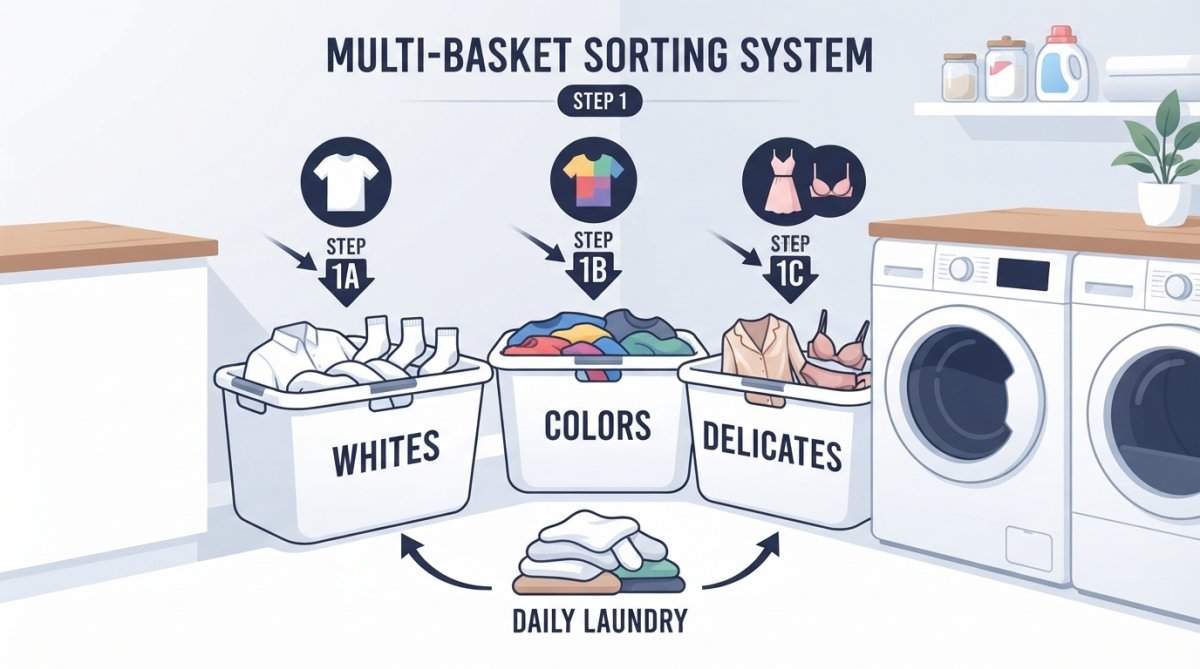
Efficient laundry starts before clothes hit the washer. A well-designed sorting system means clothes are separated continuously as they accumulate, not mid-laundry day.
Choosing the Right Sorting Baskets
Three sorting baskets is the minimum: one for whites, one for colors, and one for delicates. Some households benefit from a fourth for towels and heavily soiled items. Baskets should be durable, clearly labeled with waterproof markers, sized for your household's weekly volume, and positioned where family members naturally undress, bedrooms, bathrooms, or hallway corners.
Practical baskets designed for laundry storage last years longer and get used consistently, unlike decorative baskets that collapse under weight.
Labeling and Placement Strategy
Labels should be visible and impossible to misinterpret. Color-coded baskets work well: red for colors, white for whites, blue for delicates. Use visual symbols alongside text for household members who struggle with reading.
Placement matters more than most realize. Baskets positioned in bedrooms get used; baskets hidden in closets don't. When sorting is automatic, you eliminate pile-ups.
Step 2: Create a Consistent Laundry Schedule
A consistent schedule prevents buildup that makes laundry feel like an all-day event. The schedule should match your household's actual needs.
Choosing Your Laundry Day Frequency
Frequency depends on household size, activity level, and washer capacity. A family of four with children in sports typically needs laundry twice weekly. A single professional might need it once weekly. Track one week: count how many loads you actually run. That number becomes your baseline for scheduling. If you run four loads weekly, spreading them across two days (two loads per day) is more efficient than cramming all four into one day.
Batch Processing for Maximum Efficiency
Batch processing means handling all laundry in concentrated blocks rather than scattered throughout the week. On scheduled laundry days, you sort all accumulated laundry, run multiple wash cycles back-to-back, move loads to the dryer immediately, and fold and put away everything the same day.
This approach takes 3-4 hours concentrated effort versus spreading small tasks across seven days. The efficiency gain comes from momentum, you're already in laundry mode, so folding right after drying is natural.
Step 3: Master Pre-Wash Preparation and Fabric Sorting
Pre-wash preparation prevents damage, stain setting, and laundry room disasters. Five minutes of prep saves hours of problem-solving later.
Checking Pockets and Treating Stains
Before any load enters the washer, empty every pocket. This two-minute step prevents tissues, coins, and pens from destroying loads. Treat stains immediately, the longer a stain sits, the harder it becomes to remove. Keep stain remover near your sorting baskets. Most stains treated within 24 hours come out completely.
Sorting by Fabric Type and Color
Beyond the basic whites-and-colors split, sort by fabric type. Delicate items need gentler cycles and lower heat. Towels and heavy items can handle hot water and high-speed drying. Mixing these creates problems: delicates get damaged, towels don't dry thoroughly.
New dark items should be washed separately for the first 2-3 washes to prevent dye transfer. Reds and blacks are particularly prone to bleeding.
Laundry Organization Tips for Busy Professionals
Time-pressed households need strategies that require minimal decision-making and maximum automation.
Minimizing Procrastination With Visual Systems
Procrastination happens when laundry feels invisible. A visible system creates accountability. Use a whiteboard near your laundry baskets showing today's date, how many loads need washing, and when the next laundry day is. Seeing "3 loads" is more motivating than a vague sense that laundry needs doing.
Some professionals set phone reminders for laundry day. Others use a simple checklist on the refrigerator. The specific method matters less than having something external that prompts action.
Delegating Chores in Shared Living Spaces
In households with multiple adults or older children, clear assignments prevent the default where one person does all laundry. Assign specific responsibilities: Person A runs wash cycles, Person B moves clothes to dryer, Person C folds and puts away. Rotating responsibilities every month prevents burnout.
For families with children, age-appropriate laundry tasks teach responsibility. Children as young as eight can sort laundry; teenagers can handle folding and putting away.
Step 4: Implement Efficient Laundry Folding Hacks
Folding represents the longest single task in most laundry routines. The difference between slow and fast folding is technique.
The KonMari Method and Speed Folding
The KonMari method involves folding clothes into standing rectangles that stack vertically, creating visible storage and preventing the "I can't find anything" problem. Speed folding prioritizes efficiency: t-shirts get folded into thirds, jeans in half, underwear and socks balled together. The goal is putting clothes away in 20-30 minutes.
Whatever method you choose, do it consistently. Consistency builds speed through muscle memory.
Optimizing Storage for Quick Access
Vertical storage, folded items standing upright in drawers, beats stacked piles. You see every item without moving others. Designate specific drawer sections for specific clothing types. All socks in one drawer, all t-shirts in another.
Hanging frequently worn items saves folding time. Work clothes, everyday pants, and jackets worn multiple times per week go straight to hangers, reducing folding workload by 20-30%.
Step 5: Build an Efficient Laundry System With Technology
Modern technology offers tools that reduce active time and prevent forgotten loads.
Smart Washers, Dryers, and Reminders
Smart washers send notifications when cycles complete, preventing wet clothes from sitting in the washer for hours. Dryer notifications tell you exactly when to move clothes to folding. Some smart dryers allow you to start cycles remotely.
Basic smartphone reminders work just as well if you don't have the budget. Set a reminder 30 minutes after starting the washer, another for when the dryer should be done.
Apps and Digital Checklists for Load Management
Laundry tracking apps let household members see which loads are running. Google Calendar works as a free laundry scheduler with recurring events and task reminders. Some households use simple spreadsheets tracking when each person last did laundry.
Step 6: Declutter and Minimize Your Wardrobe
More clothes mean more laundry. A minimalist approach directly reduces laundry volume and time required.
The Minimalist Wardrobe Approach
Most people own 30-40% more clothing than they use. Remove items you haven't worn in a year, items that don't fit, require constant mending, or make you feel bad when worn. A functional minimalist wardrobe is 30-50 pieces total, including everyday clothing, work-appropriate items, and one or two nicer pieces.
Reducing Laundry Volume Through Strategic Closet Choices
Choose fabrics that don't require frequent washing. Heavy cotton, linen, and quality synthetics can be worn multiple times before washing. Neutral colors reduce washing frequency and hide stains. Quality over quantity means fewer items that last longer, reducing total laundry management over years.
Step 7: Design Your Laundry Room for Speed
Physical space design affects how quickly you complete laundry. An efficient layout reduces wasted movement.
Ergonomic Layout and Workspace Organization
Position your washer, dryer, and folding surface in logical sequence: washer → dryer → folding table → storage. This prevents backtracking and creates natural workflow.
The folding surface should be at comfortable height, typically 34-36 inches. Bright overhead lighting or a task light over the folding area reduces eye strain and increases speed.
Storing Supplies Within Arm's Reach
Keep detergent, stain remover, fabric softener, and dryer sheets within arm's reach of the washer. Organize supplies by frequency of use. Storage for clean folded clothes should be near the folding area to encourage putting clothes away immediately.
Laundry management either runs smoothly or consumes disproportionate time and energy. The difference between households that spend three hours on laundry weekly and those that spend eight hours isn't effort, it's organization. These seven steps create a system where laundry happens predictably, requires minimal decision-making, and fits into your actual life.
If you've tried organizing systems before without success, the problem likely was friction. WowHaul offers practical storage solutions designed specifically for laundry workflows, including durable sorting baskets, folding tables, and supply organization systems that make consistency automatic. Start with one system and add others as the first becomes automatic. Real change happens through small, sustainable additions.
Frequently Asked Questions
How can I organize my laundry to reduce laundry time?
Start with a multi-basket sorting system to separate whites, colors, and delicates before wash day. Create a consistent laundry schedule, designating specific days reduces decision fatigue and procrastination. Use a laundry hamper in each bedroom and pre-sort directly into washing baskets. This approach minimizes handling and keeps your laundry volume manageable throughout the week.
What is the most efficient laundry system for busy professionals?
An efficient laundry system combines batch processing with delegation. Wash full loads on set days, use smart washer reminders to prevent forgotten loads, and fold immediately after drying. In shared living spaces, assign laundry days to household members. Store clothing near where it's used to reduce folding and storage time. This system reduces clutter and keeps your weekly routine predictable.
What are the best laundry folding hacks to save time?
Use speed-folding techniques like the KonMari method or flat-lay folding to reduce handling time. Fold directly from the dryer into a basket organized by clothing type and family member. Store frequently worn items at eye level for quick access. Consider hang-drying items that fold slowly, and use drawer dividers to organize folded clothes efficiently. These laundry folding hacks cut folding time by 20-30%.
Should I outsource laundry or handle it myself to save time?
Outsourcing laundry services makes sense if your hourly rate exceeds the service cost and you have severe time constraints. For most households, a well-organized DIY system is more cost-effective. However, outsourcing specific tasks, like dry cleaning or ironing, can free time for higher-value activities. Evaluate your budget and time availability. A minimalist wardrobe reduces overall laundry volume, making DIY management easier.
This article was written using GrandRanker