

Table of Contents
- What Makes Home Goods Curated vs. Mass-Produced
- The Economics of Small-Batch Production
- Craftsmanship and Design Integrity in Premium Decor
- How to Spot Quality Home Decor Worth the Investment
- Material Sourcing and Sustainable Home Goods Pricing
- Ethical Labor and Fair Wages Behind Higher Prices
- Finding Quality Alternatives to Mass-Market Options
- Lifecycle Cost Analysis: Why Investment Pieces Pay Off
Last Updated: August 19, 2026
What Makes Home Goods Curated vs. Mass-Produced
Curated home goods are thoughtfully selected items designed with specific quality standards, aesthetic coherence, and functional purpose. Mass-produced goods prioritize volume and cost reduction above all else.
When you buy curated home goods, you're purchasing something that passed through a deliberate selection process. Someone made a choice about what deserves shelf space, adding layers of sourcing decisions, quality vetting, and design alignment. A mass-produced item aims to reach the broadest market at the lowest price. A curated piece targets a specific use case, aesthetic, or performance standard.
This distinction explains why curated home goods cost more, last longer, and attract loyal customers. At WowHaul, we've built our approach around this principle, focusing on practical finds that solve real problems rather than stocking everything. That selectivity allows us to stand behind the quality and functionality of what we offer.
The Economics of Small-Batch Production
Small-batch production is fundamentally expensive per unit. When you manufacture 500 units instead of 50,000, fixed costs, tooling, setup, and quality control spread across far fewer pieces.
A factory producing 50,000 identical items amortizes setup costs across massive volume. A producer making 500 pieces carries the same upfront burden divided by 1/100th the quantity. Small-batch production also requires skilled craftspeople who understand the product deeply and take ownership of quality, a continuity that has real cost.
Inventory risk shifts as well. Mass producers forecast demand across millions of customers. Small-batch curators bet on specific pieces. If a design doesn't sell, that inventory becomes a loss. Supply chains also become more expensive at smaller volumes, suppliers offer better pricing for large orders. A fabric mill gives better rates for 10,000 yards than 500 yards.
Quality control costs more proportionally. Small-batch producers often inspect every piece because the margin for error is smaller and reputational cost is higher. That labor-intensive process adds real expense.
Craftsmanship and Design Integrity in Premium Decor
Craftsmanship means someone with skill, training, and care executed the work. It's where design integrity actually lives.
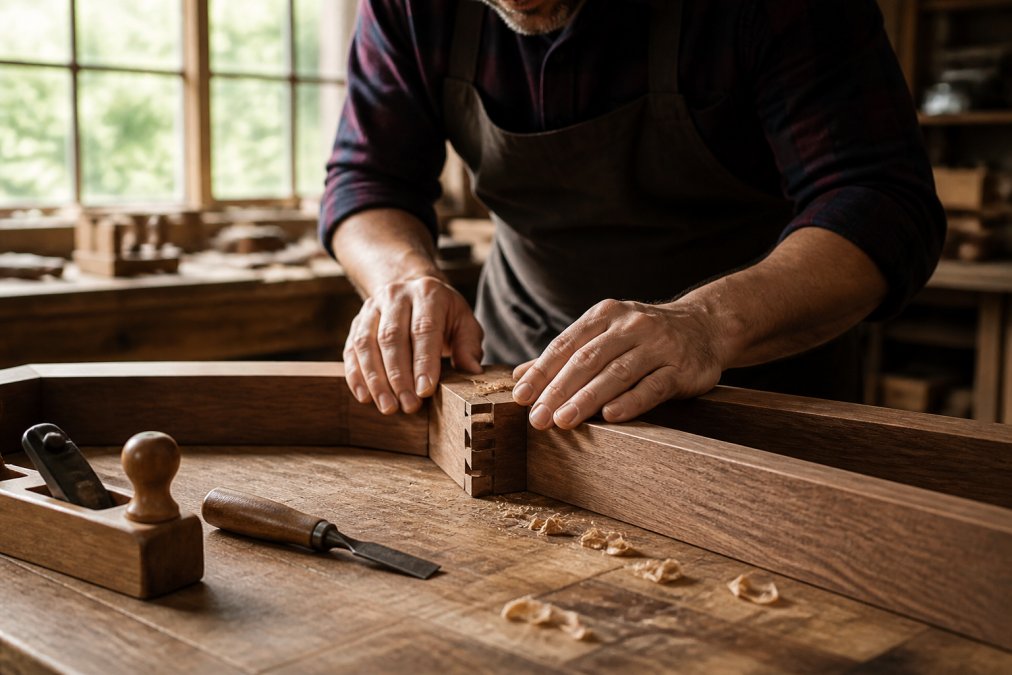
A mass-produced item is designed for manufacturability first, aesthetics second. A crafted piece is designed for function and beauty, with manufacturability as a constraint. A crafted wooden shelf aligns wood grain with structure, distributes weight efficiently, and enhances the material. A mass-produced shelf prioritizes speed and cost.
The difference shows in longevity. Crafted items often improve with age, wood develops patina, finishes deepen, joints become more stable. Mass-produced items degrade. Veneer peels, particleboard swells when wet, finishes chip and reveal cheap substrate.
Design integrity means the piece does what it's supposed to do without compromises. A curated storage system actually solves the storage problem. A curated lighting fixture illuminates properly. These results come from someone thinking through the actual use case and refusing to ship it until it worked.
How to Spot Quality Home Decor Worth the Investment
Quality indicators exist at multiple levels and learning to spot them saves you from paying premium prices for items that don't deliver.
Start with materials. Run your hand across the surface. Quality materials feel intentional. Wood should feel solid with consistent grain. Fabric should have weight and texture. Metal should be smooth without sharp edges. Leather should be supple, not stiff or cracking.
Examine joints and seams, where mass production cuts corners most aggressively. Lift a chair and look underneath. Are joints reinforced? Do screws or bolts secure the frame, or is it just glued? Curated furniture typically uses multiple fastening methods.
Check the finish. Quality finishes are applied in multiple thin layers. Run your fingernail gently across an edge, does it feel smooth and even, or chip easily? Look at how the finish handles corners and crevices.
Weight matters more than people realize. Curated pieces often weigh more because they use denser materials and more substantial construction. That density usually signals better materials and construction methods.
Look for details that serve no purpose except quality, reinforced stress points, finished undersides, protective felt pads, careful edge work. Their presence signals someone cared about how the piece would perform over years.
Ask about materials sourcing. Curated producers can usually answer questions about where wood came from, whether fabric is natural fiber, and whether dyes are non-toxic. Check the warranty or return policy. Confidence in quality shows up in generous policies.
Material Sourcing and Sustainable Home Goods Pricing
Better materials cost more. Sustainable materials often cost significantly more than conventional alternatives because they're produced at smaller scale.
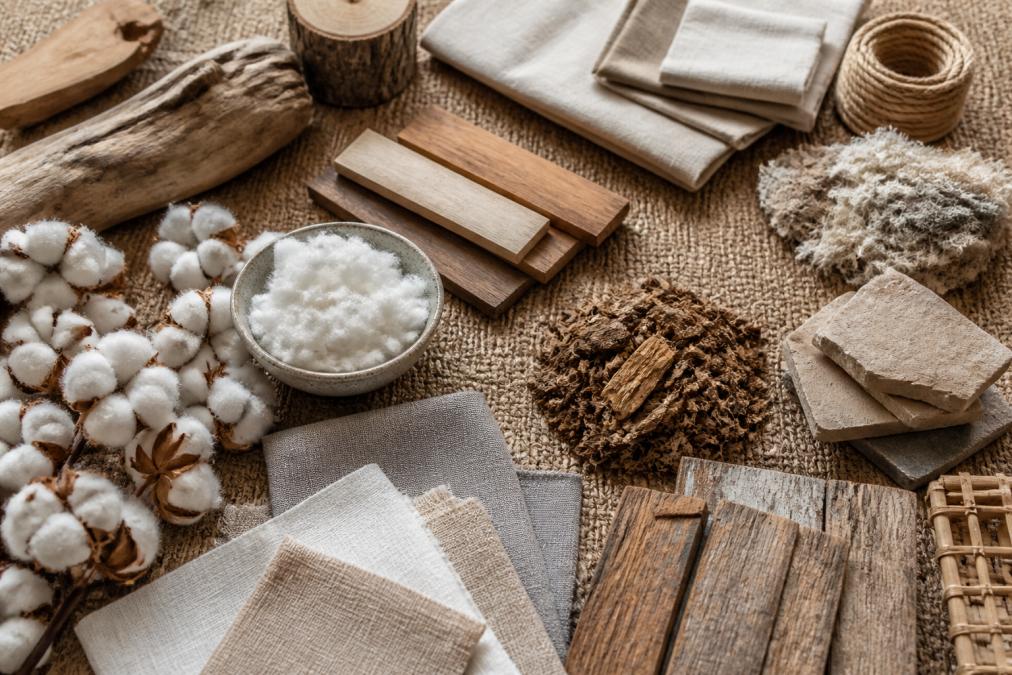
Organic cotton requires different farming practices, certification, and typically lower yields per acre. Reclaimed wood sourcing requires infrastructure, identifying sources, negotiating recovery, transporting materials, and processing them for reuse. Fair-trade certification requires verification. Ethical manufacturing requires higher wages and better working conditions.
Material quality affects longevity. A natural fiber fabric might cost three times more than polyester but lasts five times longer. A solid wood piece costs more than veneer but can be refinished multiple times. When you calculate cost per year of use, the premium often shrinks or disappears.
Supply chain transparency is increasingly expensive. A company that can tell you exactly where every material came from, who made it, and under what conditions has invested in tracking systems, verification, and documentation.
Ethical Labor and Fair Wages Behind Higher Prices
Labor is the largest cost component in curated home goods, and ethical labor practices are expensive by design.
Fair wages in manufacturing are fundamentally incompatible with mass-market pricing. A worker earning $15 per hour cannot produce items at the same cost as a worker earning $2 per day. That wage differential is the primary reason mass-produced goods cost so little.
Curated producers often pay significantly higher wages because they're committed to ethical sourcing or operate in higher-wage markets. They also employ fewer workers per item because they're optimizing for quality, not speed.
Benefits and working conditions add cost. A factory providing health insurance, safe working conditions, reasonable hours, and job security spends more per worker than one that doesn't. Skill-based labor commands premium wages. A craftsperson who spent years learning their trade costs more per hour than an assembly line worker.
Curated producers typically maintain stable workforces because consistency matters to quality. Stable employment means higher total labor costs because you're paying people year-round. The ethical supply chain is also more expensive to verify and maintain through audits, certifications, and documentation systems.
Finding Quality Alternatives to Mass-Market Options
Not every quality option is expensive, and not every expensive option is quality.
Start by understanding your actual needs. You don't need curated home goods for everything, you need them for pieces that matter most to your daily life. Look for emerging brands and designers. New designers with strong quality standards often price lower because they're building reputation.
Buy directly from makers when possible. A craftsperson selling directly might charge 40% less than the same piece through a retailer. Consider secondhand curated goods. A used piece from a quality brand often outperforms a new mass-produced equivalent.
Buy fewer, better pieces. Instead of buying five cheap throw pillows, buy one excellent one. Instead of replacing a mass-produced shelf every three years, buy one curated shelf that lasts fifteen. Invest in versatility, a modular shelving system costs more initially but serves more purposes.
Learn to evaluate quality yourself rather than relying on price as a proxy. Examine materials, construction, design, and longevity.
Lifecycle Cost Analysis: Why Investment Pieces Pay Off
The true cost of any home good is the total cost spread across the years you own it.
A $100 mass-produced chair lasting three years costs $33 per year. A $400 curated chair lasting fifteen years costs $27 per year. The curated version is cheaper per year of use, even though the upfront cost is four times higher.
Replacing the mass-produced chair five times over fifteen years involves not just purchase cost but time, effort, disposal, and disruption. The curated chair sits in your home for fifteen years, requiring only occasional maintenance.
Maintenance costs matter. A quality wooden piece might need refinishing every ten years. A mass-produced particleboard piece can't be refinished, you replace it. Curated pieces often retain significant resale value because they're durable and timeless. A $400 chair in good condition might sell for $200 used.
Environmental cost is harder to quantify but real. A piece you keep for fifteen years has lower environmental impact per year than a piece you replace five times. Manufacturing, transportation, and disposal all carry environmental costs.
Curated home goods cost more upfront, but lifecycle analysis often shows they're cheaper per year of use, more environmentally responsible, and more aesthetically satisfying over time.
Understanding why curated home goods cost more reveals that the premium isn't arbitrary, it's the result of intentional choices about materials, labor, production methods, and design. WowHaul approaches home goods with this philosophy: we select pieces that solve real problems, use quality materials, and stand up to actual use over years. That selectivity means higher prices than mass-market alternatives, but it also means you're buying something designed to last, function beautifully, and earn its place in your home. Explore our curated collection and discover practical finds that simplify your daily life without compromise.
Frequently Asked Questions
What factors contribute to the higher price point of curated home goods?
Curated home goods cost more due to several interconnected factors. Artisan-made items require skilled labor and longer production timelines than mass-produced alternatives. Sustainable materials and ethical sourcing add to raw material costs. Small-batch production means higher per-unit overhead since tooling and setup costs are spread across fewer items. Design exclusivity and limited production runs preserve aesthetic longevity and uniqueness. Finally, quality assurance and supply chain transparency require investment that mass-market retailers skip to hit lower price points.
How does sustainable home goods pricing compare to conventional options?
Sustainable home goods typically cost 20-40% more than conventional mass-produced items. This premium reflects eco-friendly material sourcing, responsible manufacturing practices, and supply chain transparency. Sustainable goods often use durable raw materials that last longer, reducing lifecycle costs. While the initial acquisition cost is higher, the price-to-value ratio improves over time because these items resist trends and maintain functional quality for years. Intentional design and ethical manufacturing also mean less waste in production, costs the maker absorbs rather than passing to consumers through cheaper bulk production.
Is there a difference in durability between mass-market and curated home items?
Yes. Curated home decor typically outperforms mass-produced goods in durability and aesthetic longevity. Mass-produced items are engineered for rapid replacement and trend cycles, using cheaper materials and assembly methods. Curated goods prioritize raw material quality, construction standards, and timeless design, meaning they resist damage and style obsolescence longer. Investment pieces often improve with age or use, while fast decor deteriorates quickly. Over a 5-10 year period, curated items deliver better value despite higher upfront costs because replacement cycles are longer and satisfaction remains consistent.
How can you tell if a home decor item is worth the investment?
Evaluate quality indicators: check raw material composition and sourcing transparency, examine construction details for signs of craftsmanship, and research the maker's production methods and labor practices. Look for design integrity, does the piece serve a functional purpose or follow intentional aesthetic principles rather than chasing trends? Read reviews for durability reports and longevity. Consider the price-to-value ratio by calculating lifecycle cost: divide the item's price by expected years of use. Grounding pieces that complement multiple design styles offer better value than trendy accent items. Finally, verify the maker's commitment to quality assurance and ethical manufacturing rather than relying on retail markup alone.
This article was written using GrandRanker