

Table of Contents
- The Real Reasons Home Organization Fails
- Decluttering Habits for Busy Families That Actually Stick
- Best Home Organization Tools for Small Spaces
- A Decluttering Checklist for Beginners: Start Here
- Psychological Barriers That Sabotage Maintenance
- How to Build a Maintenance Routine That Lasts
- Frequently Asked Questions
Last Updated: September 12, 2026
The Real Reasons Home Organization Fails
Most home organization fails for one reason: people buy storage before they remove anything. The bins, baskets, and labels arrive first, and the clutter simply gets rearranged into tidier piles. This guide from WowHaul breaks down why systems collapse and what actually fixes them, whether you're working with a single closet or an entire apartment.
The pattern repeats in households everywhere. A frustrated weekend, a shopping trip, a shelf that looks great for three weeks, then a slow slide back to chaos. The problem was never a lack of containers. It was the order of operations.
Buying Bins Before Decluttering
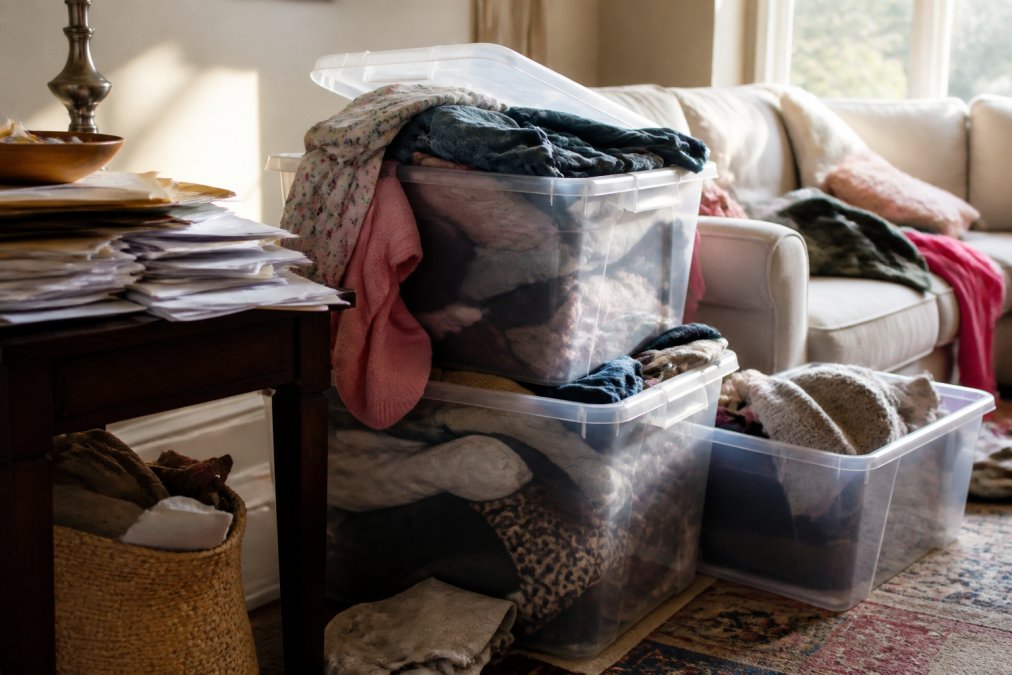
Purchasing organizational products too early is the most common mistake in home organization (napo.net). Bins lock you into a storage volume before you know what you actually own, so the system is sized for the clutter rather than your real inventory. A common approach is to sort and purge first, measure second, and buy containers last. That sequence alone prevents most of the waste.
The Container Store Syndrome
Container Store syndrome describes the trap of believing the right product will solve a behavior problem. A drawer divider cannot fix a habit of dropping keys on the counter. In practice, the fix is a landing zone by the door, not a prettier drawer. Overfilling storage spaces is the same failure wearing a different shirt.
Decluttering Habits for Busy Families That Actually Stick
Decluttering habits for busy families work only when they fit inside an existing routine. Ten minutes attached to something you already do, like the after-dinner kitchen wipe-down, beats a three-hour Saturday session you'll dread and skip. The goal is repetition, not intensity.
The 10-Minute Daily Reset
A daily reset is a short, timed pass through one zone, not the whole house. Set a timer, pick a single area, and return every item to its home. Many families find that pairing the reset with an existing cue, such as the kids' bedtime, makes the habit stick without willpower. Skip the timer and the task expands to fill the evening.
Best Home Organization Tools for Small Spaces
The best home organization tools for small spaces maximize vertical storage and zone organization rather than adding more floor-level containers. In a small apartment, wall height and door backs are your unused real estate. Think in zones: entry, kitchen, bath, sleep. Each zone gets its own storage logic.
Vertical Storage and Zone Organization
Vertical storage means using wall height, over-door space, and stacking shelves instead of floor area. Zone organization assigns every category a home near where it's used, so items travel less and get returned more often. Labeling supports both: a labeled bin in the right zone removes the decision of where something goes.
A Decluttering Checklist for Beginners: Start Here
A decluttering checklist for beginners should start with one drawer, not one room. Small wins build the decision-making stamina that larger spaces demand. Use this sequence:
- Pick a single drawer or shelf, not a whole room
- Empty it completely onto a clear surface
- Sort into keep, relocate, donate, and discard
- Wipe the empty space before anything returns
- Return only the keep pile, and only what fits
- Label the space if it holds a mixed category
- Repeat tomorrow in an adjacent space
Psychological Barriers That Sabotage Maintenance
Psychological barriers, not storage shortages, cause most organization systems to collapse over time. Decision fatigue and emotional attachment do the heavy lifting here. When you're tired, every stray object becomes a decision, and the brain defaults to "set it down for now."
Decision Fatigue and Emotional Attachment
Decision fatigue is the drop in judgment quality after too many choices in a row (PubMed). Emotional attachment is the pull to keep an item because of who gave it to you or what it cost. Decorating with guilt, keeping things you don't use because discarding them feels like a betrayal, keeps visual clutter in plain sight. Naming the feeling makes the decision easier.
How to Build a Maintenance Routine That Lasts
A maintenance routine lasts when it is small, scheduled, and tied to a cue you already have. Post-organization maintenance is the part most guides skip. Without it, every system decays, not because you stopped caring, but because the routine was designed for a version of you that has more energy, more time, and fewer competing demands than the real one.
Why Maintenance Routines Collapse
Three mechanisms account for most maintenance failures:
- The all-or-nothing trap. A routine that requires a full hour gets skipped entirely on a busy day. A routine that requires ten minutes gets done. The smaller version wins by surviving.
- The invisible-progress problem. Decluttering produces visible results; maintenance produces the absence of results. The brain does not reward "nothing got worse," so the behavior fades without reinforcement.
- The decision tax. Every item without a home is a decision waiting to happen. A routine that requires decisions at every step will fail on the first low-energy day.
The fix is to design for your worst day, not your best one.
The Weekly Maintenance Checklist
Use this as a printable or phone-notes checklist. Check off what you complete; do not aim for a perfect week.
- Daily (10 min): One-zone reset, pick a single surface or drawer and return everything to its home
- Daily (2 min): Clear the entry landing zone before bed
- Weekly (5 min): Empty the "homeless" basket and route each item to a permanent home
- Weekly (15 min): Re-sort one drawer or shelf, not a whole room
- Weekly (10 min): Reset the kitchen counter and one bathroom surface
- Monthly (30 min): Full audit of one zone, purge, relocate, relabel
- Quarterly (60 min): Seasonal swap, rotate clothing, gear, and paper categories
- Annually: Re-run the three-question container test on any bin that has not been opened in six months
| Task | Time | Frequency |
|---|---|---|
| Daily reset of one zone | 10 minutes | Daily |
| Entry landing zone clear | 2 minutes | Daily |
| Empty the homeless basket | 5 minutes | Weekly |
| Re-sort one drawer | 15 minutes | Weekly |
| Kitchen and bath surface reset | 10 minutes | Weekly |
| Full zone audit | 30 minutes | Monthly |
| Seasonal swap | 60 minutes | Quarterly |
Designing for Different Brains
Standard maintenance advice assumes a brain that reliably initiates tasks, remembers routines, and tolerates boredom (the CDC). That assumption fails for a meaningful share of people, including those with ADHD or executive dysfunction. The routine itself is not the problem, the interface between the routine and the brain is.
Adjustments that tend to help:
- Externalize the cue. Do not rely on remembering. Put the reset on a visible timer, a phone alarm with a label, or a physical object placed in your path.
- Shrink the unit. "Reset the kitchen" is too large. "Put the five things on the counter back" is a task the brain can start.
- Add a body double. Doing the reset while on a call or with another person in the room reduces the initiation cost.
- Make it visible. A checklist on the fridge or a whiteboard beats an app you forget to open.
- Allow a skip day without a reset of the streak. Rigid streaks break under one missed day; flexible ones survive.
The One Rule That Matters Most
If you keep only one rule from this section, keep this: never let a maintenance task grow past the time you assigned it. When the ten-minute reset starts turning into a forty-minute reorganization, stop. The routine that survives is the one that stays small enough to repeat tomorrow.
For households managing pets alongside everything else, WowHaul's curated selection of everyday care products and routine-building tools can take one more decision off your plate. The point isn't more stuff. It's fewer daily choices.
Frequently Asked Questions
What is the root cause of clutter?
Clutter builds when items enter your home faster than they leave. The root causes are usually emotional attachment, decision fatigue, and lack of a maintenance routine. Most people organize once, then stop maintaining. Without daily habits like a 10-minute reset, items pile up again within weeks. Addressing the behavior behind accumulation matters more than buying new storage products.
What is the 3-3-3 rule for decluttering?
The 3-3-3 rule works well as a decluttering checklist for beginners. Each session, find 3 items to throw away, 3 items to donate, and 3 items to return to their proper place. It takes about 15 minutes and prevents the overwhelm that stops most people before they start. Repeat daily for two weeks and you will clear a noticeable amount of clutter without dedicating entire weekends.
How do you maintain organization after decluttering?
Maintenance requires a routine, not willpower. Set a daily 10-minute reset where everyone returns items to their zones. Do a weekly 30-minute check of high-traffic areas like the kitchen counter and entryway. Monthly, review one drawer or shelf and purge what you have not used. Decluttering habits for busy families work best when tied to existing routines, such as cleaning up right before bedtime.
What are the best home organization tools for small spaces?
Focus on vertical storage, drawer dividers, and multi-purpose items. Foldable options like a foldable yoga mat or a portable Pilates bar store flat and free up floor space between uses. Over-the-door racks, stackable bins, and under-bed containers add capacity without new furniture. Measure your space before buying anything. The best home organization tools for small spaces are the ones that fit your actual dimensions, not the ones that look good in photos.
Home organization fails because we treat it as a shopping problem when it's a habits problem. WowHaul exists to simplify that gap, with practical finds for everyday living, everyday care products for pets, and items designed for stronger routines. If your systems keep collapsing, start with the routine, not the bins. Explore WowHaul's collection and build a home that stays organized.