

Table of Contents
- Common Causes of Slow Drains
- Diagnose Your Sink Before You Act
- How to Clean a P-trap Properly
- Best Tools for Clearing Sink Clogs
- Preventing Sink Clogs in the Kitchen
- When to Call a Professional Plumber
- Conclusion
Last Updated: August 22, 2026
Common Causes of Slow Drains
A slow-draining sink is almost always caused by a blockage in the drainage system. The most common culprits are hair accumulation, soap scum buildup, grease deposits, and food particles that restrict water flow. Hair clogs are the leading cause in bathroom sinks, wrapping around the pop-up stopper and catching on pipe irregularities. Kitchen sinks face different challenges: grease solidifies as it cools, coating the drain line and progressively narrowing the passage for water.
Less obvious causes include a malfunctioning pop-up stopper, a blocked plumbing vent that disrupts drainage velocity, pipe corrosion in older homes, or a full septic tank. The distinction between a simple surface clog and a deeper pipe obstruction matters because your fix depends on the location. A blockage at the P-trap, the U-shaped bend under your sink, requires different tools than a clog further down the line.
Diagnose Your Sink Before You Act
The biggest mistake homeowners make is jumping to chemical drain cleaners or plumbing snakes without understanding what's actually wrong. A few simple diagnostic steps take five minutes and point you toward the right solution.
Check for visible blockages
Remove the pop-up stopper if your sink has one. Most designs allow removal without tools. Pull out any visible material, you'll often find surprising amounts of buildup here.
Next, look down into the drain opening with a flashlight. Hair clogs often sit just below the drain opening and may be visible from above. Check the overflow hole if your sink has one; if blocked, it can slow drainage.
Test water flow in other fixtures
Turn on water at other sinks in your home and observe how quickly they drain. If only one sink drains slowly, the problem is isolated to that fixture. If multiple sinks drain slowly or toilets are backing up, the issue extends to your main sewer line or septic system.
This test also gauges severity. Does water drain noticeably slower than usual, or has it stopped almost completely? Minor slowdown suggests early-stage buildup; standing water indicates a serious blockage.
Listen for drainage sounds
Normal drainage is relatively quiet. Slow drains often produce a sucking sound or prolonged gurgling, indicating the plumbing vent is struggling to equalize pressure. If you hear nothing and water isn't moving, the blockage is severe.
How to Clean a P-trap Properly
The P-trap is the curved section of pipe directly beneath your sink. It's designed to hold standing water that creates a seal preventing sewer gases from entering your home. This same water traps debris, making it the most common location for blockages.
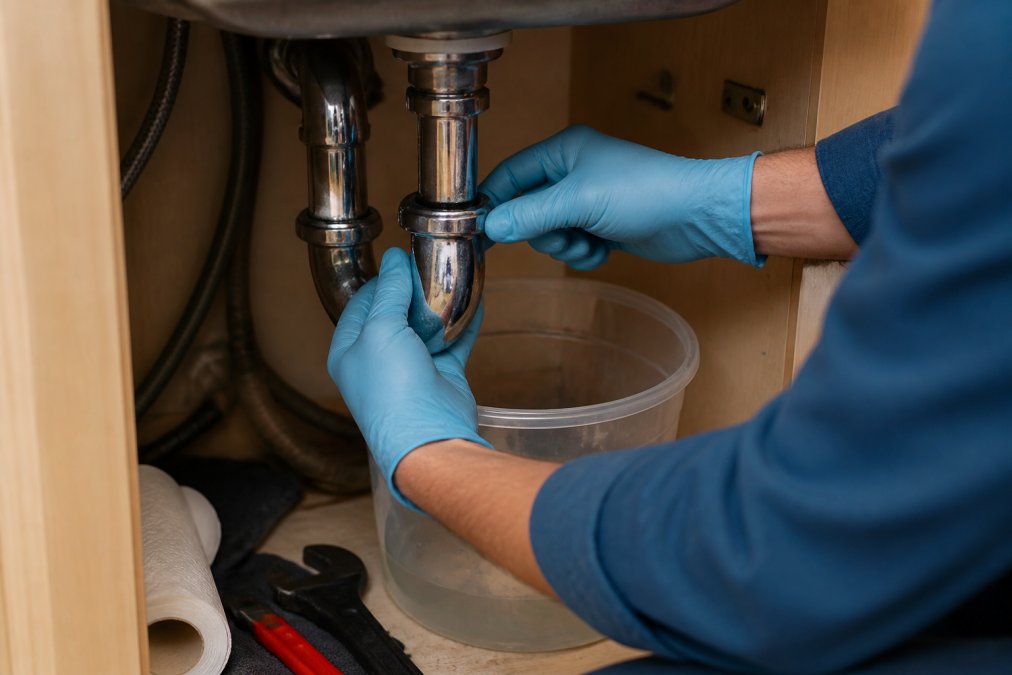
Place a bucket under the P-trap to catch water and debris. Loosen the slip nuts by turning them counterclockwise. You usually don't need a wrench; hand-tightness is sufficient. Once loose, carefully unscrew them by hand and set aside.
Slowly lower the P-trap and let the trapped water drain into your bucket. Inspect the inside of the P-trap; you'll likely see hair, soap scum, and other buildup. Use a plumbing snake or straightened wire coat hanger to push through and dislodge stubborn material. For severe buildup, soak the P-trap in hot water mixed with baking soda for 15 minutes before scrubbing with an old brush.
Rinse the P-trap thoroughly under running water. Reinstall by screwing the slip nuts back into place, hand-tight is correct; over-tightening can crack plastic fittings. Turn on the water and check for leaks. A small drip usually means the slip nuts need another quarter-turn tightening.
Best Tools for Clearing Sink Clogs
Different blockage locations require different tools. The right tool for your situation depends on where the clog is located and how severe the blockage has become.
Plunger technique for quick results
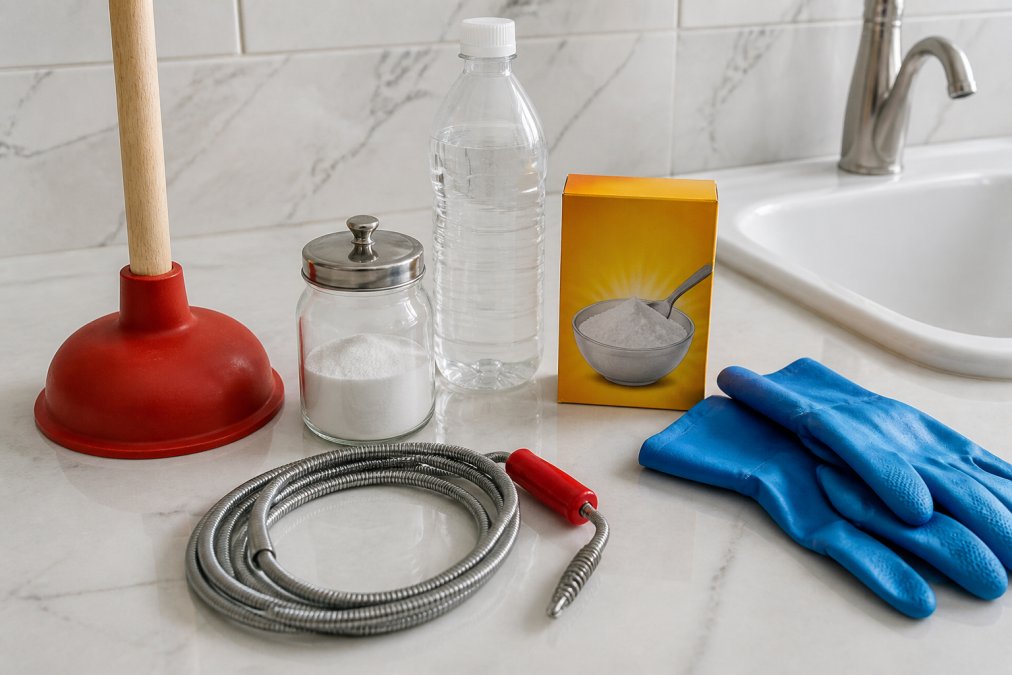
A plunger works by creating pressure that dislodges blockages near the drain opening. It's most effective for clogs in the first few feet of the drain line. Fill the sink with enough water to cover the plunger cup completely. Position the plunger directly over the drain opening and push down firmly, then pull up quickly. Repeat this pumping motion 15-20 times without breaking the seal.
If your sink has an overflow hole, cover it with a wet cloth during plunging to prevent air from escaping. Most clogs respond within a minute or two. If nothing moves after 20 attempts, the blockage is deeper or too solid for plunger pressure alone.
Plumbing snake for deeper blockages
A plumbing snake, also called a drain auger, is a flexible metal cable that pushes through the drain line to break up or retrieve blockages. It works on clogs that plungers can't reach and handles tougher obstructions like grease buildup and mineral deposits. Most hardware stores sell manual snakes ranging from 15 to 50 feet long; 25 feet is usually sufficient for residential sinks.
Feed the snake down the drain slowly, turning the handle as you push. You'll feel resistance when the snake encounters the blockage. Keep turning and pushing to break through it. Once you've pushed past the obstruction, pull the snake back out slowly while continuing to turn the handle. After using the snake, run hot water through the drain for a minute to flush away loosened material.
Natural cleaning methods with baking soda and vinegar
Baking soda and vinegar create a chemical reaction that can dissolve soap scum and break down mineral deposits without harsh fumes (peer-reviewed research). This method works best for partial blockages and preventative maintenance.
Pour half a cup of baking soda directly down the drain, followed by half a cup of white vinegar. Cover the drain opening with a plug or wet cloth to keep the reaction contained. Leave it undisturbed for 30 minutes, then flush with hot water. For stubborn buildup, repeat this process or let the mixture sit overnight.
Preventing Sink Clogs in the Kitchen
Kitchen sinks face unique challenges because grease and food particles create blockages that accumulate over time. Grease cools and solidifies as it moves through the drain line, coating the interior walls and progressively narrowing the passage for water flow (the EPA).
Never pour grease, cooking oil, or fat directly down the drain. Instead, let it cool and solidify, then scrape it into the trash. Wipe pans with paper towels before washing them to remove excess grease. Use a drain catch, a simple mesh basket that sits in the drain opening, to trap food particles before they enter the drain line. Empty it after each use.
Run hot water through the drain for 30 seconds after washing dishes. The heat helps dissolve any grease residue, flushing it further down the line where it's less likely to accumulate. Once a month, use the baking soda and vinegar method as preventative maintenance. This dissolves early-stage buildup before it becomes a serious problem.
When to Call a Professional Plumber
Some situations require professional expertise and equipment. Knowing when to stop troubleshooting and call a plumber saves time and prevents damage to your plumbing system.
Call a plumber if water backs up into multiple fixtures simultaneously. This indicates a blockage in your main sewer line, which requires professional equipment to locate and clear. If you've tried plunging, P-trap cleaning, and snaking without success, the blockage is either deeper than your tools can reach or caused by something unusual like a collapsed pipe section or tree root infiltration.
Persistent slow drains that return within days or weeks despite your efforts suggest a systemic issue rather than simple debris accumulation. This might be inadequate venting, improper pipe slope, or deteriorating pipes. If your home has a septic system and multiple drains are slow, your tank may be full and require pumping.
Conclusion
A sink draining slowly is frustrating, but it's almost always fixable with the right approach. Start by diagnosing the problem: checking for visible blockages, testing other fixtures, and listening to drainage sounds tells you exactly what you're dealing with. Most clogs respond to simple solutions like removing the pop-up stopper and cleaning the P-trap.
When basic cleaning doesn't work, the right tool makes all the difference. A plunger works for surface clogs, a plumbing snake tackles deeper blockages, and natural methods with baking soda and vinegar dissolve buildup without harsh chemicals. Prevention through simple habits, never pouring grease down the drain and using a drain catch, eliminates most kitchen sink clogs before they start.
At WowHaul, we understand that home maintenance is about choosing practical solutions that actually work. The tools and methods covered here represent what experienced homeowners have found most effective. When a clog requires professional expertise, don't hesitate to call a plumber. Start with diagnosis, apply the right solution for your specific problem, and maintain your drains regularly to keep water flowing freely.
Frequently Asked Questions
Why is my sink draining slowly but there is no visible clog?
A slow-draining sink without a visible blockage often points to a venting problem or mineral buildup inside the pipes. Your plumbing system needs air to flow through the vent stack to maintain proper drainage velocity. If the air admittance valve is blocked or the vent line is obstructed, water moves sluggishly even though no debris blocks the drain line. Mineral deposits from hard water can also restrict water flow. Try the baking soda and vinegar method first to dissolve buildup, then check that your vent isn't blocked by leaves or debris.
Can a blocked vent pipe cause a slow sink drain?
Yes. Your plumbing vent allows air into the drainage system, which creates the pressure needed for water to flow freely. When a vent pipe becomes blocked, water drains slowly or makes gurgling sounds because air can't enter the system. Common vent blockages include bird nests, leaves, or ice buildup. If multiple drains in your home are slow, the main vent stack is likely blocked. This requires a professional to inspect and clear safely from the roof.
How do I fix a slow draining sink quickly?
Start with a plunger, it's the fastest first step for most clogs. Fill the sink with a few inches of water, place the plunger over the drain, and pump vigorously 15-20 times. If that doesn't work, try baking soda and vinegar: pour half a cup of baking soda down the drain, follow with vinegar, let it sit for 30 minutes, then flush with hot water. For stubborn blockages, a plumbing snake can pull out hair clogs and soap scum. If none of these work after 2-3 attempts, call a plumber to rule out deeper issues like sewer line problems.
When should I call a professional plumber for a slow drain?
Call a plumber if multiple drains in your home are slow, if DIY methods don't work after 2-3 attempts, if you hear persistent gurgling sounds, or if water backs up into other fixtures. Also call if you suspect a sewer line issue (signs include slow drains throughout the house, foul odors, or wet spots in the yard) or if you're unsure about your plumbing vent system. A professional can diagnose venting problems, pipe corrosion, and deeper blockages that DIY tools can't reach.
This article was written using GrandRanker