

Table of Contents
- What to Look For in Laundry Stain Removers for Baby Clothes
- Comparison Table: Sprays, Powders, and Liquids for Baby Stains
- How to Remove Set-In Baby Stains: A Step-by-Step Method
- Removing Yellow Stains from Stored Baby Clothes
- Safe Laundry Practices for Newborn Skin
- Cost-Per-Load Analysis: Which Stain Remover Saves Money?
- Fabric-Specific Safety and Allergy Testing for Baby Clothes
- Conclusion
- Frequently Asked Questions
Last Updated: September 27, 2026
What to Look For in Laundry Stain Removers for Baby Clothes
The best laundry stain removers for baby clothes lift breast milk, formula, and blowout stains without leaving harsh residues that irritate newborn skin. The right pick comes down to two things: what's in the bottle and what it does to fabric over time.
Baby skin is thinner and more absorbent than adult skin, so residue left in the fibers matters more than most parents realize, a remover that lingers can undo your best intentions.
Below, we'll break down the two factors that separate a smart buy from a regret, then show you how to use whatever you choose.
Ingredient Safety and Skin Sensitivity
Hypoallergenic, fragrance-free, and dye-free formulas are the safest starting point. Fragrance is a common trigger for contact irritation, and dyes add color with zero cleaning benefit.
Look for plant-based surfactants and enzymatic cleaners. Enzymes break down protein-based stains like breast milk and formula at the molecular level, meaning less scrubbing and agitation on delicate fabric.
A common mistake is assuming "gentle" on the label means safe for newborns. It doesn't. Read the ingredient list instead.
Fabric Integrity and Color Safety
Organic cotton, bamboo, and muslin lose strength with repeated chlorine bleach exposure. Chlorine-free, color-safe formulas protect white and printed baby clothes in the same load.
Enzyme-based removers are generally safe for cotton and synthetics, but wool and silk need a gentler approach. Check the care tag before soaking anything you'd hate to ruin.
One insider note: hot water sets protein stains permanently.
Comparison Table: Sprays, Powders, and Liquids for Baby Stains
Each format solves a different problem, and the right pick depends on where the stain is, how old it is, and how much fabric you're treating. Sprays suit fresh spot cleaning, powders shine in the wash cycle, and liquids handle soaking and pre-treating.
| Format | Best For | How to Use | Watch Out For | Cost Signal |
|---|---|---|---|---|
| Spray | Fresh spit-up, small spots, diaper bag emergencies | Mist, wait 5-10 minutes, wash | Can leave residue if over-applied; propellant formulas may be thinner | |
| Powder | Full loads, odor control, hard water | Add to wash drum or dispenser | Less effective as a direct pre-treat; can clump in cold water | |
| Liquid | Soaking, set-in stains, direct pre-treating | Dilute in water or apply directly | Measure carefully; more isn't better |
How to Remove Set-In Baby Stains: A Step-by-Step Method
Set-in stains need patience, not force. This method works on dried formula residue, breast milk stains, and blowout stains.
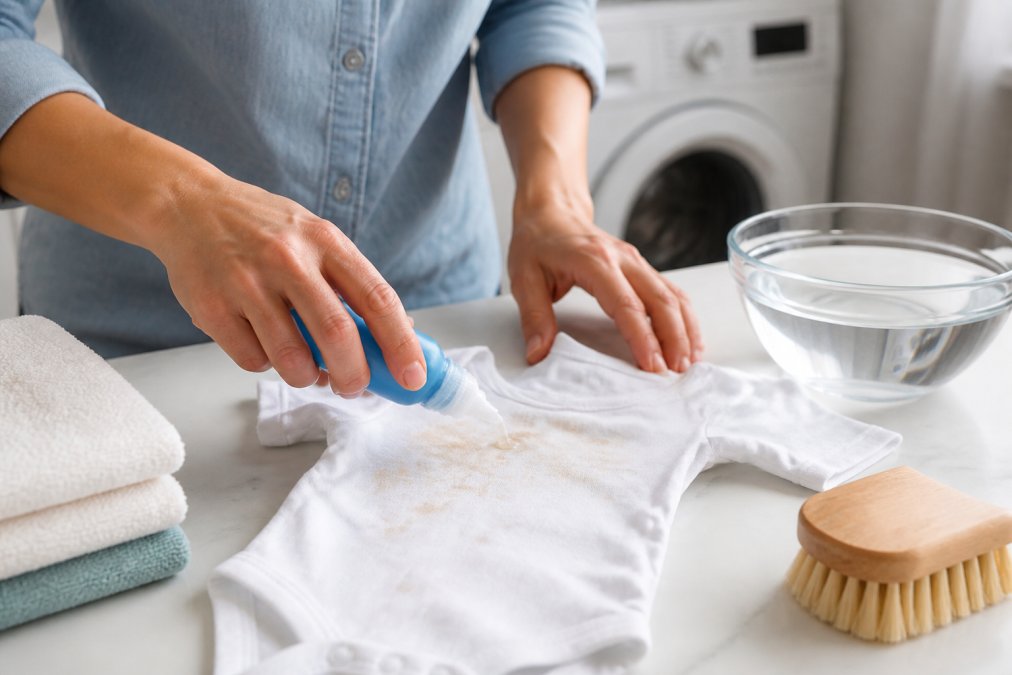
- Scrape off any solids with a soft brush. Never rub, which pushes the stain deeper.
- Rinse under cold water from the back of the fabric to push the stain out.
- Apply a liquid enzymatic remover directly to the stain and let it sit for 15 minutes.
- Soak in cold water with a scoop of oxygen booster for 30 minutes to 2 hours.
- Wash on a gentle cycle with a fragrance-free detergent.
- Check before drying. Heat sets anything the wash missed.
Pre-Treating and Soaking Techniques
Pre-treat within 24 hours when you can; the longer a stain sits, the more protein bonds to the fiber. A vinegar solution rinse (one part white vinegar to four parts cold water) helps break down formula residue before the main wash.
Removing Yellow Stains from Stored Baby Clothes
Yellowing on stored baby clothes usually comes from leftover milk or formula residue oxidizing over time, not from dirt. The fix is a long, gentle soak followed by sunlight.
Sun Bleaching and Oxygen Boosters
Sun bleaching is one of the most effective, chemical-free ways to lift yellow stains. After washing, lay damp items flat in direct sunlight for a few hours. UV light breaks down the compounds causing the yellow tint.
Safe Laundry Practices for Newborn Skin
Safe laundry practices for newborn skin come down to three habits: separate loads, a fragrance-free detergent, and a double rinse. Newborn skin reacts to residue more than to any single ingredient.
- Wash baby items separately from adult clothes for the first few months
- Choose dermatologist-tested, non-toxic formulas when available
- Run an extra rinse cycle to flush out detergent
- Skip fabric softener and dryer sheets entirely
- Use the laundry cycle labeled gentle or delicate
Cost-Per-Load Analysis: Which Stain Remover Saves Money?
Cost per load matters more than sticker price, because concentrated formulas use far less per wash. A pricier bottle that treats twice as many loads is often the cheaper option.
Fabric-Specific Safety and Allergy Testing for Baby Clothes
Not every remover suits every fabric, and not every baby tolerates every formula. Match the product to the fabric first, then test on skin, the step most guides skip, and the one that saves the most onesies from the rag bin. Investing in durable baby clothing brands ensures that these garments withstand the repeated wash cycles necessary to keep them clean and stain-free.
How Different Fibers React to Stain Removers
Organic cotton and muslin are the most forgiving, tolerating enzymatic liquids, oxygen boosters, and gentle agitation. The main risk is mechanical, not chemical, repeated scrubbing with a stiff brush breaks down the weave and creates pilling that traps future stains. Use a soft brush or your fingertips.
A Patch-Test Protocol for Sensitive Skin and Eczema
If your baby has eczema, a history of contact dermatitis, or unusually reactive skin, a fabric-and-skin patch test is worth the extra day. Here's a workable protocol:
- Pick one garment you can afford to sacrifice, a plain white onesie is ideal.
- Dilute the product to the strength you'd actually use in a wash (follow the label; don't guess).
- Apply to an inside hem or the inside of a sleeve, where it won't show.
- Wash and dry the garment exactly as you would a normal load, same detergent, same cycle, same dryer setting.
- Place it against your baby's skin for a few hours during a normal wake window. The inner forearm, back, or thigh works well.
- Watch for redness, bumps, or dryness over the next 24 hours. A reaction can be delayed.
Matching the Remover to Your Baby's Age and Mess
The stains change as your baby grows, and so should your approach. Newborn messes are almost entirely milk-based, breast milk, formula, and spit-up. These protein stains respond best to cold water and enzymatic cleaners; hot water sets them permanently.
Conclusion
Getting baby stains out for good takes the right formula and a little patience, not a cabinet full of products. WowHaul offers a curated selection of practical finds designed to simplify your everyday living. From essential care for your pets to products that help you build stronger, more efficient routines, we focus on quality solutions for your home. Discover items that bring ease and happiness to your daily life through our thoughtfully selected collection.
Frequently Asked Questions
What is the best laundry stain remover for baby clothes?
The best option is a fragrance-free, dye-free enzymatic cleaner or oxygen-based powder that targets protein and fat stains. For newborn skin, choose a product labeled hypoallergenic and dermatologist-tested. Always test on a hidden area first. Sprays work well for quick pre-treating, while powders are better for soaking set-in stains. There is no single best for every family; match the formula to the stain type and your baby's sensitivity.
How do you get very old stains out of baby clothes?
For old stains, start with a warm water soak using an oxygen-based powder for at least 30 minutes, then apply an enzymatic cleaner directly to the stain and let it sit for 15 minutes before washing. If the fabric is white and color-safe, a diluted hydrogen peroxide solution or a vinegar solution can help. Avoid chlorine bleach on baby clothes. Repeat the process if the stain persists, and always check the garment before drying.
Why do baby clothes get yellow stains after storage?
Yellow stains often come from formula residue, breast milk, or spit-up left on fabric that wasn't fully removed before storage. Over time, these protein and fat residues oxidize and turn yellow. Storing clothes in hot, humid areas makes it worse. To prevent this, wash thoroughly with an enzymatic cleaner before storing, and use oxygen boosters when you pull them out. Sun bleaching can also help fade yellowing on white cotton.
Are enzyme-based cleaners safe for newborn skin?
Enzyme-based cleaners are generally safe for newborn skin when they are fragrance-free, dye-free, and thoroughly rinsed. Enzymes break down protein and fat stains without harsh chemicals. However, some babies with sensitive skin may react to residual enzymes. Choose products labeled hypoallergenic and dermatologist-tested, use the recommended dose, and run an extra rinse cycle. If you notice irritation, switch to a plant-based or oxygen-based alternative.
Stain removal doesn't have to be a science project every time a onesie comes out of the nursery. WowHaul offers practical finds for everyday living, from care essentials to products designed for stronger routines, so you can stock one drawer and stop second-guessing. Explore WowHaul's collection and build a laundry routine that actually holds up.