

Table of Contents
- What Makes a Laundry Sorter Work for Families
- How to Organize Laundry for Large Families
- Heavy Duty Laundry Sorter With Wheels: What You Need
- Laundry Room Organization Tips for Maximum Efficiency
- Durability and Material Quality: Long-Term Wear Testing
- Space-Saving Designs and Ergonomic Considerations
- Choosing the Right Sorter for Your Family's Needs
Last Updated: August 29, 2026
What Makes a Laundry Sorter Work for Families
A laundry sorter for families is a multi-compartment storage system designed to separate and organize clothing by color, fabric type, or family member before washing. The best models combine durable construction, adequate capacity, and thoughtful design features that make laundry workflows faster and more efficient for households managing multiple loads per week.
For families, the right sorter does more than just hold dirty clothes. It prevents color-bleeding mistakes, reduces the time spent sorting at the washing machine, and keeps your laundry room or utility space organized even when laundry piles up. Many families find that a dedicated sorter eliminates the chaos of clothes scattered across floors or overflowing hampers, which means fewer arguments about whose turn it is to do laundry and less stress on everyone involved.
The best laundry sorters for families 2026 share several key characteristics: they accommodate multiple loads simultaneously, use breathable fabrics to prevent mildew and odor buildup, feature sturdy frames that handle heavy use, and include wheels or handles for easy movement. At WowHaul, we focus on practical home solutions that actually simplify daily routines, and choosing the right sorter is one of the highest-impact organization decisions a busy household can make.
How to Organize Laundry for Large Families
Organizing laundry for large families requires a system that separates clothes efficiently while accommodating the sheer volume most households generate. The most effective approach divides loads by color (whites, darks, colors) and fabric type (delicates, towels, regular wear), which prevents laundry mistakes and protects garments from premature wear.
Start by assigning each family member a compartment or color-coded section of your laundry sorter. This approach works especially well for households with teenagers who can manage their own laundry sorting. When each person knows where their clothes go, the responsibility shifts from one person managing everything to a shared system where everyone participates. Many families find this reduces the total laundry burden significantly.
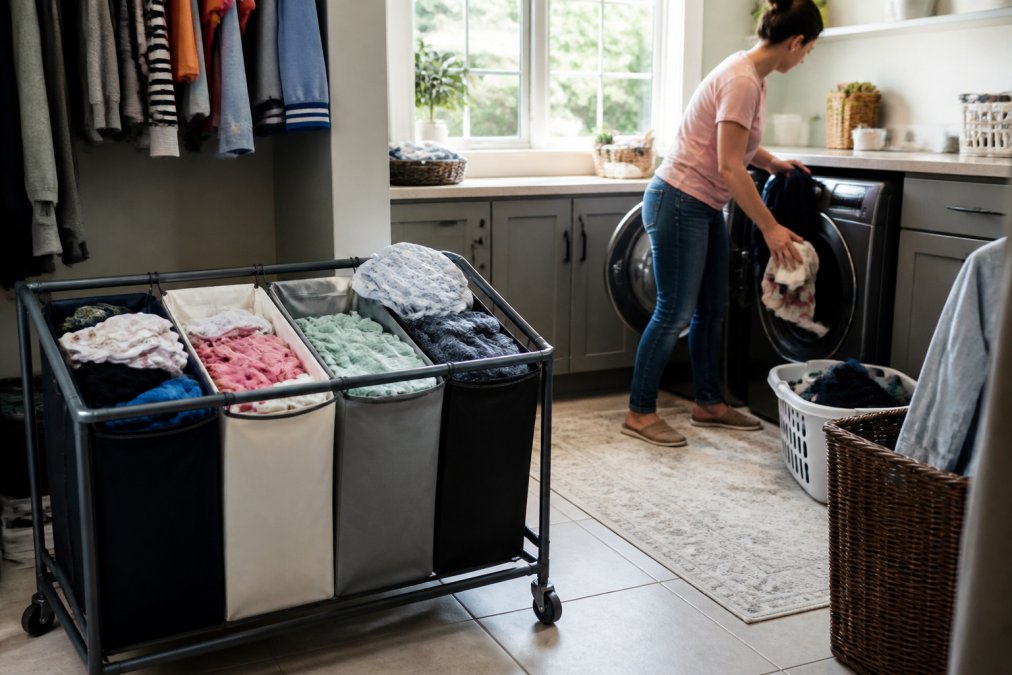
The physical placement of your sorter matters more than most people realize. Position it near the bedroom hallway or bathroom where family members naturally undress, not in a back corner of the laundry room. When the sorter is convenient and visible, people actually use it instead of dropping clothes on the floor. A sorter with wheels gives you flexibility to move it closer to where clothes accumulate during different seasons or life changes.
For households with young children, use visual labels or pictures on compartments rather than relying on written text. This removes the barrier to participation and teaches organizational skills early. Pair your sorter with a simple rule: clothes go into the sorter immediately, not into a pile that gets sorted later. The time savings compound quickly when you eliminate the sorting step entirely.
Heavy Duty Laundry Sorter With Wheels: What You Need
A heavy duty laundry sorter with wheels handles the weight and frequency demands of large households without sagging, tipping, or showing wear after months of daily use. The frame must support multiple full compartments simultaneously, which means solid construction materials and reinforced joints matter far more than aesthetics.
Look for sorters with frames made from steel or heavy-gauge plastic that resists bending under load. The compartments themselves should use breathable fabric that allows air circulation to prevent moisture and odor accumulation. Polyester blends work well because they resist staining, dry quickly if they get wet, and withstand repeated washing without deteriorating. Avoid thin materials that tear easily or trap moisture against the frame.
The wheels are critical. Casters that swivel smoothly and lock securely prevent the sorter from rolling unexpectedly when you're loading or unloading. Many families prefer wheels that lock both horizontally and vertically, giving you stability when stationary and easy maneuverability when moving the unit. Wheels rated for at least 200 pounds of load capacity ensure they won't fail under the weight of multiple full compartments.
Handles should be positioned at heights that work for adults of different sizes. A common mistake is purchasing a sorter with handles positioned too low, which forces you to bend awkwardly when moving it. The best designs include handles on multiple sides, allowing you to push, pull, or carry the sorter depending on your space and physical capability.
Laundry Room Organization Tips for Maximum Efficiency
Beyond the sorter itself, your laundry room layout determines whether your system actually works or becomes another source of clutter. The most efficient setups position the sorter between where dirty clothes accumulate and where you start the washing machine, creating a natural workflow that requires minimal movement.
Dedicate shelf space above or beside your sorter for sorting supplies: stain remover, color-catching sheets, and delicate wash bags. When these items are immediately accessible, you're more likely to treat stains before washing and properly protect delicate items. Many people skip this step and regret it when expensive clothes get damaged.
Install a small trash bin next to your sorter for lint, tags, and items that shouldn't go into the wash. This prevents debris from accumulating inside compartments and keeps your sorting area cleaner. The bin should be small enough to fit in tight spaces but large enough that you're not emptying it constantly.
Consider the humidity and temperature of your laundry space. Sorters stored in damp basements or unventilated closets can develop mildew even with breathable fabric. Improve air circulation with a small fan or by leaving the sorter in an open area when not in active use. If your laundry room is particularly humid, you might add moisture-absorbing packets inside compartments during off-season storage.
Create a simple rule system that everyone in the household understands. Post a small chart showing which compartment is for which load type. The visual reminder takes seconds to create but saves hours of confusion and prevents color-bleeding disasters that require re-washing entire loads.
Durability and Material Quality: Long-Term Wear Testing
The difference between a sorter that lasts two years and one that lasts eight comes down to material quality and construction details that aren't always obvious during purchase. Frame materials matter most because they support the entire weight of wet laundry, which is significantly heavier than dry clothes.
Steel frames with powder-coat finishes resist rust and corrosion better than bare metal, especially in humid laundry spaces (nist.gov). The finish should be thick enough that minor dings don't expose bare metal underneath. Heavy-gauge plastic frames work well in dry environments but can become brittle over time if exposed to temperature fluctuations or direct sunlight.
The fabric used for compartments experiences constant stress from being stretched over frames, filled with heavy loads, and sometimes wrung out when wet. High-quality polyester blends maintain their shape and integrity far longer than cheaper materials that sag or tear after a few months of heavy use (peer-reviewed research). Seams should be reinforced with double stitching, and stress points where fabric attaches to the frame should use reinforced stitching or metal grommets.
Wheels and hardware are often the first components to fail on budget sorters. Casters made from high-quality plastic or rubber roll smoothly and don't flatten under weight. Cheap wheels become sticky or develop flat spots that make movement difficult. Locking mechanisms should engage smoothly without requiring excessive force, which indicates quality construction that will continue functioning after years of use.
Test the sorter's stability by pushing on the top corners when it's fully loaded. Quality models resist tipping and don't wobble, while cheaper options feel unstable immediately. This isn't just a comfort issue; an unstable sorter is a safety hazard in households with children or aging family members.
Space-Saving Designs and Ergonomic Considerations
Families living in apartments, condos, or homes with limited laundry space need sorters that maximize capacity without consuming excessive floor space. Vertical designs that stack compartments upward rather than spreading them sideways work well for narrow laundry closets or utility corners.
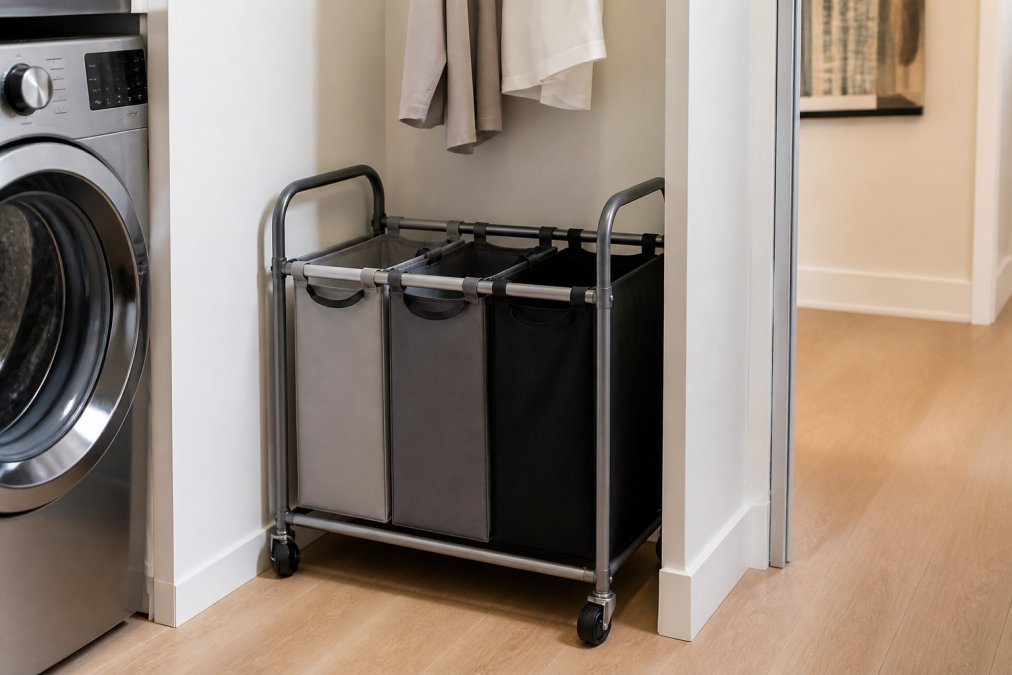
Collapsible designs offer flexibility for households where laundry space is shared or seasonal. Some sorters fold flat when not in use, allowing you to store them in a closet and pull them out only during peak laundry seasons. This works especially well for college students or families with variable household sizes throughout the year.
Ergonomic design becomes increasingly important for aging family members or anyone with back or mobility concerns. Handles positioned at waist height reduce strain when loading and unloading. Some sorters feature angled compartments that tilt slightly forward, eliminating the need to reach deeply into the unit. Wheels with smooth-rolling casters mean less force is required to move full loads, which matters significantly for people with limited upper body strength.
The height of the sorter affects usability more than most people realize. A unit that's too tall requires reaching overhead to access top compartments, while one that's too short forces excessive bending. The ideal height positions the middle compartment at approximately waist level, making all sections accessible without strain. For households with multiple adults of different heights, adjustable compartment positions offer a practical solution.
Weight distribution matters for stability and ease of movement. Sorters that concentrate weight in the lower compartments are more stable and easier to maneuver than those with heavy upper sections. This design principle is especially important for households with children who might bump into the sorter or for spaces where the unit sits on uneven flooring.
Choosing the Right Sorter for Your Family's Needs
The right laundry sorter for families depends on your household size, laundry volume, available space, and physical capabilities of the people using it. A family of three generates fundamentally different laundry demands than a family of six, which affects compartment size and total capacity requirements.
Start by estimating your weekly laundry volume. Most families generate 4-6 loads per week, though larger households might need 8-10 loads (the CDC). A good sorter should accommodate at least three full loads simultaneously without overflowing. If you frequently run more loads than this, either choose a larger model or consider using two smaller sorters positioned side by side.
Evaluate your space constraints realistically. Measure your available floor space, doorway width, and ceiling height. A sorter that barely fits through your laundry room door becomes a permanent fixture that you can't rearrange. Similarly, a unit that reaches nearly to the ceiling creates storage problems and makes accessing top compartments difficult. Leave at least 12 inches of clearance on all sides for comfortable movement and loading.
Consider who will actually use the sorter. If young children participate, choose designs with clearly labeled compartments and lightweight construction that won't cause injury if tipped. If aging family members use it, prioritize ergonomic features and smooth-rolling wheels. If teenagers manage their own laundry, a system with individual compartments per person creates accountability and reduces overall household laundry burden.
Budget for quality over the lowest price. A sorter that costs 40% more but lasts twice as long is actually the cheaper option over time. The most expensive models often include features you don't need, but the cheapest options frequently fail within a year or two of heavy use. The sweet spot is usually in the mid-range of available options, where quality materials meet practical design without excessive premium pricing.
Test the sorter's stability and movement before purchasing if possible. Push on the frame to check for wobbling. Roll it across different floor types to confirm the wheels move smoothly. Lift a compartment to assess weight distribution. These quick checks reveal whether the sorter is built to handle real-world family use or just looks good on display.
Choosing the right laundry sorter transforms how your family manages one of the most time-consuming household tasks. The best models combine durable materials, thoughtful design, and practical features that actually simplify daily routines. At WowHaul, we understand that busy families need solutions that work reliably day after day, and a quality laundry sorter is one of the highest-impact organization investments you can make. Look for models with heavy-duty frames, breathable compartments, smooth-rolling wheels, and ergonomic handles that accommodate everyone in your household. When you choose a sorter that matches your family's actual needs and space constraints, laundry becomes faster, cleaner, and less stressful for everyone involved.
Frequently Asked Questions
Q: What features should I look for in a heavy-duty laundry sorter?
A: Prioritize a sturdy frame, removable and washable liners, rolling casters for portability, and multiple compartments for sorting by color and fabric type. Look for moisture-resistant materials to prevent odor buildup and hinged lids for easy access. Breathable fabric allows air circulation, reducing mildew.
Q: How do large families effectively manage laundry volume?
A: Implement a sorting system that divides loads by fabric type, color, and care instructions before washing. Use multi-compartment laundry sorters to establish this workflow from the moment clothes are removed. Assign each family member a designated compartment or color-coded section. This approach reduces sorting time at the washer and prevents color bleeding or fabric damage. Pair your sorter with a laundry room layout that positions the sorter between bedrooms and the washer for natural traffic flow.
Q: Are multi-compartment laundry sorters worth the investment?
A: Yes, for families of four or more. Multi-compartment sorters can help reduce daily sorting time at the washer. They can also help reduce fabric damage from improper sorting and prevent color bleeding. Sorters with removable liners add convenience, you can carry entire sections directly to the washer without transferring clothes. For small households or apartments, a single or dual-compartment sorter may be sufficient.
Q: How should I choose the right laundry sorter for a small laundry room?
A: Measure your available floor space before purchasing and choose collapsible or compact designs that don't block access to appliances. Look for sorters with wheels so you can move them aside when needed. Vertical storage options maximize space without expanding your footprint. Confirm the sorter fits your doorways and hallways during delivery. Consider wall-mounted or over-the-washer designs if floor space is severely limited. Prioritize load capacity over compartment count, two large compartments work better than four cramped ones in tight spaces.
This article was written using GrandRanker