

Table of Contents
- Best Lightweight Vacuum for Hardwood Floors: Quick Comparison
- What Makes a Vacuum Safe for Hardwood Floors?
- Cordless Stick Vacuum for Hardwood: Why It Wins
-
Key Features to Look For in a Lightweight Vacuum
- Soft Roller Technology: Material Matters
- The Brush Roll Switch: A Hardwood Safety Essential
- Suction Control: The Unseen Protector
- Filtration: The Difference Between Clean and Cleaned
- Ergonomics: The Hidden Spec
- The Cost of Convenience: Batteries and Replacement Parts
- Noise: The Uncomfortable Trade-Off
- Best Lightweight Vacuum for Seniors: Ease of Use Matters
- How to Clean Hardwood Floors Without Scratching
- Conclusion: Choosing the Right Lightweight Vacuum
- Frequently Asked Questions
Last Updated: September 6, 2026
Protecting hardwood floors from scratches while keeping up with daily debris is a constant balancing act. The best lightweight vacuum combines gentle contact with strong suction, and ideal models weigh under 8 pounds with soft roller brushes.
Best Lightweight Vacuum for Hardwood Floors: Quick Comparison
The best lightweight vacuum for hardwood floors prioritizes a soft roller floorhead over traditional bristle brushes. A soft roller is a fabric-wrapped cylinder that glides across sealed wood without scratching while still lifting dust and pet hair.
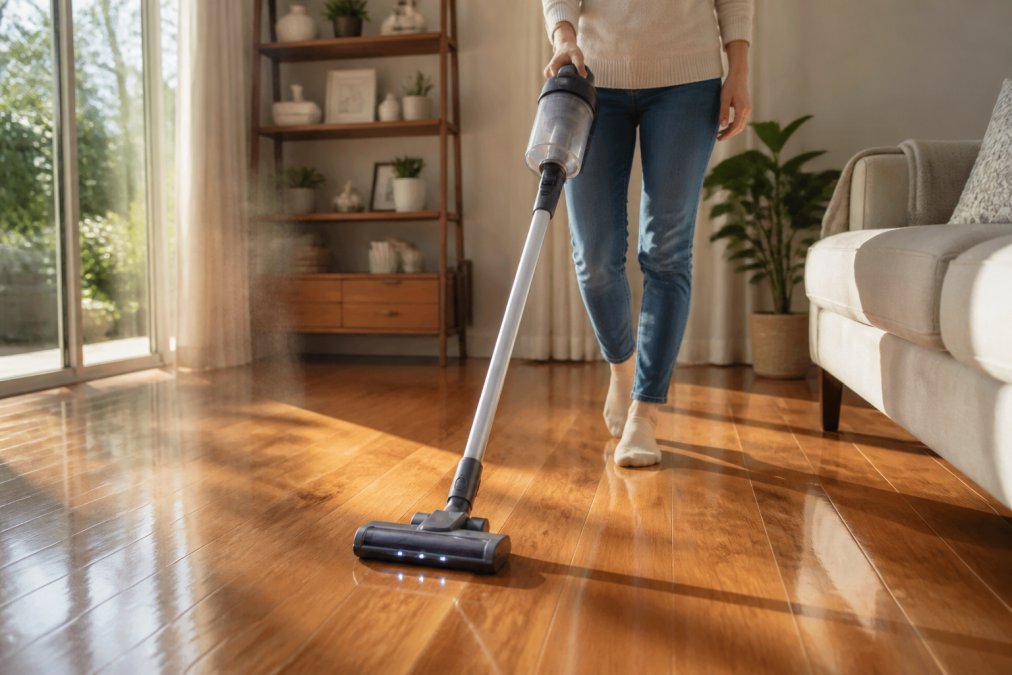
Here is how the main contenders stack up on the criteria that matter most for wood surfaces:
| Model Type | Weight Range | Floorhead Type | Best For |
|---|---|---|---|
| Cordless Stick | 5-7 lbs | Soft roller | Quick daily pickups |
| Corded Stick | 6-9 lbs | Soft roller | Longer sessions, no battery worry |
| Lightweight Canister | 8-11 lbs | Floor nozzle with brush on/off | Deep cleaning under furniture |
| Compact Upright | 8-10 lbs | Soft roller with hard floor setting | Multi-surface homes |
What Makes a Vacuum Safe for Hardwood Floors?
A vacuum is safe for hardwood floors when it uses a soft roller or a floor nozzle with a brush that can be turned off, paired with suction that does not require aggressive beater bars. The beater bar, a spinning bristle brush found on many carpet-focused uprights, is the main culprit behind scratches and finish wear. A lightweight vacuum designed for hard floors either omits this part or allows you to disable it.
Suction power still matters, but it needs to be controlled. Excessively high suction on a bare floor can suck up area rugs or make the vacuum hard to push. Look for adjustable suction or a dedicated hard floor mode that reduces airflow slightly while maintaining enough pull to capture fine dust. According to guidance from the National Wood Flooring Association, routine vacuuming with the correct floorhead is essential to prevent grit from grinding into the finish, which is the leading cause of premature dulling.
Cordless Stick Vacuum for Hardwood: Why It Wins
For most households, a cordless stick vacuum is the most practical daily tool because it removes the friction of finding an outlet. You grab it from a wall mount, clean the kitchen and entryway in three minutes, and hang it back up. This convenience translates to more frequent cleaning, which protects your floors from scratch-causing grit.
Battery life and runtime are the trade-offs to watch. Most cordless models offer 30 to 60 minutes of run time on a full charge, but that number drops significantly on high-power mode. If you have a large home, check the runtime on the turbo setting, not just eco mode. Charging time varies, with some models needing three hours to recharge, so consider a second battery if daily cleaning is your goal.
Key Features to Look For in a Lightweight Vacuum
A lightweight vacuum should weigh no more than 8 pounds to qualify as truly easy to use, especially for stairs. But weight alone is a misleading metric. The real differentiators are in the engineering details that determine whether a machine protects your finish or degrades it.
Soft Roller Technology: Material Matters
The soft roller floorhead is not a single technology, it is a category with meaningful material differences. Most premium models use a plush, tightly woven microfiber sleeve that traps fine dust while gliding. Cheaper models often use a felt-like material that mats down over time, leaving a film of dust behind. Look for a roller that is removable and washable; a non-removable roller will harbor bacteria and odors within months, and replacing the entire floorhead is far more expensive than swapping a sleeve.
The Brush Roll Switch: A Hardwood Safety Essential
A dedicated hard floor mode that stops the brush roll entirely is a feature many cordless models now offer, but it is not universal. On a bare hardwood floor, a spinning brush, even a soft one, can fling debris into baseboards and kick fine grit into the air. The safest configuration is a floorhead with a physical switch or app setting that halts the roller completely, relying on suction alone. This is particularly important for delicate finishes like oil-rubbed or hand-scraped wood.
Suction Control: The Unseen Protector
Raw suction power is a marketing number, not a hardwood safety metric. Most cordless vacuums generate between 20 and 50 air watts. Look for a model with at least two suction modes and a floorhead with a bleed valve or air passage that reduces lift on hard floors.
Filtration: The Difference Between Clean and Cleaned
HEPA filtration is frequently cited, but the nuance is in the sealing. A vacuum with a HEPA filter but poor gasketing around the dust bin will leak fine particles back into the room. Look for models that advertise a fully sealed system, not just a HEPA filter. For households with allergies, this is the difference between vacuuming and redistributing dust. Washable filters save money but must be fully dried before reuse to prevent mold growth.
Ergonomics: The Hidden Spec
The most overlooked feature is the angle of the handle and the position of the motor. A vacuum that is light on paper can feel heavy if the motor sits high, creating torque that strains the wrist. The best lightweight designs place the battery low, near the floorhead, and the motor just above it, keeping the center of gravity close to the ground.
The Cost of Convenience: Batteries and Replacement Parts
Before purchasing, check the price of a replacement battery and the availability of replacement rollers. Models with standard, interchangeable batteries can be cheaper to maintain than those with proprietary, glued-in cells.
Noise: The Uncomfortable Trade-Off
Finally, consider noise output. Many lightweight vacuums use high-speed motors that produce a high-pitched whine, more fatiguing than the lower-frequency hum of a larger canister motor. If you have pets or young children, a quieter model (under 70 decibels) will cause less stress and allow you to clean at times when a louder machine would be disruptive.
A vacuum that checks all these boxes, soft, washable roller; brush stop; suction control; sealed HEPA; balanced weight; and reasonable replacement part costs, is the one that will protect your floors and your budget over the long term.
Best Lightweight Vacuum for Seniors: Ease of Use Matters
A lightweight vacuum for seniors must prioritize trigger-free operation and minimal bending. Many cordless stick vacuums now feature a one-touch power button that locks on, eliminating the need to hold a trigger continuously, which can fatigue arthritic hands. Total weight matters less than the effort required to push and pull, so look for models with powered floorheads that drive the brush forward.
Consider the height of the handle and the angle of the floorhead. A vacuum that requires you to bend your wrist or lean forward will cause back strain quickly. Upright and stick designs with adjustable handles are easier on the spine than canisters that require pulling a hose. For seniors who struggle with stairs, a model that converts to a handheld unit removes the need to carry the full machine.
How to Clean Hardwood Floors Without Scratching
To clean hardwood floors without scratching, vacuum frequently with a soft roller attachment and reserve wet mopping for occasional deep cleans. The most common mistake is letting visible debris sit until the weekend, allowing grit to embed into the finish with every footstep. Daily vacuuming prevents this abrasion cycle.
The finish on a hardwood floor is not permanent; it is a sacrificial layer designed to take the abuse so the wood underneath does not. Understanding how your vacuum and mopping habits interact with that finish is key to avoiding a costly refinishing job.
The Finish Matters: Not All Hardwood Is the Same
A factory-finished floor with a multi-layer aluminum oxide finish is far more resistant to scratching than a site-finished floor with oil-based polyurethane, and both are more durable than an oil-rubbed or waxed finish. Oil-rubbed finishes are softer and more porous, absorbing water and oils, and are easily dulled by any abrasive contact. For these floors, a vacuum with a brush roll that can be completely stopped is mandatory, even a soft roller can leave micro-scratches over time.
The Real Cost of Abrasion: A 5-Year Calculation
Consider the economics. A vacuum with a stiff bristle brush, used weekly, can create visible micro-scratches on a soft finish over time. The cost of a quality soft-roller vacuum can be a worthwhile investment if it helps prevent premature refinishing.
The Hidden Cost of Wet Mopping
Wet mopping is another area where long-term costs hide. Every time you use a soaking wet mop, you risk forcing water into the seams between boards. Over time, this causes the wood to swell, the finish to crack, and the boards to cup. The safest approach is to use a barely damp microfiber pad and to dry the floor immediately if you see standing water.
The pH Balance Trap
Many commercial hardwood cleaners are pH-neutral, but not all are safe for all finishes. Some contain solvents that can strip oil-based finishes or leave a residue that attracts dirt. Flooring contractors often recommend a simple solution of water and a few drops of dish soap for most finishes, but avoid any cleaner with vinegar, which is acidic and will dull a finish over time. Always test any cleaner in an inconspicuous area, such as inside a closet, before using it on the main floor.
The Grit Cycle: Why Doormats Are a Financial Tool
Every particle of grit that enters your home is a tiny piece of sandpaper. A high-quality doormat that traps grit can reduce the abrasive load on your finish.
The Maintenance Schedule That Protects Your Investment
A realistic maintenance schedule for a home with hardwood floors is:
- Daily: Sweep or vacuum high-traffic areas with a soft roller (2-3 minutes).
- Weekly: Vacuum the entire floor area, including under furniture, with a soft roller.
- Monthly: Damp-mop with a barely damp microfiber pad and a pH-neutral cleaner.
- Quarterly: Inspect the finish for dull spots or scratches, and address any issues before they worsen.
- Annually: Consider a professional inspection to assess finish wear and recommend any touch-up work.
This schedule is not about perfection, it is about preventing the accumulation of grit and moisture that causes the majority of finish damage.
Resources on wood floor maintenance from the American Hardwood Information Center reinforce that consistent, gentle cleaning is the cheapest way to protect your investment.
Conclusion: Choosing the Right Lightweight Vacuum
Selecting the best lightweight vacuum comes down to matching the machine to your home's size, your physical needs, and your tolerance for maintenance. A cordless stick with a soft roller is the default recommendation for most households, while corded models suit larger homes where battery anxiety is a real concern. For seniors or anyone with joint pain, prioritize trigger-free operation and balanced weight distribution over raw suction numbers.
Remember that no vacuum replaces good habits. Daily sweeping or vacuuming prevents the grit buildup that causes most scratches, and routine care extends the life of your wood finish significantly. Resources on wood floor maintenance from the American Hardwood Information Center reinforce that consistent, gentle cleaning is the cheapest way to protect your investment.
At WowHaul, we curate practical home tools that simplify daily routines, from pet hair management to efficient cleaning systems. Our focus is on products that genuinely make your home easier to maintain, not clutter that adds to your workload. Discover items that bring ease and happiness to your daily life through our thoughtfully selected collection.
Frequently Asked Questions
What kind of vacuum should you use on hardwood floors?
Use a vacuum with a soft roller or a hard floor setting that turns off the brush roll. Hard bristle brushes can scratch wood finishes. A lightweight vacuum with a dedicated floor nozzle or soft roller head is safest. Look for models with rubber wheels rather than hard plastic ones to prevent scuffs and marks on your floors.
Are stick vacuums effective for hardwood floors?
Yes, cordless stick vacuums are highly effective on hardwood floors. They provide strong suction power, are lightweight and easy to maneuver, and often include soft roller heads designed for hard surfaces. For quick daily cleanups and pet hair, they match or outperform heavier canister models while being much easier to store and carry.
What is the lightest vacuum for seniors?
Look for cordless stick models with ergonomic handles and a low center of gravity to reduce wrist strain. Features like swivel steering and a trigger-style power control help seniors clean without bending or reaching. Always check the weight distribution, not just the total weight.
How do I prevent scratches when vacuuming hardwood floors?
Prevent scratches by using a vacuum with a soft roller floorhead and checking for debris stuck in the brush. Turn off the brush roll on hard floor settings if your model has one. Keep the wheels clean and avoid using vacuums with worn-out bristles. Vacuum at least twice a week to remove grit and sand that acts like sandpaper on your finish.