

Table of Contents
- Why Pet Allergies Feel Worse Than They Should
- The Real Source of Allergies: It's Not the Fur
- How to Reduce Pet Dander in the Home: A Room-by-Room Plan
- Best Air Purifiers for Pet Dander: What to Look For
- Grooming Protocols That Minimize Allergen Spread
- Over-the-Counter Allergy Relief for Pet Owners
- Debunking Hypoallergenic Pet Myths
- When to See an Allergist for Long-Term Management
- Frequently Asked Questions
Last Updated: September 5, 2026
Why Pet Allergies Feel Worse Than They Should
Living with pet allergies often feels like choosing between your health and your companion. Managing pet allergies is not about giving up your pet; it is about strategically reducing your exposure to the allergens that trigger your symptoms.
Allergens are persistent and microscopic, clinging to soft surfaces and settling into carpets long after your pet has left the room. This guide from WowHaul breaks down practical, room-by-room strategies that cut your allergen load without turning your life upside down.
Allergic rhinitis, or hay fever, occurs when your immune system overreacts to proteins found in pet dander, saliva, and urine. The goal of allergy management is to reduce these airborne particles and surface proteins to a level your body can tolerate.
The Real Source of Allergies: It's Not the Fur
Pet allergies are triggered by proteins, not hair. The primary culprits are proteins found in a pet's dander (dead skin cells), saliva, and urine. When your pet grooms, saliva proteins dry on the fur and flake off as micro-dander, becoming airborne and settling throughout your home.
This is why short-haired or hairless breeds still cause reactions. These proteins are incredibly small and can remain airborne for hours, which is why you might feel symptoms even in a room your pet hasn't entered recently.
All pets produce these proteins to some degree. Your management strategy must focus on controlling the spread of dander, saliva, and urine allergens, not on eliminating fur.
Understanding Pet Dander, Saliva, and Urine Proteins
Dander flakes are the most common trigger and are easily stirred up by movement. Saliva proteins are transferred to fur during grooming and dry into potent airborne allergens. Urine allergens are less common but can be significant, particularly with cats and small rodents like hamsters.
Because you cannot see these proteins, consistent removal is key. Regular bathing of your pet, washing of bedding, and vacuuming are the most effective ways to physically remove them from your environment.
How to Reduce Pet Dander in the Home: A Room-by-Room Plan
A whole-house approach is the most effective way to reduce pet dander. Allergens travel on your clothes and through the air, so the best strategy combines creating barriers with a consistent cleaning rhythm.
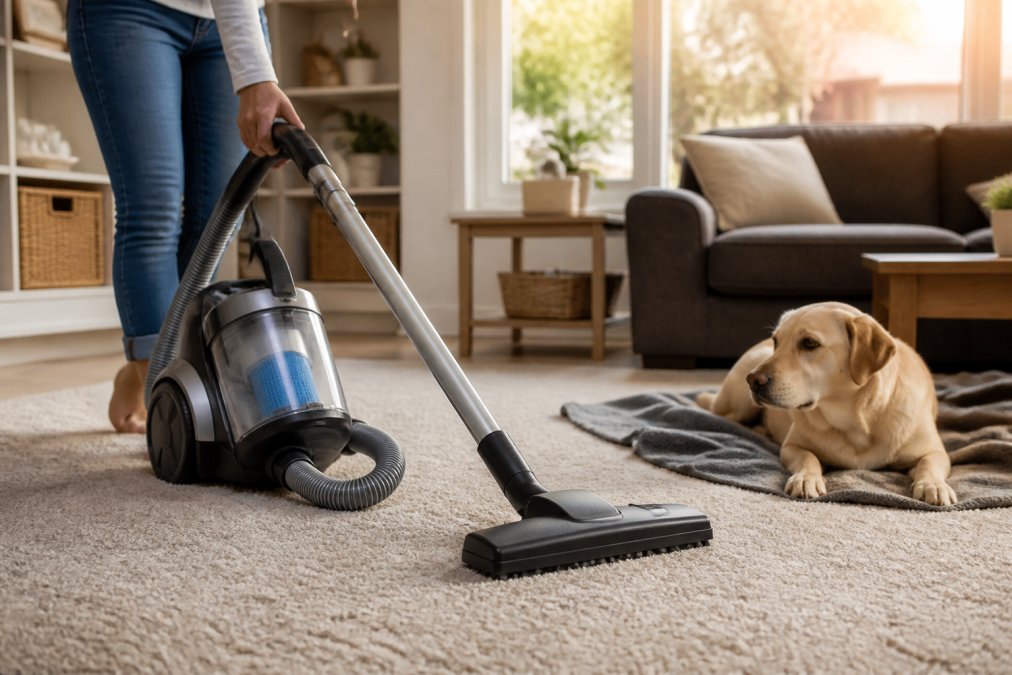
Start with the spaces where you spend the most time. If you can keep your pet out of the bedroom, you give your body eight hours of reduced exposure, which can significantly lessen your symptoms overnight.
Creating Pet-Free Zones That Actually Work
Designating pet-free zones is one of the most effective preventative measures you can take. The bedroom is the most critical area to keep off-limits. Closing the door and using a HEPA air purifier in this room creates a low-allergen retreat where you can sleep and recover.
You must be consistent; allowing your pet in "just for a few minutes" reintroduces dander that can linger for weeks. Invest in a comfortable pet bed for the hallway or living room so your pet has a designated space that feels like a treat.
Cleaning and Vacuuming Strategies That Cut Allergen Load
Cleaning is your first line of defense, but only if done correctly. Standard vacuuming can blow micro-dander back into the air, so you need a vacuum with a HEPA filter that traps particles rather than recirculating them.
Vacuum at least twice a week in high-traffic areas, paying special attention to upholstered furniture. Wash your pet's bedding weekly in hot water, and use allergen-proof covers on your mattress and pillows to create a barrier against dander.
For hard floors, use a damp mop rather than a dry sweep. Steam-clean upholstery a few times a year to pull deeply embedded allergens out of couches and chairs.
Best Air Purifiers for Pet Dander: What to Look For
The most critical specification is a true HEPA filter, a standard defined by the U.S. Department of Energy that captures at least 99.97% of particles at 0.3 microns (energy.gov). Pet dander flakes range from 5 to 10 microns, while the protein allergens clinging to them can be much smaller, which is why the 0.3-micron rating matters. Avoid units labeled "HEPA-type" or "HEPA-like," as these will not effectively trap the microscopic proteins that trigger your symptoms.
You also need to match the purifier's power to your room using the Clean Air Delivery Rate (CADR), measured in cubic feet per minute. Look for a CADR at least two-thirds of your room's square footage; a 200-square-foot bedroom benefits from a smoke CADR of at least 130. For larger, open-concept areas, you may need a CADR of 300 or higher, or two strategically placed units.
Placement is just as important as the specs. Do not tuck the purifier behind a couch or in a corner; it needs unobstructed airflow. Position it where your pet spends the most time, at least a foot away from walls, and near your bed in the bedroom for the cleanest air while you sleep.
Maintenance is non-negotiable. Most manufacturers recommend replacing the HEPA filter every 6 to 12 months, but this depends on usage and the number of pets in your home. If yours lacks a filter indicator, hold a piece of paper near the air intake; if it does not pull strongly, the filter is likely clogged. Set a recurring reminder to check and replace it per the manufacturer's schedule.
Grooming Protocols That Minimize Allergen Spread
Regular grooming is one of the most direct ways to manage pet allergies. The goal is to physically remove protein-laden dander and dried saliva from the coat before they become airborne.
The Bathing Science: Bathing your pet once a week with a gentle, pet-safe shampoo can reduce airborne allergen levels (PubMed). Use lukewarm water and let the shampoo sit for at least five minutes to break down oils and proteins. If weekly baths are not practical, a bi-weekly bath is still beneficial, but over-bathing can dry out skin and increase dander production.
The Wipe-Down Alternative: For days between baths, a daily wipe-down with a damp microfiber cloth or pet-safe wipe physically removes loose dander and dried saliva. Focus on the face, neck, and chest, where saliva proteins concentrate, to cut down on allergens your pet sheds.
The Brushing Protocol: Brush your pet outdoors in a contained area; brushing indoors launches dander into your air supply. Wear a NIOSH-approved N95 mask and disposable gloves, place loose fur directly into a sealed trash bag, and wash your hands and face immediately (the CDC). Do not bring the brush inside without cleaning it first.
The Diet and Supplement Connection: The condition of your pet's skin directly influences how much dander they shed. A diet rich in omega-3 fatty acids, found in fish oil supplements or high-quality pet foods, can improve skin barrier function and reduce flaking. Always consult your veterinarian before adding supplements, as dosages depend on your pet's weight and health status.
Over-the-Counter Allergy Relief for Pet Owners
Sometimes environmental controls are not enough. Over-the-counter allergy relief typically involves a combination of antihistamines, nasal corticosteroids, and decongestants to manage symptoms like nasal congestion, itchy eyes, and sneezing.
Antihistamines block the histamine your body releases in response to allergens and are most effective when taken before exposure. Non-drowsy formulas are available for daytime use.
Nasal corticosteroids reduce inflammation in the nasal passages and are considered the most effective for controlling nasal allergy symptoms. They work best when used daily, as they take a few days to reach full effect.
Antihistamines, Nasal Corticosteroids, and Decongestants
Antihistamines provide immediate relief of sneezing and itching. Decongestants help with nasal congestion but should not be used for more than a few days in a row. Nasal corticosteroids are for long-term symptom management.
Many people find a combination approach works best, such as a daily nasal corticosteroid paired with an oral antihistamine for breakthrough symptoms. Always consult with a pharmacist or your doctor to ensure these medications are safe for you.
Debunking Hypoallergenic Pet Myths
The idea of a truly hypoallergenic pet is a myth. Breeds like Poodles and certain terriers may shed less fur, meaning fewer allergens are tracked around the house, but they still produce the same allergenic proteins found in dander and saliva.
Research indicates that allergen levels can vary widely between individual animals of the same breed. The best way to know if you can live with a specific dog or cat is to spend time with it in its own environment before committing.
If you are set on getting a pet, choose an adult animal rather than a puppy or kitten. You can assess your reaction to the adult's specific allergen levels, whereas a young animal's coat and dander will change as it matures.
When to See an Allergist for Long-Term Management
If your symptoms are severe, persistent, or not well-controlled with over-the-counter medications, see an allergist. They can perform a skin prick test or blood test to confirm exactly which proteins you are allergic to.
For long-term management, an allergist can discuss immunotherapy, or allergy shots, which involve regular injections of tiny amounts of the allergen to desensitize your immune system. This can significantly reduce your sensitivity, offering a more permanent solution than daily medication.
Seeing a specialist is a proactive step toward sustainable symptom management. If you are constantly battling wheezing, asthma triggers, or severe nasal congestion, a professional can help you build a comprehensive plan.
Living with pet allergies requires a shift from "all or nothing" to consistent, layered management. At WowHaul, we offer a curated selection of practical finds, from HEPA air purifiers to pet grooming tools designed to support your daily routine. Focus on creating pet-free zones, maintaining a consistent cleaning schedule, and using the right products to reduce your allergen exposure. Get started with WowHaul and build a home where you and your pets can both breathe easier.
Frequently Asked Questions
Can you live with a pet you're allergic to?
Yes, many people manage pet allergies successfully without rehoming their animals. The key is reducing your total allergen exposure through a combination of strategies: creating pet-free zones, especially in the bedroom, using HEPA air purifiers in main living areas, bathing your pet weekly, and taking over-the-counter allergy relief when symptoms flare. For persistent cases, an allergist can offer prescription options or immunotherapy to build tolerance over time.
What is the best treatment for dog allergies?
The best treatment combines environmental controls with medication. Start by reducing pet dander at the source with regular grooming and HEPA filtration. For symptom relief, second-generation antihistamines like cetirizine or loratadine work well for many people without drowsiness. Nasal corticosteroid sprays are highly effective for congestion and are available over the counter. For severe allergies, allergy shots or sublingual immunotherapy offer long-term desensitization.
How can I reduce pet dander in my house?
Wash pet bedding weekly in hot water, vacuum carpets and upholstery at least twice a week using a vacuum with a HEPA filter, and dust surfaces with a damp cloth to trap allergens rather than spreading them. Run a HEPA air purifier continuously in rooms where you spend the most time. Bathing your pet once a week with pet-safe shampoo can reduce dander. Consider replacing carpet with hard flooring in high-traffic areas.
Do air purifiers help with pet allergies?
Yes, air purifiers with true HEPA filters are one of the most effective tools for managing pet allergies. They capture airborne particles, including pet dander, that are too small to see. For best results, choose a unit sized for your room and run it 24/7. Place it in the bedroom first, since that's where you spend a third of your life. Keep windows closed and run the purifier on high during peak shedding seasons for maximum benefit.
Is there a way to overcome pet allergies completely?
Immunotherapy is the closest thing to a permanent solution. Allergy shots or under-the-tongue drops expose your immune system to tiny, increasing amounts of the allergen over several years, gradually reducing your sensitivity. Many people experience significant improvement. While not everyone becomes completely symptom-free, most find their reactions become manageable or disappear entirely. An allergist can determine if you're a good candidate.
Are hypoallergenic dog breeds actually allergy-free?
No. The term hypoallergenic is misleading. All dogs produce dander, saliva, and urine proteins that trigger allergies. Some breeds shed less, which means fewer allergen-laden hairs spread around your home, but they still produce allergens. Studies have found no scientific evidence that any breed is truly hypoallergenic. What matters more is your individual sensitivity, the dog's size, and how diligently you maintain cleaning and grooming routines.
This article was written using GrandRanker