

Table of Contents
- Eco-Friendly Cleaning vs Traditional Cleaning: The Core Differences
- Health Impacts: What Chemical Exposure Really Means for Your Family
- Indoor Air Quality and Cleaning Products: Volatile Organic Compounds Explained
- Effectiveness: Do Eco-Friendly Products Actually Clean?
- Understanding the EPA Safer Choice Label and What It Means
- DIY Natural Cleaning Recipes vs Store-Bought Options
- Cost, Environmental Impact, and Long-Term Maintenance
- Making the Switch: A Practical Comparison
- Frequently Asked Questions
Last Updated: August 30, 2026
Eco-Friendly Cleaning vs Traditional Cleaning: The Core Differences
The choice between eco-friendly and traditional cleaning isn't just about trends, it's about understanding what ends up in your air, on surfaces, and in water. Traditional cleaners rely on synthetic surfactants and harsh chemicals designed to dissolve dirt quickly, while eco-friendly alternatives use plant-based ingredients and naturally derived surfactants that work through different mechanisms. Traditional cleaners often work faster, while eco-friendly options prioritize safety and environmental impact.
The practical difference comes down to three factors: chemical residue on surfaces after cleaning, airborne emissions during and after application, and environmental impact once the product enters water systems. Traditional products often contain volatile organic compounds (VOCs), phthalates, and phosphates. Eco-friendly formulations typically avoid these, though "natural" doesn't automatically mean safe or effective.
| Factor | Traditional Cleaning | Eco-Friendly Cleaning |
|---|---|---|
| Chemical residue on surfaces | Often leaves residue requiring rinse | Minimal residue, typically biodegradable |
| VOC emissions | Higher, can linger in air | Lower or none |
| Water contamination risk | Phosphates and synthetics persist | Biodegradable, minimal aquatic impact |
| Effectiveness on tough grime | Generally faster acting | Varies by product and application |
| Cost per use | Often lower upfront | Higher per unit, but concentrated formulas offset this |
| Safety for pets and children | Requires caution and ventilation | Generally safer direct contact, still requires care |
The real question isn't which is objectively "better," it's which aligns with your household's priorities and actual cleaning needs.
Health Impacts: What Chemical Exposure Really Means for Your Family
Chemical exposure from household cleaners happens through dermal absorption and inhalation of airborne particles and gases. Traditional cleaners expose families to compounds that accumulate over time, even in small doses.

Synthetic surfactants in traditional cleaners can disrupt skin barriers and irritate respiratory tissues. Ammonia, bleach, and volatile compounds release gases that linger in enclosed spaces. For households with pets, children, or respiratory sensitivity, this matters significantly. The EPA recognizes certain cleaning chemicals as hazardous substances, which is why ventilation is always recommended with traditional products (the EPA).
Eco-friendly cleaners reduce this exposure substantially. Plant-based ingredients like citric acid, vinegar, and essential oils don't accumulate in body tissues the way synthetic chemicals do. However, "natural" doesn't mean consequence-free; some people react to essential oils, and concentrated formulas can still irritate sensitive skin or eyes.
You still need basic safety practices: wear gloves, ventilate the space, keep products away from children and pets, and never mix different cleaners. The difference is one of degree, not absolutes. Regular exposure over months and years shifts the risk calculation significantly. Eco-friendly products reduce this cumulative load substantially.
For families with asthma, eczema, or chemical sensitivities, switching to eco-friendly options often produces noticeable improvements in symptoms.
Indoor Air Quality and Cleaning Products: Volatile Organic Compounds Explained
Volatile organic compounds (VOCs) are chemicals that evaporate at room temperature, entering your home's air as you clean. Traditional cleaning products are significant sources of VOCs. When you spray a window cleaner or scrub with ammonia-based products, you release compounds into the air that can linger for hours or days depending on ventilation.
VOCs contribute to indoor air quality degradation, affecting respiratory function, triggering headaches, and worsening allergies and asthma (the EPA). Children and pets are more vulnerable because they breathe more air per pound of body weight and spend more time indoors.
Eco-friendly cleaners dramatically reduce VOC emissions. Products made with vinegar, baking soda, and essential oils have minimal volatile components. The difference in air quality after switching is often noticeable: less chemical smell, fewer respiratory irritations, and better sleep quality for sensitive individuals.
Not all eco-friendly products are VOC-free. Some still contain essential oils or other compounds that evaporate. Look for products specifically labeled as low-VOC or VOC-free, and maintain basic ventilation regardless of which type you use. For households concerned about indoor air quality, especially those with children, elderly members, or respiratory conditions, switching to eco-friendly options is meaningful and measurable.
Effectiveness: Do Eco-Friendly Products Actually Clean?
Traditional cleaners often work faster and more aggressively on tough, baked-on grime and heavy soil. However, "slower" doesn't mean "ineffective." For routine household cleaning and light soil, eco-friendly products perform comparably to traditional ones. The difference emerges with stubborn, dried-on messes.
The effectiveness gap narrows significantly when you understand proper application. Vinegar-based cleaners need 5-10 minutes of contact time on mineral deposits to work effectively. Baking soda requires gentle scrubbing rather than aggressive force. When used correctly, they deliver solid results.
Concentrated eco-friendly formulas, where you dilute a small amount with water, often outperform diluted traditional cleaners on a per-use basis. Plant-based surfactants can be just as effective as synthetic ones; they simply work through different chemical pathways and often require adjusted application techniques.
For most households, eco-friendly products handle 85-90% of typical cleaning tasks as effectively as traditional products (the FTC). The remaining 10-15%, extreme cases like burnt-on stovetop residue or heavily stained grout, may require traditional products or more intensive scrubbing. Many households find this trade-off acceptable given the health and environmental benefits.
Understanding the EPA Safer Choice Label and What It Means
The EPA Safer Choice label signals that a product has been evaluated against EPA criteria for safer chemical ingredients. Products bearing this label have been reviewed to ensure they contain safer chemical alternatives compared to conventional products in the same category.
This matters because it provides an objective standard beyond marketing language. "Natural" and "eco-friendly" are unregulated terms; any company can use them. The EPA Safer Choice label requires actual verification.
However, the label has limitations. It evaluates the product as formulated, not necessarily how it performs in your home or its real-world environmental impact after use. A product can carry the label and still require proper ventilation or careful handling. The label also doesn't exist for all product categories.
When shopping for eco-friendly cleaning products, the EPA Safer Choice label is a useful filter. Many genuinely safe eco-friendly cleaners don't carry it simply because manufacturers haven't pursued certification. But if you see it, you can be confident the product has undergone independent evaluation.
WowHaul's approach to curating cleaning products includes prioritizing those with transparent ingredient lists and third-party certifications like the EPA Safer Choice label, ensuring you're getting products that deliver on their environmental and safety claims.
DIY Natural Cleaning Recipes vs Store-Bought Options
The DIY versus store-bought question comes down to time, consistency, and cost. Making your own cleaners from vinegar, baking soda, and essential oils costs less per application but requires mixing and measuring. Store-bought eco-friendly products cost more upfront but offer convenience and consistent formulation.
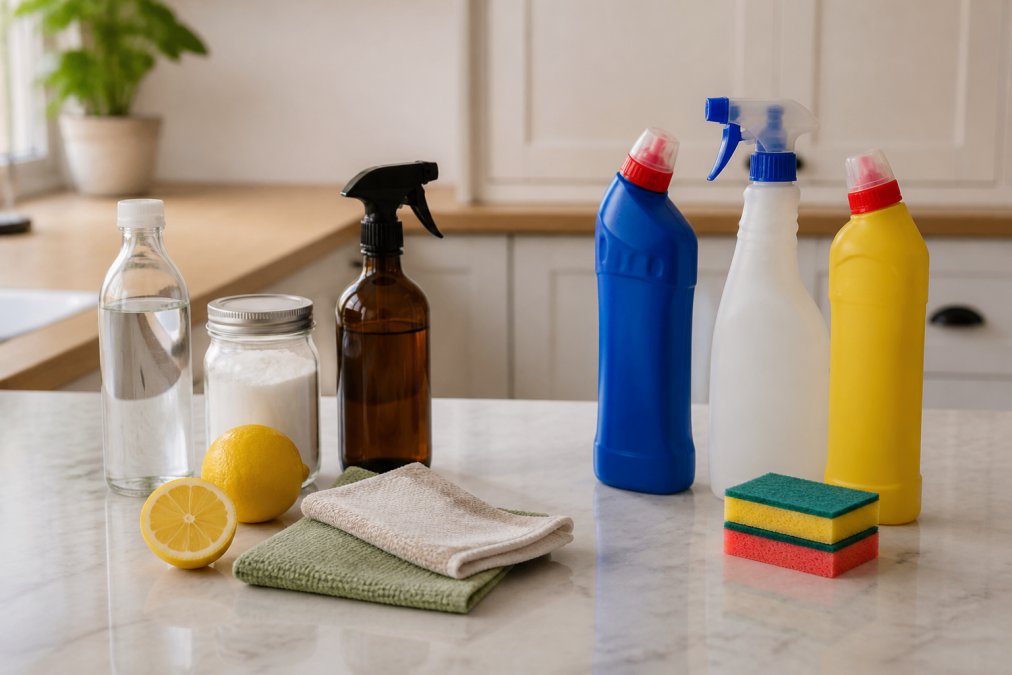
DIY advantages: Lowest cost per use, complete control over ingredients, no packaging waste, and customizable strength.
DIY disadvantages: Time-intensive preparation, less consistent results, requires trial and error, limited shelf life for some recipes, and doesn't work well for all cleaning tasks.
Store-bought eco-friendly advantages: Consistent formulation, convenient and ready to use, often more effective on specific tasks, and longer shelf life.
Store-bought disadvantages: Higher per-use cost, packaging waste (though many companies offer refill options), and less control over exact ingredients.
For most households, a hybrid approach works best: use DIY recipes for routine cleaning and store-bought eco products for specific challenges. This balances cost savings with practical effectiveness.
A basic DIY starter kit requires just four ingredients: white vinegar, baking soda, castile soap, and essential oils (optional). These handle 70-80% of household cleaning needs. For remaining tasks, having a few targeted store-bought products prevents frustration and ensures actual cleanliness.
Cost, Environmental Impact, and Long-Term Maintenance
The cost comparison between eco-friendly and traditional cleaning isn't straightforward because concentrated formulas and dilution ratios complicate the picture. Over a year of household cleaning, the cost difference is typically modest, often 15-30% more for eco options. For most households, this translates to a few dollars per month.
Environmental impact extends beyond the product itself. Traditional cleaning products create toxic residues that persist in water systems, affecting aquatic life and drinking water supplies. Phosphates contribute to algal blooms that deplete oxygen in waterways. Eco-friendly products biodegrade more readily, reducing long-term environmental accumulation.
Many eco-friendly brands offer refill concentrates, reducing packaging waste substantially. Over time, this becomes a significant environmental advantage.
Long-term surface maintenance differs between approaches. Traditional cleaners often leave chemical residues that can buildup over time, potentially causing discoloration or degradation of natural stone or wood. Eco-friendly cleaners, being less harsh and leaving minimal residue, are often gentler on delicate surfaces. For households with natural stone countertops or wood floors, eco-friendly products often extend material life, offsetting their higher upfront cost.
Making the Switch: A Practical Comparison
Switching from traditional to eco-friendly cleaning doesn't require an all-or-nothing approach. A gradual transition works better and lets you identify which eco products work for your specific needs.
Phase 1 (Week 1-2): Choose your most frequent cleaning task and replace your traditional product with an eco-friendly equivalent. Use it for two weeks to establish whether it meets your standards.
Phase 2 (Week 3-4): Add another category once you've found a product that works. Continue using traditional products for specialized tasks where you haven't found eco equivalents.
Phase 3 (Month 2+): Identify which eco products work well and adjust your approach for weaker performers or accept that you'll use traditional products for specific tasks.
This gradual approach prevents frustration and spreads the cost increase across time. WowHaul's curated selection includes eco-friendly cleaning products chosen for real-world effectiveness, reducing the trial-and-error phase significantly.
Key decisions during the switch:
- Decide on your non-negotiables. What cleaning tasks absolutely must work perfectly?
- Accept trade-offs. Some tasks may require slightly more effort or time with eco products.
- Invest in concentration. Concentrated eco formulas deliver better cost-effectiveness.
- Maintain basic safety. Eco-friendly doesn't mean "use without precaution." Always ventilate, wear gloves, and keep products away from children and pets.
The transition typically takes 6-8 weeks before most households feel confident in their eco-friendly cleaning routine. By that point, the health and environmental benefits become apparent.
Making the switch to eco-friendly cleaning represents a meaningful shift toward a healthier home environment and reduced environmental impact. The challenge isn't whether eco products work, it's finding the right products for your specific needs and adjusting your expectations about cleaning time and effort. WowHaul's thoughtfully selected collection of eco-friendly cleaning products removes much of the guesswork, offering household solutions that balance effectiveness with safety and environmental responsibility. Start with products designed for your most frequent cleaning tasks, and let your results guide the rest of your transition.
=== FAQ ANSWERS (audit these too, same rules) ===
[1] Q: Are eco-friendly cleaning products as effective as traditional ones? A: Yes, when formulated correctly. Eco-friendly products with plant-based ingredients and biodegradable surfactants can match or exceed traditional cleaners on most household tasks. The key difference is that they work through different mechanisms, often requiring slightly longer contact time or different application methods. For stubborn stains or heavy-duty sanitization, some traditional cleaners still perform faster, but eco-friendly options handle everyday cleaning, disinfection, and surface maintenance effectively. Effectiveness depends more on proper application than the product type itself.
[2] Q: What should I look for on labels to avoid hazardous chemicals? A: Check for the EPA Safer Choice label first, it identifies products that meet strict safety standards. Avoid products listing phthalates, phosphates, chlorine, ammonia, or synthetic surfactants in the ingredients. Look for certifications from third-party organizations that verify non-toxic claims. Read the full ingredient list rather than relying on marketing terms like 'natural' or 'green,' which aren't regulated. Products labeled hypoallergenic or fragrance-free are safer for households with pets or members with sensitive skin. When in doubt, contact the manufacturer for a complete safety data sheet.
[3] Q: Can I make effective cleaning products at home with DIY natural cleaning recipes? A: Absolutely. Basic recipes using vinegar, baking soda, lemon juice, and castile soap handle most household cleaning needs. Vinegar cuts grease and mineral deposits, baking soda tackles stains and odors, and lemon provides natural antibacterial properties. These ingredients are non-toxic, biodegradable, and cost significantly less than commercial products. However, DIY recipes won't disinfect as quickly as commercial disinfectants and may not work on heavily soiled surfaces. They're ideal for daily maintenance, but you may still need commercial options for specific tasks like mold removal or pathogen elimination.
[4] Q: How does indoor air quality relate to the cleaning products I use? A: Traditional cleaners release volatile organic compounds (VOCs) into your home's air, which can trigger respiratory issues, headaches, and allergic reactions, especially in poorly ventilated spaces. VOCs continue off-gassing even after cleaning is complete. Eco-friendly products with plant-based ingredients produce minimal VOCs and don't create harmful residues in your indoor air. This is particularly important for homes with pets, children, or family members with asthma or allergies. Improving indoor air quality directly impacts long-term respiratory health and comfort in your living space.
Frequently Asked Questions
Are eco-friendly cleaning products as effective as traditional ones?
Yes, when formulated correctly. Eco-friendly products with plant-based ingredients and biodegradable surfactants can match or exceed traditional cleaners on most household tasks. The key difference is that they work through different mechanisms, often requiring slightly longer contact time or different application methods. For stubborn stains or heavy-duty sanitization, some traditional cleaners still perform faster, but eco-friendly options handle everyday cleaning, disinfection, and surface maintenance effectively. Effectiveness depends more on proper application than the product type itself.
What should I look for on labels to avoid hazardous chemicals?
Check for the EPA Safer Choice label first, it identifies products that meet strict safety standards. Avoid products listing phthalates, phosphates, chlorine, ammonia, or synthetic surfactants in the ingredients. Look for certifications from third-party organizations that verify non-toxic claims. Read the full ingredient list rather than relying on marketing terms like 'natural' or 'green,' which aren't regulated. Products labeled hypoallergenic or fragrance-free are safer for households with pets or members with sensitive skin. When in doubt, contact the manufacturer for a complete safety data sheet.
Can I make effective cleaning products at home with DIY natural cleaning recipes?
Absolutely. Basic recipes using vinegar, baking soda, lemon juice, and castile soap handle most household cleaning needs. Vinegar cuts grease and mineral deposits, baking soda tackles stains and odors, and lemon provides natural antibacterial properties. These ingredients are non-toxic, biodegradable, and cost significantly less than commercial products. However, DIY recipes won't disinfect as quickly as commercial disinfectants and may not work on heavily soiled surfaces. They're ideal for daily maintenance, but you may still need commercial options for specific tasks like mold removal or pathogen elimination.
How does indoor air quality relate to the cleaning products I use?
Traditional cleaners release volatile organic compounds (VOCs) into your home's air, which can trigger respiratory issues, headaches, and allergic reactions, especially in poorly ventilated spaces. VOCs continue off-gassing even after cleaning is complete. Eco-friendly products with plant-based ingredients produce minimal VOCs and don't create harmful residues in your indoor air. This is particularly important for homes with pets, children, or family members with asthma or allergies. Improving indoor air quality directly impacts long-term respiratory health and comfort in your living space.
This article was written using GrandRanker