

Table of Contents
- Why Morning Independence Matters for Children
- Building Independence Through Everyday Morning Routines
- Age-Appropriate Expectations and Self-Help Skills
- Creating a Kids Morning Routine Chart That Works
- Teaching Age-Appropriate Chores for Children
- Creating a Morning Routine Checklist for Kids
- Troubleshooting Common Morning Obstacles
- Building Confidence and Reducing Morning Stress
- Frequently Asked Questions
Last Updated: October 14, 2026
Why Morning Independence Matters for Children
To teach children morning independence isn't just about getting your child dressed faster. It's about building their confidence and sense of control over their own day.
The real benefit hits differently than you might expect. Kids who build morning independence don't just move through their routines more smoothly. They start their day feeling capable. That matters.
Teaching children morning independence also reduces morning stress for you. When your child takes ownership of getting ready, you're not managing every step. You're guiding.
Building Independence Through Everyday Morning Routines
A consistent morning routine is the foundation for independence. Children thrive with predictability.
The routine itself doesn't need to be complicated. Wake up, use the bathroom, get dressed, eat breakfast, brush teeth. The order matters more than the complexity.
Routines also reduce decision fatigue. When everything follows the same pattern, your child uses less mental energy figuring out what to do.
Build your routine around realistic timelines. If your child needs 20 minutes to get dressed, that's the number. Don't fight it. Plan around it.
Age-Appropriate Expectations and Self-Help Skills
Toddlers (Ages 2-3)
Toddlers are just beginning to understand the concept of doing things independently. Their motor skills are still developing. Realistic expectations here mean celebrating small wins.
At this age, your toddler can:
- Pull off socks or shoes with help
- Wash hands with assistance (you guide their hands)
- Point to body parts when asked
- Begin to understand simple instructions like "get your shoes"
The key with toddlers is patience and repetition. They'll need your help for most tasks, but they can participate. Let them try. Let them fail. Let them try again. This is where self-help skills start.
Don't expect independence yet. Instead, focus on building familiarity with the routine. Your toddler is learning the sequence, not executing it alone.
Preschoolers (Ages 4-5)
Preschoolers are ready for real participation. Their motor skills have improved. Their attention span is longer. This is where you start seeing genuine morning independence emerge.
At this age, your preschooler can:
- Pull on pants or a shirt with minimal help
- Wash hands and face with reminders
- Brush teeth with supervision (you'll still need to help them do a thorough job)
- Choose between two outfit options
- Follow a two-step instruction without repetition
Preschoolers respond well to visual cues and routines. They're old enough to understand cause and effect. "If you get dressed now, we have time to read a book before school."
This is the sweet spot for introducing a morning routine chart. Your preschooler can follow pictures and understand what comes next.
School-Age Children (Ages 6+)
School-age children can handle real responsibility. Their executive function is developing. They can plan ahead and problem-solve. This is where you shift from guiding to supporting.
At this age, your school-age child can:
- Get completely dressed without help
- Wash and dry their hands independently
- Brush their teeth thoroughly
- Pack their own backpack with a checklist
- Manage their own breakfast (pouring cereal, getting a bowl)
- Problem-solve when something goes wrong ("I can't find my shoes" becomes their problem to solve with your support, not your problem to solve for them)
School-age children respond to independence. They want to feel grown-up. Give them that. Step back. Let them own their morning.
Creating a Kids Morning Routine Chart That Works
Visual Schedules and Step-by-Step Breakdown
A visual schedule removes the need for constant reminding. Your child sees what comes next. They don't have to ask. They don't have to remember. They look at the chart.
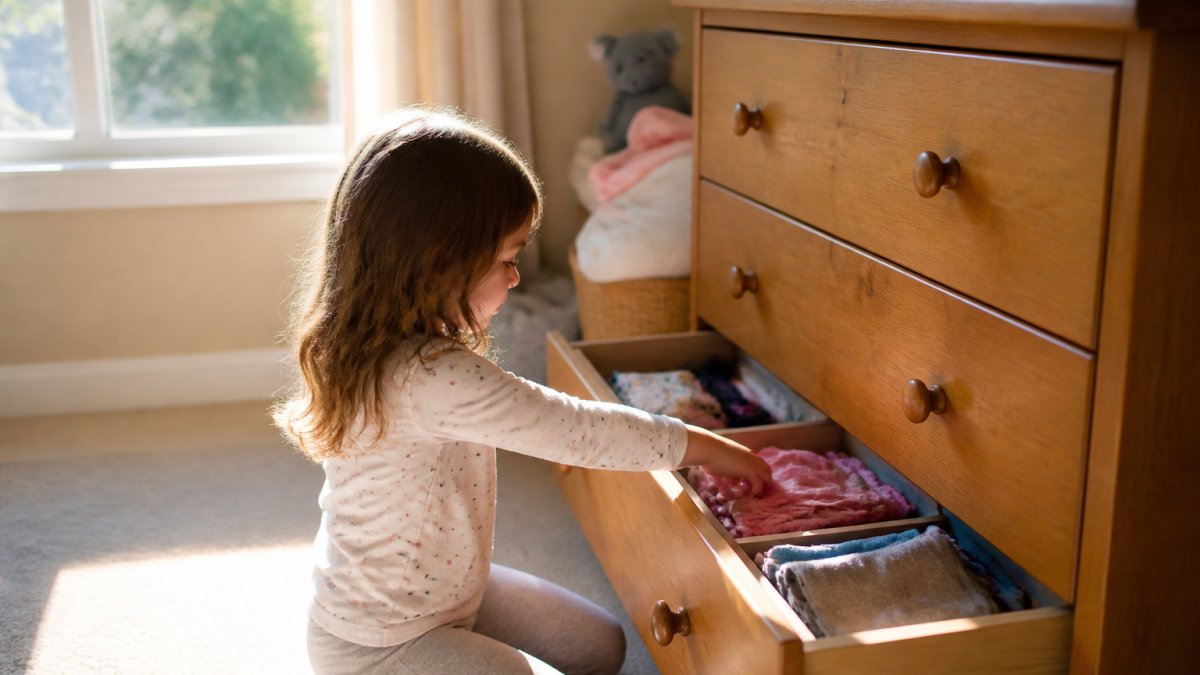
The best charts use pictures, not just words. Even school-age children benefit from visual cues. A picture of a child getting dressed is clearer than the word "get dressed."
Your chart should follow your actual routine in order:
- Wake up
- Use the bathroom
- Get dressed
- Eat breakfast
- Brush teeth
- Put on shoes
- Get backpack
That's it. Seven steps. Your child knows what comes next without asking.
The chart works best when it's visible and accessible. Mount it at your child's eye level in the bathroom or bedroom.
Using Reminders and Visual Cues
Reminders and visual cues are different tools for different situations. A reminder is something you say. A visual cue is something your child sees.
Visual cues are more powerful because they don't require your voice. Your child sees a picture of a toothbrush and knows it's time to brush teeth. You don't have to say it.
Use visual cues for:
- A toothbrush next to the sink (reminder to brush teeth)
- Clean clothes laid out on the bed (reminder to get dressed)
- A backpack by the door (reminder to grab it before leaving)
- A checklist on the bathroom mirror (reminder of bathroom tasks)
Verbal reminders are still necessary sometimes. Use them strategically, not constantly. If you're reminding your child of every step, your visual system isn't working. Adjust the cues.
Teaching Age-Appropriate Chores for Children
Morning chores aren't just about getting ready. They're about responsibility. A child who manages their morning tasks develops competence and confidence.
Age-appropriate chores for morning routines:
- Toddlers: Put dirty clothes in a basket
- Preschoolers: Put on their own shoes, clear their bowl from the table
- School-age: Pack their own backpack, make their bed, load their dishes into the dishwasher
The goal isn't perfection. Your school-age child's bed won't be perfectly made. Their backpack might be disorganized. That's fine. The goal is ownership. They did it. They're responsible for it.
Assign one chore at a time. Let your child master it before adding another. Mastery builds confidence. Confidence builds independence.
Creating a Morning Routine Checklist for Kids
A checklist gives your child a tool to manage their own morning. Instead of relying on you to tell them what to do, they check the list.
Step 1: Map Out Your Current Morning
Write down exactly what happens in your morning right now. Don't write what you wish happened. Write what actually happens.
Your list might look like:
- Wake up (6:45 AM)
- Use bathroom (5 minutes)
- Get dressed (10 minutes)
- Eat breakfast (15 minutes)
- Brush teeth (3 minutes)
- Put on shoes (2 minutes)
- Leave for school (7:30 AM)
Include the time each task takes. This is important. You need to know if your timeline is realistic.
Step 2: Break Tasks Into Manageable Steps
"Get dressed" is too vague for a young child. Break it down.
Instead of "get dressed," your checklist says:
- Pick out clothes
- Put on underwear
- Put on shirt
- Put on pants
- Put on socks
- Put on shoes
Each step is one action. Your child can complete one action. That's manageable.
Step 3: Add Visual Cues and Prompts
For younger children, add pictures next to each step. For older children, add specific details.
Instead of "brush teeth," write "brush teeth for two minutes" or "brush all surfaces."
Add visual cues:
- A picture of a child getting dressed next to the clothing steps
- A picture of a toothbrush next to the teeth-brushing step
- A timer for steps that need one
Step 4: Practice and Gradually Reduce Prompting
The first week, you'll walk through the checklist with your child. You'll point to each step. You'll remind them to check it off.
The second week, you'll ask: "What's next on your checklist?" instead of telling them.
By week three or four, your child should be moving through the checklist with minimal input from you. You're checking in, not directing.
This gradual reduction of prompting is how you build real independence. Your child isn't dependent on your reminders. They're dependent on the checklist.
Troubleshooting Common Morning Obstacles
Child Refuses to Follow the Routine
Resistance usually means one of three things: the routine is too hard, the routine is boring, or your child is exerting control.
If the routine is too hard, simplify it. If it takes 45 minutes to get dressed, something is wrong.
If the routine is boring, add something your child enjoys. Maybe they get to pick the music. Maybe they get to choose between two outfits.
If your child is exerting control, give them control in appropriate ways. Let them choose which task to do first (within reason).
Morning Tasks Take Too Long
Start by timing each task. You might think getting dressed takes five minutes when it actually takes 15. Real data changes how you approach the problem.
If tasks are genuinely slow, break them into smaller steps. If getting dressed takes 15 minutes, that's okay. Plan for 15 minutes. Don't fight it.
Sometimes slow mornings are a sign your child needs more sleep. A tired child moves slowly. That's not laziness. That's fatigue.
Inconsistency Across Caregivers
If your child follows the routine with one parent but not the other, the problem is consistency. Both caregivers need to use the same approach.
Talk to the other caregiver. Use the same checklist. Use the same visual cues. Use the same expectations. Consistency is what teaches children morning independence.
If one caregiver is doing tasks for your child while the other expects independence, your child gets confused. They don't know what's expected. Align your approaches.
Building Confidence and Reducing Morning Stress
Confidence comes from success. Your child needs to experience doing things independently and having those attempts go well.
Start small. Let your child succeed at one task. Celebrate that success. Then add another task.
Use specific praise. Instead of "good job," say "you got your shirt on all by yourself.
Reduce morning stress by managing expectations. If mornings are rushed, they're stressful. Build in extra time. Your child doesn't learn independence when they're hurried and anxious.
WowHaul helps families build stronger routines with practical products designed to simplify your everyday living.
Frequently Asked Questions
What morning tasks can a child do independently at different ages?
Toddlers (2-3) can remove socks and attempt to put on shoes with help. Preschoolers (4-5) can wash hands, brush teeth with supervision, and choose between two outfit options. School-age children (6+) can shower independently, get fully dressed, pack their backpack, and eat breakfast with minimal reminders. The key is matching tasks to developmental level and building skills gradually through practice and positive reinforcement.
How do I create a morning routine checklist for kids that actually gets used?
Start with a visual morning routine checklist featuring pictures or simple words for each task: wake up, bathroom, get dressed, eat breakfast, brush teeth, pack bag. Place it at eye level where your child can see it. Use checkmarks, stickers, or color-coding to show progress. Keep the list to 5-7 main tasks to avoid overwhelming your child. Update it as skills improve and gradually reduce the need for visual reminders.
How can I teach independence to my toddler without creating morning chaos?
Teaching toddlers self-help skills requires patience and consistency. Start with one small task at a time, like washing hands or choosing between two shirt options. Use modeling (show them how), practice repeatedly, and offer specific praise when they try. Expect mistakes and accidents, this is normal learning. Build in extra time so rushing doesn't undermine the process. Consistency across caregivers helps toddlers understand expectations and builds confidence faster.
What should I do if my child refuses to follow the morning routine?
Refusal often signals overwhelm, lack of understanding, or loss of control. Offer limited choices within the routine: 'Do you want to brush teeth first or get dressed first?' Break tasks into smaller steps if your child is struggling. Use visual cues and reminders without nagging. Acknowledge their feelings ('I see you're frustrated') and stay calm. Praise effort, not just completion. If resistance is severe or sudden, consider whether the routine needs adjustment or if something else is causing stress.
The path to morning independence isn't about forcing your child to move faster. It's about building routines, setting realistic expectations, and gradually stepping back. Your child is capable of far more than you might expect. Give them the structure, the tools, and the space to surprise you.