

Table of Contents
- Why Teaching Kids to Do Their Own Laundry Matters
- Age Appropriate Laundry Tasks: A Step-by-Step Breakdown
- Laundry Chore Chart for Kids: Make It Visual and Stick
- How to Teach a Teenager to Do Laundry (Without the Power Struggle)
- The Step-by-Step Laundry Process Kids Can Follow
- Safety Tips for Laundry Chemicals and Machine Operation
- Setting Up a Laundry Schedule and Routine That Sticks
- Eco-Friendly and Budget-Conscious Laundry Habits
- Frequently Asked Questions
Last Updated: October 1, 2026
Why Teaching Kids to Do Their Own Laundry Matters
Teaching kids to do their own laundry is one of the most practical life skills a parent can pass on. It builds independence, saves you hours each week, and prepares children for living on their own.
Age Appropriate Laundry Tasks: A Step-by-Step Breakdown
Age appropriate laundry tasks grow with your child's motor skills and attention span. Match the job to the stage, not the calendar.
Toddlers (2-4): Building Familiarity
Toddlers can't run machines, but they can build familiarity. Keep it playful and short.
- Drop dirty clothes in the hamper
- Match socks into pairs
- Carry small items to the laundry room
- Press the start button with your hand over theirs
Young Kids (5-8): Sorting and Simple Folding
This is the sorting sweet spot. Kids this age love categories.
- Separate lights, darks, and towels
- Fold washcloths, towels, and simple shirts
- Put their own clothes away
- Help measure detergent with a clear cup
Tweens (9-12): Running the Machine
Tweens can handle a full load with a checklist nearby.
- Read care labels before washing
- Choose the right wash cycle and water temperature
- Measure detergent and start the machine
- Move clothes to the dryer and clean the lint trap
Laundry Chore Chart for Kids: Make It Visual and Stick
A laundry chore chart for kids works when it's visual, simple, and tied to a routine. Words get ignored. Pictures get followed. The chart isn't decoration, it's the thing that lets you walk away and trust the load gets finished.
Here's what belongs on the chart:
- Days for wash, dry, and put-away
- A checkbox for each step
- A small reward or privilege at week's end
Build the Chart Around the Six Stages
Most charts fail because they list vague tasks like "do laundry." Break the job into the same six stages you'll teach in the process section below, sort, pretreat, load, wash, dry, put away, and give each stage its own row. A child checking off six small boxes feels progress. A child staring at one big box stalls.
A workable layout:
| Stage | What It Looks Like | Done? |
|---|---|---|
| Sort | Three piles: lights, darks, towels | ☐ |
| Pretreat | Stain spray on spots, check pockets | ☐ |
| Load | Clothes in, lid closed, settings set | ☐ |
| Wash | Detergent measured, start pressed | ☐ |
| Dry | Lint trap cleaned, dryer started | ☐ |
| Put away | Folded or hung, back in drawers | ☐ |
Visual Aids for Different Learning Styles
Not every child learns the same way. Visual aids help kids who struggle with multi-step directions, including many neurodivergent children. The goal is a system that works without you standing there.
Try these formats:
- Photo sequence. Take pictures of your own child doing each step and tape them inside the laundry cabinet door in order. Familiar faces and familiar machines beat generic clip art.
- Numbered icon card. A laminated card with a number and a simple icon per step, a shirt for sort, a spray bottle for pretreat, a dial for wash.
- Dry-erase board. Kids check off each load as they go, then wipe it clean for the next one.
- Color-coded baskets. One basket per pile, each labeled with a colored dot that matches the chart. Sorting becomes matching.
Make It Neurodivergent-Friendly
Standard chore charts assume a child can hold six steps in working memory, transition between tasks on demand, and tolerate the noise and texture of a laundry room. Some kids can't, and that's not defiance, it's wiring.
Adjustments that help:
- Shrink the load. One step per day instead of six in one sitting. Monday sort, Tuesday wash, Wednesday dry.
- Front-load the sensory plan. Noise-canceling headphones for the spin cycle, gloves for handling wet fabric, unscented detergent for kids sensitive to smell.
- Use timers, not nagging. A visual timer set for the wash cycle does the reminding so you don't have to.
- Keep the chart at eye level in the room where the task happens. A chart in the kitchen doesn't help a kid standing at the machine.
Printable Checklist You Can Copy
- Empty pockets. Close zippers.
- Sort into three piles.
- Spray stains. Wait five minutes.
- Load the machine. Don't overstuff.
- Measure detergent to the line.
- Pick the cycle. Press start.
- Move to dryer. Clean the lint trap.
- Fold or hang. Put it away.
A chart on the wall does the reminding for you. That's the whole point, the system replaces your voice.
How to Teach a Teenager to Do Laundry (Without the Power Struggle)
Teens resist lectures, not skills. Hand over full ownership and step back.
Here's the approach that works:
- Do one load together, narrating each step once.
- Watch them do the next load without correcting.
- Let them make small mistakes, like a shrunk shirt.
- Make them responsible for their own clothes from then on.
The Step-by-Step Laundry Process Kids Can Follow
The step-by-step laundry process kids can follow has six stages: sort, pretreat, load, wash, dry, and put away. Each stage has a simple rule your child can remember.
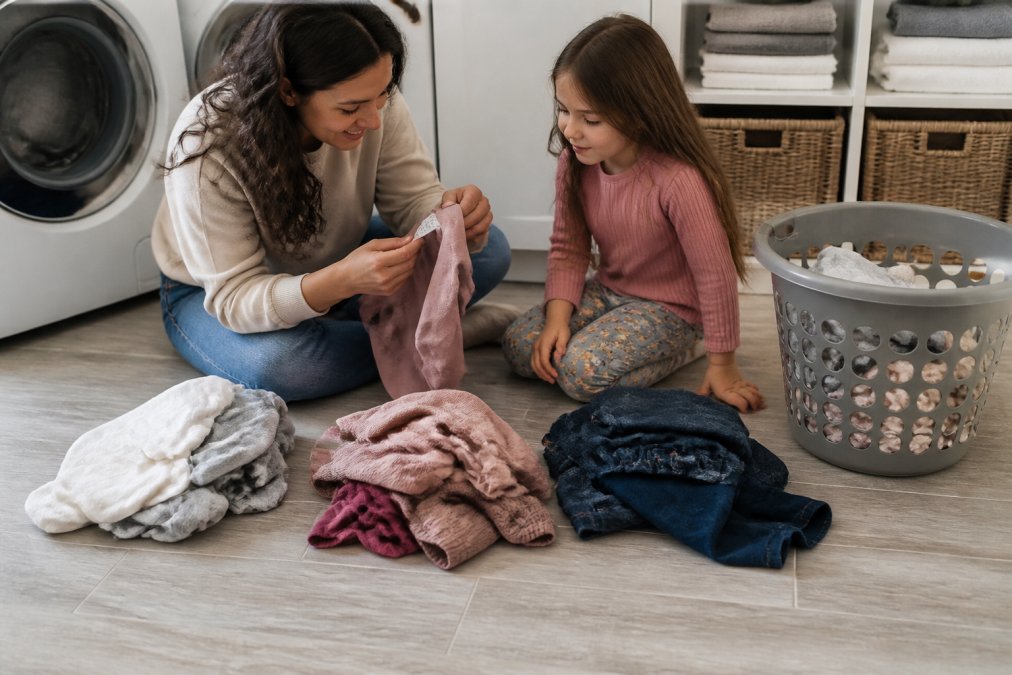
Sorting Clothes by Color and Fabric
Sorting laundry protects clothes and prevents color bleeding. Teach three basic piles.
- Lights and whites together
- Darks and brights together
- Towels and heavy fabrics separate
Reading Garment Care Labels and Measuring Detergent
Garment care labels tell you everything: water temperature, drying method, and whether to bleach. Teach kids to read the symbols before washing anything new.
- Use the cap or cup that came with the detergent
- Fill to the line for the load size
- Skip fabric softener on towels and athletic wear
Folding Techniques and Putting Away Clothes
Folding is the step kids skip. Make it fast and specific.
- Lay shirts flat, fold sleeves in, fold in half
- Roll socks into pairs
- Hang anything wrinkle-prone
Safety Tips for Laundry Chemicals and Machine Operation
Laundry chemicals and machines need clear rules. Set them before your child works alone.
- Store detergent and bleach out of reach of young kids
- Never mix bleach with ammonia or vinegar
- Keep bleach away from colors unless the label allows it
- Clean the lint trap before every load
- Never reach into a moving machine
Setting Up a Laundry Schedule and Routine That Sticks
A laundry schedule turns a big weekend pile into small daily loads. Pick days that match your family's rhythm.
A simple setup:
| Day | Task | Who |
|---|---|---|
| Monday | Wash darks | Teen |
| Wednesday | Wash lights | Tween |
| Friday | Towels and sheets | Parent and tween |
| Saturday | Put away all clothes | Everyone |
Eco-Friendly and Budget-Conscious Laundry Habits
Eco-friendly habits save money at the same time, and that pairing is the lesson worth teaching. A kid who understands why cold water matters is a kid who'll keep doing it in a dorm laundry room with no parent watching.
The Big Three That Actually Move the Needle
Most "green laundry" advice is noise. Three changes do the real work:
- Wash full loads. A half-full machine uses nearly the same water and energy as a full one. Batching is the single biggest saver.
- Wash cold. Heating water is the largest energy draw in a wash cycle. Cold water handles everyday dirt and protects fabrics from fading and shrinking.
- Air-dry when you can. A clothesline or drying rack in the garage or backyard costs nothing to run. The dryer is the second-biggest energy user in the room.
Detergent: Less Is Usually More
Overdosing detergent is the most common laundry mistake in American homes. It leaves residue that traps odor, irritates skin, and forces a second rinse, which wastes water and money.
- Buy concentrated formulas. You pay for cleaning power, not water.
- Use the cap that came with the bottle and fill only to the line for your load size.
- For high-efficiency machines, use an HE-labeled detergent. Regular detergent creates too many suds and can damage the machine.
- Skip fabric softener on towels and athletic wear. It coats fibers, reduces absorbency, and gunks up the dryer.
Dryer Habits That Cut Both Bills
- Clean the lint trap every load. A clogged trap makes the dryer run longer and is a fire risk.
- Don't over-dry. Take clothes out when they're dry, not when the timer ends. Over-drying wears out elastic and cotton faster.
- Wool dryer balls replace dryer sheets. They bounce clothes apart for faster drying and last for hundreds of loads.
- Dry similar-weight items together. A load of heavy towels plus light shirts means the shirts are done long before the towels.
A Kid-Friendly Money Math Exercise
Turn the eco lesson into a household math problem. Have your child count how many loads your family runs in a week, then estimate how many could be combined into full loads instead of half loads. Fewer loads means less water, less electricity, and a lower utility bill.
Frequently Asked Questions
At what age should a child do their own laundry?
Most children can start helping with laundry around age 5 by sorting clothes and folding simple items. By age 8-10, many kids can run a washer and dryer with supervision. Full independence typically happens between 12 and 14. The right age depends on your child's maturity and interest, not just their birthday. Start with one small task, like matching socks, and build from there.
How can I make laundry less overwhelming for kids with ADHD?
Break laundry into small, clear steps and use visual aids like a printable checklist or a laundry chore chart for kids. Keep supplies in one accessible spot and set a timer for each step to make time concrete. Avoid overwhelming piles by having separate hampers for lights and darks. A consistent routine, done at the same time each week, reduces the mental load and helps kids with ADHD build muscle memory.
What safety precautions should I teach kids when using laundry machines?
Teach kids to never reach into a running washer or dryer, to keep the lint trap clean, and to use only the amount of detergent recommended on the label. Store bleach and other chemicals out of reach of young children, and explain that mixing bleach with other cleaners can create dangerous fumes. Show them how to turn the machine off in an emergency and always supervise until they are confident.
How do I create a laundry routine that kids will actually follow?
Set a fixed laundry day each week and make it part of the family schedule. Use a laundry chore chart for kids to track who does what, and keep the steps simple: sort, wash, dry, fold, put away. Pair laundry with something enjoyable, like listening to a podcast, and offer praise for effort, not perfection. Adjust the routine as kids get older and more capable.
Laundry piles up whether you teach the skill or not. The difference is who handles it. WowHaul curates practical finds for everyday living, including products that help you build stronger routines and simplify daily home tasks. From organization tools to pet care essentials, the collection is built around real household needs. Get started with WowHaul and turn laundry from a weekly battle into a habit your kids own.