

Table of Contents
- The Real Breakdown: What You're Actually Paying For
- Labor: The Biggest Line Item
- Overhead Expenses Most Owners Never See
- The Average Cost of Dog Grooming (and Why It Varies)
- Why Cat Grooming Costs More Than Dog Grooming
- Essential Grooming Tools for Home Maintenance
- How to Maintain Pet Coat Between Professional Grooms
- The Hidden Value: Health Checks and Hygiene Standards
- Conclusion: Weighing the Cost Against the Value
- Frequently Asked Questions
Last Updated: September 14, 2026
The Real Breakdown: What You're Actually Paying For
Pet grooming costs what it costs because it is skilled, physical labor performed on a living animal that may not want to be there. The price reflects time, training, tools, rent, insurance, and injury risk, not a markup on shampoo.
This WowHaul guide breaks down where every dollar goes and how a simple home routine keeps costs down.
Why is pet grooming so expensive? Because a groomer does three jobs at once: stylist, animal handler, and health screener, and that is the short answer to why is pet grooming so expensive. A typical appointment runs one to three hours of continuous hands-on work, all of it paid.
Labor: The Biggest Line Item
Labor is the single largest driver of grooming prices.
A groomer cannot work faster than the dog allows. Nervous pets, senior dogs with joint pain, and matted coats all slow the process. A bath, dry, and tidy-up might take 60 to 90 minutes on a cooperative poodle and stretch past three hours on a fearful, matted husky.
Add the behind-the-scenes time owners never see: intake notes, drying, sanitizing the station, and admin, all paid time.
Overhead Expenses Most Owners Never See
A salon carries rent, utilities that spike because dryers and water heaters run all day, liability insurance, licensing, and ongoing education. Mobile grooming adds a van, fuel, maintenance, and a generator, all baked into the price before the groomer earns a cent.
Then there is equipment. Professional clippers, blades, shears, and dryers are not consumer-grade and they wear out; blades need regular sharpening or replacing, and one quality clipper can cost several hundred dollars.
U.S. Small Business Administration guidance on business operating costs outlines how fixed overhead shapes what any service business must charge. Grooming is no exception.
The Average Cost of Dog Grooming (and Why It Varies)
The average cost of dog grooming is not a single number but a range that moves with breed, size, coat condition, location, and temperament on the day.
Two golden retrievers in the same city can get quotes that differ widely, and the reason is rarely greed. It is the work required.
| Factor | What It Changes | Typical Impact on Price |
|---|---|---|
| Breed and coat type | Cut complexity, drying time | Higher for double coats and doodles |
| Size | Product volume, handling time | Higher for large and giant breeds |
| Temperament | Handling difficulty, safety | Higher for anxious or reactive pets |
| Coat condition | De-matting, extra time | Higher for neglected or matted coats |
| Location | Rent and labor market | Higher in high cost-of-living areas |
Breed, Size, and Coat Type
Breed-specific cuts and hand scissoring are skilled work. A poodle's continental clip or a schnauzer's beard takes precision a buzz cut does not. Doodles and double-coated breeds add serious drying time, sometimes 30 minutes or more under a high-velocity dryer.
Size compounds everything. A Chihuahua and a Great Pyrenees may both need a bath, blow-dry, nail trim, and ear cleaning, but the Pyrenees consumes several times the shampoo, drying time, and physical effort to lift, turn, and hold, which is why large breeds top most salon menus.
The Behavioral Surcharge: Why Anxious and Reactive Pets Cost More
Most pricing guides mention a fee for "difficult" dogs and stop there, but the mechanism is the most misunderstood line on a grooming invoice.
A calm dog moves through a bath, dry, and trim predictably; a fearful or reactive dog does not. The groomer slows every step, watches body language, and pauses to let the animal settle, a procedure that takes 20 minutes on a relaxed dog can stretch to 45 or more on an anxious one, same haircut, double the chair time.
Safety is the second half of the surcharge. A snapping or panic-prone pet raises the risk of nicks from clippers and shears, plus bites and scratches to the groomer. Many salons assign a second set of hands, use a grooming loop or muzzle, or book a quieter slot, all paid labor and reduced throughput.
A pet with a documented bite history may be declined, referred to a vet for sedation-assisted grooming, or booked at a specialty salon that charges a premium for the added risk. The behavioral surcharge is not a punishment, it is the honest price of doing the work safely.
The Matting Tax: Why Matted Coats Cost So Much More
Matted fur is not just tangled fur, it is felted fur, dense and often anchored against the skin. A slicker brush cannot penetrate it, and pulling causes real pain, which is why most groomers shave severe matting down instead of brushing it out.
Shaving a matted coat is slower and harder than a routine clip. The groomer works a clipper under the mat, frequently stopping to cool the blade and swap in a fresh one, dull or overheated blades pull skin, so blade changes are a safety requirement. Severely matted pets may also have hidden hot spots, sores, or parasites to work around.
The time math explains the price. A routine bath-and-tidy on a maintained coat takes 60 to 90 minutes; the same dog arriving fully matted can take two to three hours. That is the matting tax, not a penalty, but the true cost of extra hours and equipment wear required to fix a preventable problem.
Why Quotes Swing Between Salons in the Same City
Even within one metro area, quotes for the same dog vary widely. The variables are usually the same: how much time the salon blocks, whether it specializes in difficult or matted pets, whether it is mobile (adding van, fuel, and generator costs), and how full its schedule is. A salon with a six-week waitlist has less reason to discount than one with empty slots, none of it arbitrary, just real differences in cost structure and demand.
Why Cat Grooming Costs More Than Dog Grooming
Cat grooming costs more because cats are harder to handle safely.
Most cats are not socialized to grooming, and they are flexible, fast, and armed. A cat groomer often works with a second set of hands, uses specialized restraint, and accepts a higher risk of scratches and bites. That risk carries a higher price, and many salons do not offer cat services at all.
The result is less competition and fewer slots, pushing prices up further. Cat grooming is a specialty, and specialties cost more.
Essential Grooming Tools for Home Maintenance
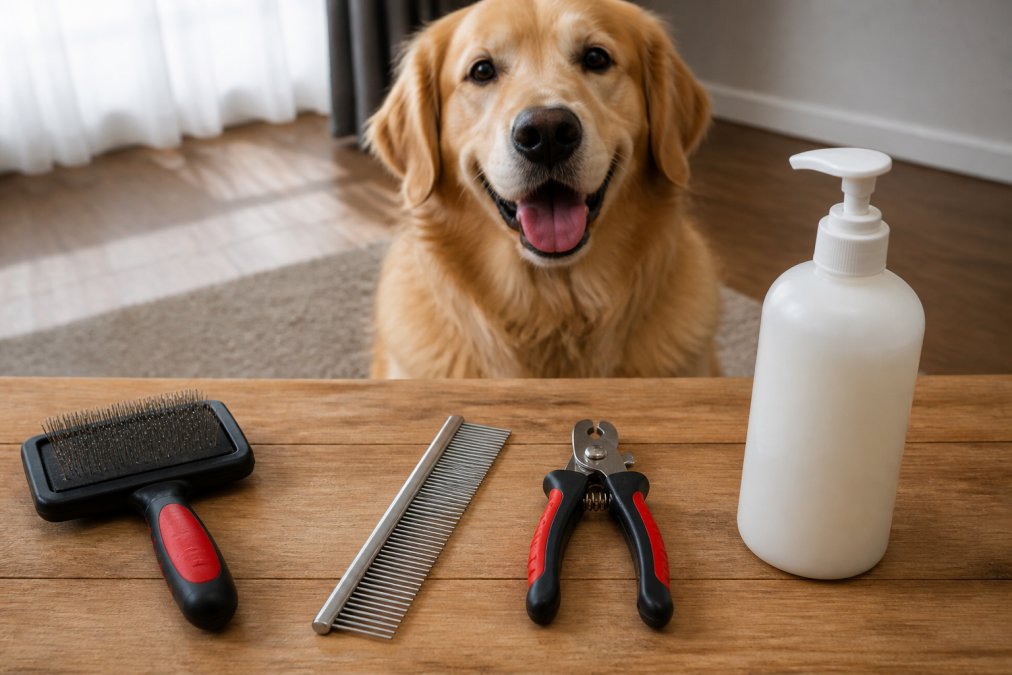
Essential grooming tools for home maintenance keep a coat healthy between professional visits, not a full salon setup in your closet.
The goal is maintenance, not replacement. A few good tools prevent the matting and tangles that turn a routine appointment into an expensive rescue job.
What to Buy and What to Skip
Buy a slicker brush, a metal comb, nail clippers, and a gentle pet-safe shampoo. Skip cheap clippers that pull hair, human shampoo that strips a pet's coat, and any tool you will not use weekly.
- Slicker brush: removes loose fur and prevents tangles
- Metal comb: checks for hidden mats close to the skin
- Nail clippers: keeps nails from overgrowing and splitting
- Pet-safe shampoo: protects skin and coat during baths
WowHaul carries a curated selection of practical pet care tools like these, chosen to fit real routines rather than sit unused in a drawer.
How to Maintain Pet Coat Between Professional Grooms
Learning how to maintain pet coat between professional grooms is the biggest way to control costs over time.
Consistent home care means fewer mats, shorter appointments, and less strain on your pet, plus catching skin issues, lumps, and ear problems early, when they are cheaper to treat.
A Simple Weekly Routine
Set aside 15 minutes weekly: brush in the direction of the coat, run a metal comb through to catch mats near the skin, check ears, trim nails every few weeks, and bathe only as often as your pet's coat needs.
- Brush the full coat with a slicker brush
- Comb check for mats close to the skin
- Inspect ears for redness or odor
- Check nails and trim if needed
- Note any lumps, sores, or skin changes
American Veterinary Medical Association guidance on routine pet care notes that regular coat and skin checks help owners spot problems before they become serious.
The Hidden Value: Health Checks and Hygiene Standards
Professional grooming doubles as a health check, a benefit owners rarely factor into the price, and the part most likely to save money later.
What a Groomer Actually Sees
A groomer works over your pet's entire body with their hands, often for an hour or more, more close-up contact than most owners get in a month. In a routine appointment, a groomer can notice:
- Ear problems, redness, discharge, odor, or head-shaking that suggests an infection
- Skin issues, hot spots, rashes, flaking, or bald patches that can signal allergies or parasites
- Lumps and bumps, new growths, cysts, or swellings that an owner might miss under a thick coat
- Parasites, fleas, ticks, or evidence of mites, often found near the skin where brushing reveals them
- Nail and paw problems, overgrown nails, split pads, or foreign objects lodged between toes
- Dental and eye concerns, tartar buildup, gum redness, or discharge that warrants a vet look
None of this replaces a veterinarian, but it is a recurring screening layer between vet visits, every four to eight weeks for many pets, that makes early detection far more likely.
The Preventative Math: Where Grooming Saves Money
Ear infections. Dogs with floppy ears or heavy coats trap moisture and debris in the ear canal. Regular cleaning and drying during grooming reduces that buildup. Treating an established infection typically involves an exam, diagnosis, and medication, costs that dwarf a routine grooming appointment, and the infection is painful in the meantime.
Matting-related skin problems. A matted coat traps moisture and debris against the skin, restricts airflow, and can hide sores or infections. Severe matting is a common reason pets end up at the vet, and the fix usually requires shaving the coat down, the same shave-down the groomer would have done, plus a medical bill.
Nail overgrowth. Untrimmed nails can curl into the paw pad, cause the toe to splay, and contribute to joint strain. A nail trim is one of the cheapest parts of a grooming appointment and one of the most preventable sources of discomfort.
Parasite detection. Finding fleas or ticks early, before an infestation takes hold in the home, is far cheaper than treating a full-blown problem across multiple pets and the environment.
Owners commonly report that a grooming appointment pays for itself the first time it catches something they would not have noticed until it became a vet visit. That is a probability, not a guarantee, and it is part of what the price buys.
Hygiene Standards Are Part of the Price
A professional salon is not just a bathtub and clippers. It is a controlled environment with standards that protect your pet.
- Sanitized tools between pets, clippers, blades, shears, and combs are cleaned and disinfected to reduce the spread of skin conditions and parasites
- Clean towels and bedding, laundered between uses, not reused damp
- Proper drying, high-velocity dryers and controlled heat reduce the risk of skin problems that come from a pet staying damp
- Trained handling, staff who know how to restrain a pet safely without causing injury
- Pet-safe products, shampoos and conditioners formulated for animal skin pH, not human products that strip the coat
Those standards cost money to maintain, and they are why a salon appointment is safer for your pet than a rushed bath at home with the wrong shampoo and a human hairdryer.
[American Veterinary Medical Association guidance on routine pet care(/blogs/news/buy-practical-pet-care-supplies-online) | avma.org] notes that regular coat and skin checks help owners spot problems before they become serious.
Conclusion: Weighing the Cost Against the Value
The real challenge is not that grooming is expensive. It is that most owners only see the price tag and never the labor, overhead, and skill behind it.
WowHaul makes the home side of that equation easier with practical pet care tools, everyday care products, and items built for stronger daily routines. Our curated selection helps you maintain a healthy coat between appointments, so you get more value from every professional groom.
Get started with WowHaul and build a simple routine that keeps your pet comfortable and your grooming costs predictable.
Frequently Asked Questions
What factors influence the cost of a professional dog groom?
The average cost of dog grooming depends on several factors: the dog's breed, size, and coat condition; the groomer's skill level and training; your local cost of living; and the specific services requested. Add-ons like de-matting, medicated baths for skin conditions, or special breed-specific cuts increase the price. Mobile grooming also costs more due to travel and setup time. Expect pricing to vary significantly by region and salon.
Is it cheaper to groom my pet at home versus a salon?
Home grooming can save money on labor, but requires an upfront investment in essential grooming tools for home maintenance, such as clippers, brushes, and nail trimmers. You also need to factor in your time and the risk of injury if your pet is anxious or wiggly. For simple tasks like brushing and nail trimming, DIY is cost-effective. For full haircuts and de-matting, professional grooming is often safer and more efficient.
How often does my pet actually need professional grooming?
Most dogs benefit from professional grooming every 4 to 8 weeks, depending on coat type and lifestyle. Dogs with continuously growing hair, like poodles, need more frequent appointments. Cats typically need professional grooming less often, but long-haired breeds may require it every 8 to 12 weeks to prevent matting. Between visits, regular brushing and how to maintain pet coat between professional grooms at home keeps your pet comfortable and reduces salon costs.
Why is cat grooming typically more expensive than dog grooming?
Cat grooming costs more because cats are often more difficult to handle, requiring specialized skills and extra safety precautions. Many groomers charge a premium for the increased risk of scratches and bites, and some salons do not accept cats at all. Cats also have delicate skin that tears easily, so de-matting requires more time and care. The limited supply of cat-specific groomers further drives up prices.