

Table of Contents
- Understanding Grooming Anxiety and Skin Sensitivity in Dogs
- Recognizing Signs of Skin Irritation in Dogs Before You Start
- How to Desensitize a Dog to Grooming: A Progressive Training Schedule
- Preparing the Grooming Environment and Choosing the Right Tools
- Best Shampoo for Dogs with Sensitive Skin and Bathing Techniques
- Step-by-Step Bathing Process for Sensitive Dogs
- Post-Grooming Recovery and Managing Difficult Behaviors
- Conclusion
Understanding Grooming Anxiety and Skin Sensitivity in Dogs
Grooming anxiety and skin sensitivity are distinct challenges often confused by dog owners. Anxiety is behavioral, stemming from fear or lack of exposure to grooming stimuli. Skin sensitivity is physiological, dermatological issues like irritation, dryness, or allergies that make contact uncomfortable. Some dogs have both, which compounds difficulty.
The mistake most people make is treating them as the same problem. A trembling dog during bathing may be anxious; one developing hotspots after grooming has a skin issue. Understanding which one you're dealing with changes your entire strategy.
At WowHaul, we provide practical grooming solutions designed for sensitive animals. The tools and techniques you choose should address the root cause, not just mask symptoms. A dog with genuine skin irritation needs different products and handling methods than one experiencing behavioral anxiety, though calming techniques benefit both.
The good news: both are manageable with the right approach, patience, and correct tools. This guide helps you recognize what your dog is experiencing, then provides step-by-step protocols to make grooming safer and less stressful.
Recognizing Signs of Skin Irritation in Dogs Before You Start
Before grooming sensitive dogs, identify whether your dog has actual skin problems. Missed signals mean applying anxiety techniques when your dog needs dermatological support.
Real skin irritation shows physical markers: redness in skin folds, between toes, or under armpits; hotspots (localized inflamed, often hairless areas that worsen quickly); dander (white flaking); or excessive scratching, licking, or chewing at specific spots.
Another indicator is how your dog reacts to touch outside grooming contexts. A dog with skin sensitivity flinches when petted in certain areas or avoids specific spots. An anxious dog may be fine with casual petting but panic when grooming tools appear.
Some breeds carry higher genetic predisposition to skin issues. Golden Retrievers, Bulldogs, and Cocker Spaniels are prone to allergies and dermatological conditions (the American Academy of Dermatology). If your dog is one of these breeds, assume skin sensitivity is a factor even if symptoms aren't obvious yet.
Check your dog's skin before grooming by parting the coat and examining directly. Healthy skin should be pale pink, not red or blotchy. If you see inflammation, unusual odor, or signs of infection, consult a veterinarian before grooming.
How to Desensitize a Dog to Grooming: A Progressive Training Schedule
Desensitization works by gradually introducing your dog to grooming stimuli in low-stress contexts, building positive associations over time. The key is moving slowly enough that your dog never reaches panic threshold.
Week 1: Spend time in the grooming area without grooming. Let your dog explore and reward calm behavior with treats.
Week 2: Introduce grooming tools without using them. Leave a brush or clippers in the space and let your dog investigate.
Week 3: Hold tools against your dog's coat for two seconds, then treat. Repeat five to ten times daily, gradually increasing contact time.
Week 4: Add gentle brushing motions on comfortable areas. Brush for ten seconds, then treat.
Week 5-6: Introduce water exposure in shallow containers, then warm water contact without full bathing.
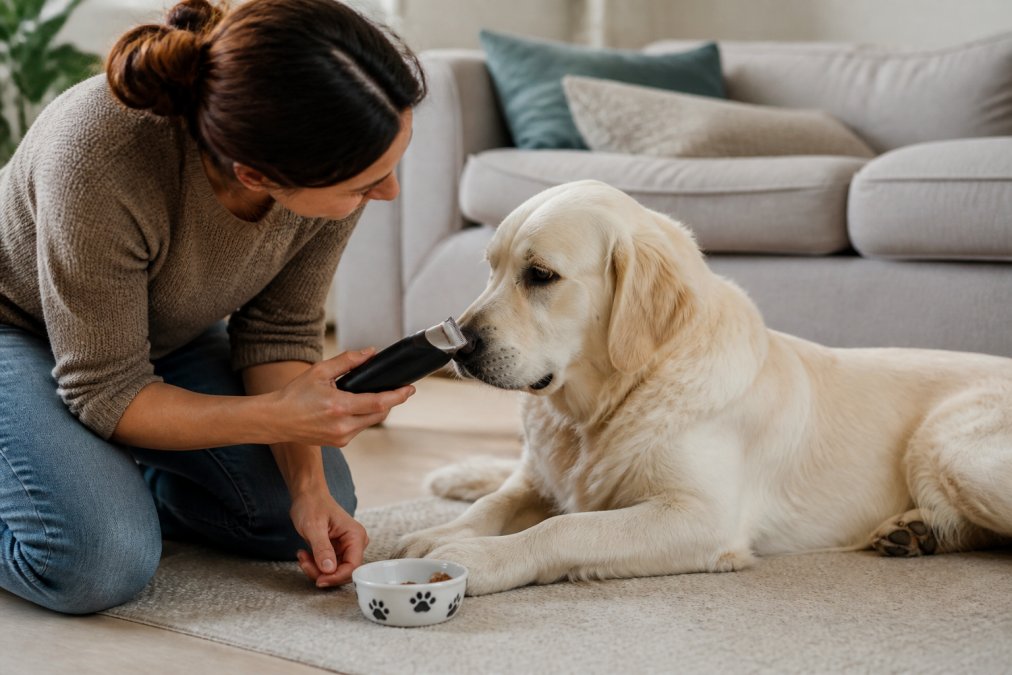
This timeline assumes moderate anxiety. Severe cases may need double the time. The principle remains: small steps, consistent rewards, never forcing, always stopping before panic. Rushing creates setbacks that take weeks to recover from.
Desensitization requires repetition. Your dog needs to experience the tool or sensation dozens of times in a positive context before anxiety truly diminishes. Consistency matters more than intensity.
Preparing the Grooming Environment and Choosing the Right Tools
The environment you create directly affects how your dog experiences grooming. A calm, warm, secure space reduces anxiety before you even touch your dog.
Temperature matters significantly. Warm water (around 85-90 degrees Fahrenheit) and a warm room help your dog stay relaxed (aaha.org). Use towels warmed in the dryer to wrap your dog afterward.
Lighting should be bright enough to see clearly but not harsh. Natural light or softer artificial light creates a calmer atmosphere. Sound matters too, close doors to minimize household noise. Some people play soft background music to mask external sounds.
Non-slip surfaces prevent anxiety. Use a rubber mat in your tub or grooming area so your dog feels stable.
For grooming tools, prioritize low-vibration clippers if trimming. High-vibration clippers overwhelm sensitive dogs. Brushes should have soft-grip handles and gentle bristles. Stiff brushes pull at the coat and irritate skin.
Choose a pH-balanced shampoo specifically formulated for sensitive skin without harsh detergents, artificial fragrances, or dyes. Oatmeal-based formulas are popular because oatmeal has natural soothing properties. Avoid human shampoo or generic pet shampoo.
Have everything you need within arm's reach before starting. This keeps your dog calmer and makes the process faster.
Best Shampoo for Dogs with Sensitive Skin and Bathing Techniques
Selecting the best shampoo for dogs with sensitive skin requires understanding what makes a formula gentle. Most commercial dog shampoos contain sulfates, cheap detergents that strip natural skin oils and leave skin dry and irritated. For sensitive dogs, choose sulfate-free formulas.
Oatmeal-based shampoos work because colloidal oatmeal has anti-inflammatory properties that soothe irritated skin and restore natural pH balance (peer-reviewed research). Hypoallergenic formulas minimize ingredients that commonly trigger allergic reactions. Look for ingredients like coconut oil, aloe vera, or chamomile, which have natural moisturizing and calming properties. Avoid heavy perfumes or dyes.
Water temperature should be warm but not hot, test it on your inner wrist first. Hot water opens pores and increases irritation.
Wet your dog thoroughly before applying shampoo, starting with feet and legs, then moving to body, back, and finally head. Use a cup or handheld showerhead rather than running water directly from the tap.
Apply shampoo in the direction of hair growth. Lather gently with your fingertips, not your nails. Avoid vigorous rubbing, which irritates skin and tangles hair.
Rinse thoroughly. Shampoo residue left on the skin causes irritation and dryness. Rinse until water runs completely clear. Incomplete rinsing is one of the most common causes of post-grooming irritation.
After rinsing, apply conditioner designed for sensitive skin if using one. Let it sit for 3-5 minutes before rinsing again. Conditioning replaces moisture and protects the skin barrier.
Step-by-Step Bathing Process for Sensitive Dogs
Step 1: Pre-bath preparation (5 minutes) Brush your dog thoroughly before bathing to remove dead hair, mats, and tangles. Bathing a matted dog makes mats worse and traps water against skin, causing irritation.
Step 2: Gather supplies (2 minutes) Have shampoo, conditioner, towels, brush, and treats within arm's reach. Test water temperature on your wrist.
Step 3: Wet the coat (3-5 minutes) Start with feet and legs, working upward. Use a cup or handheld showerhead to control water flow. Wet the entire coat thoroughly, including underside and between toes. Avoid spraying directly into the face. If your dog shows stress signals, slow down and take a break.
Step 4: Apply shampoo (5 minutes) Dilute shampoo with warm water (1:1 ratio) to make it easier to distribute and rinse. Work systematically from neck to tail, then front legs, then back legs. For the face and ears, use a washcloth dampened with diluted shampoo rather than pouring water directly.
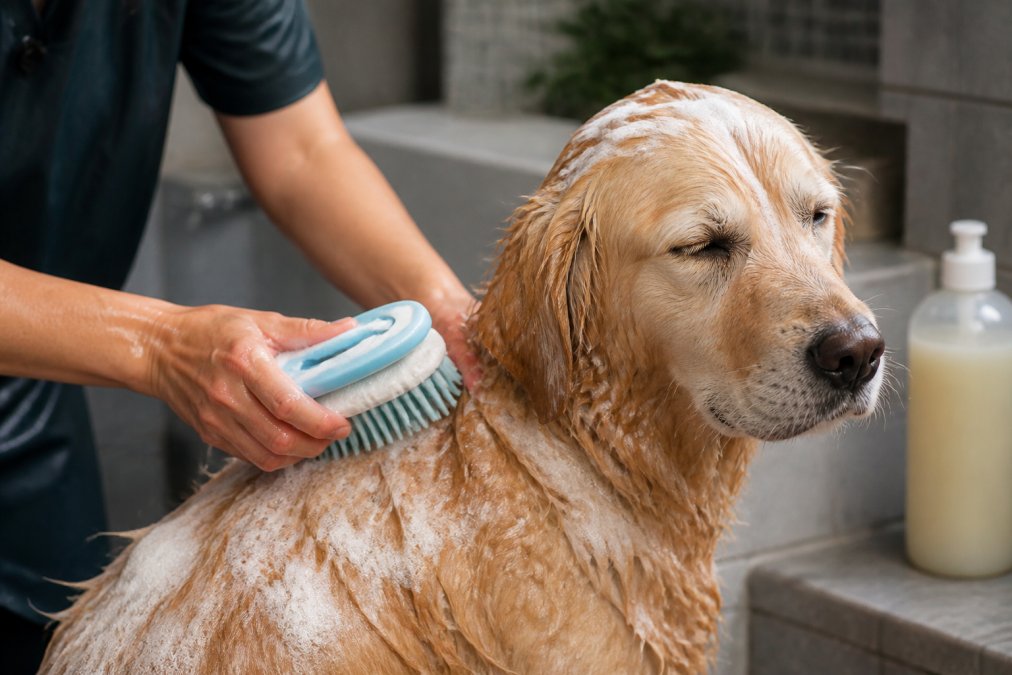
Step 5: Rinse thoroughly (5-7 minutes) Incomplete rinsing causes post-grooming irritation. Rinse the entire coat with clean, warm water, starting at the head and working downward. Pay special attention to skin folds, armpits, and between toes where shampoo residue hides.
Step 6: Apply conditioner (3-5 minutes) Apply conditioner the same way as shampoo, dilute, distribute evenly, and let sit for the recommended time. Conditioner seals the cuticle and protects against irritation.
Step 7: Final rinse (3-5 minutes) Rinse the conditioner completely. Any residue causes irritation.
Step 8: Dry (10-15 minutes) Towel dry thoroughly by squeezing water gently from the coat rather than rubbing. If using a blow dryer, use the lowest heat setting and keep it moving. Many sensitive dogs tolerate towel drying better than blow drying.
Step 9: Post-bath brushing (5 minutes) Once mostly dry, gently brush the coat to remove dead hair and prevent mats from forming as the coat dries.
The entire process should take 30-45 minutes, depending on your dog's size and coat type. Rushing causes stress and incomplete rinsing.
Post-Grooming Recovery and Managing Difficult Behaviors
What happens after grooming matters as much as the grooming itself. For the first 2-4 hours after grooming, keep your dog in a calm environment. No rough play, running, or swimming. Freshly bathed skin is more vulnerable to irritation.
Monitor your dog's skin for the next 24 hours. Some mild redness immediately after bathing is normal and fades within a few hours. Persistent redness or new irritation suggests either the shampoo wasn't suitable or rinsing was incomplete.
Avoid bathing too frequently. For dogs with sensitive skin, bathing every 4-6 weeks is usually sufficient. Frequent bathing strips natural skin oils faster than they can replenish, leading to chronic dryness and irritation.
A dog that growls, snaps, or bites during grooming is communicating extreme stress, not dominance. This is fear or pain. Forcing the dog to continue creates trauma and makes future grooming harder. Consult a certified professional dog trainer or veterinary behaviorist who specializes in fear-based aggression.
For dogs showing stress signals short of aggression, take breaks. Breaking grooming into multiple shorter sessions over several days is often more effective than one long session. A 15-minute session where your dog stays calm is better than a 45-minute session where they panic halfway through.
Reward calm behavior during grooming with high-value treats your dog only gets during grooming. Treats should be given frequently, after each successful step. Your dog learns: grooming behavior leads to immediate reward.
Grooming a sensitive dog requires patience, the right tools, and a systematic approach that addresses both behavioral anxiety and physical skin health. Start by identifying whether you're dealing with anxiety, skin sensitivity, or both. Desensitize gradually using positive reinforcement. Choose products and tools specifically designed for sensitive skin. Follow proper bathing technique with thorough rinsing. Monitor recovery carefully.
WowHaul's curated selection of grooming tools and care products for sensitive dogs is designed to make this process easier. From soft-grip brushes to pH-balanced shampoos, our collection focuses on practical solutions that genuinely reduce stress for both you and your dog. Explore our pet care essentials and find the tools that work for your dog's specific needs.
Frequently Asked Questions
Q: How do I know if my dog has sensitive skin that needs special grooming care?
A: Signs of skin irritation in dogs include redness, excessive scratching, flaking, hotspots, or an unpleasant odor. Dogs with sensitive skin may also show stress signals like trembling or avoidance during grooming. If you notice these signs, use pH-balanced, hypoallergenic shampoos and avoid products with harsh chemicals. Consult your veterinarian to rule out allergies or dermatological conditions before starting a grooming routine.
Q: What's the best approach to desensitize a dog to grooming if they're already anxious?
A: Start by introducing grooming tools without using them, let your dog sniff clippers and brushes. Reward calm behavior with treats and praise. Gradually touch your dog with these tools for short periods, always rewarding positive responses. Over 2-4 weeks, build up to brief handling sessions. Use low-vibration clippers and soft-grip brushes to minimize stress. This reward-based training reduces fear and helps your dog associate grooming with positive outcomes.
Q: Can I use regular shampoo on my dog with sensitive skin?
A: No. Regular shampoos often contain harsh chemicals and fragrances that irritate sensitive skin. Look for the best shampoo for dogs with sensitive skin, which should be hypoallergenic, pH-balanced, and free of dyes and sulfates. Oatmeal shampoo is a popular option that soothes irritation. Always check ingredient safety and consider a patch test before full use. Your veterinarian can recommend products suited to your dog's specific skin condition.
Q: How often should I groom my dog if they have sensitive skin?
A: Dogs with sensitive skin typically need grooming every 4-8 weeks, depending on coat type and skin condition. However, frequent bathing can strip natural skin oils and worsen irritation. Space baths 4-6 weeks apart, and use dry brushing between baths to remove dead hair and dander without water exposure. Work with your veterinarian to establish a grooming schedule that maintains coat health while protecting dermatological health.
This article was written using GrandRanker