

Table of Contents
- Quick Comparison: Top Upholstery Attachments at a Glance
- How to Remove Pet Hair from Upholstery: Tools That Actually Work
- Best Vacuum Brush for Delicate Fabrics: Matching Tools to Textiles
- Choosing the Right Attachment for Your Vacuum Type
- Maintenance and Care of Vacuum Tools for Upholstery Cleaning
- DIY Cleaning Solutions vs. Attachment Performance
- Troubleshooting Common Suction Issues with Upholstery Attachments
- Conclusion
- Frequently Asked Questions
Last Updated: September 23, 2026
Quick Comparison: Top Upholstery Attachments at a Glance
The best vacuum attachments for upholstery cleaning are the upholstery nozzle, the soft dusting brush, and the motorized pet hair brush. Each one solves a different problem, and using the wrong tool on the wrong fabric is the fastest way to damage a sofa or leave dirt behind.
This guide breaks down which attachment fits which job, how to match tools to delicate textiles, and how to keep them working at full suction. Below, we'll show you exactly how to pick the right tool the first time, plus the compatibility tricks most guides skip.
| Attachment | Best For | Fabric Type | Key Feature |
|---|---|---|---|
| Upholstery nozzle | General debris, crumbs | Durable weaves | Wide-mouth, low suction loss |
| Soft dusting brush | Delicate fabrics, dust | Velvet, linen | Soft bristles, gentle agitation |
| Pet hair brush | Embedded fur | Most textiles | Rubber or stiff bristle strip |
| Crevice tool | Seams, folds | Any | Narrow tip, high airflow |
| Motorized mini head | Deep pet hair | Sturdy upholstery | Rotating brush, strong agitation |
EPA guidance on indoor air quality and allergen control
Upholstery Tool vs. Dusting Brush vs. Pet Hair Brush
An upholstery nozzle is a wide, flat tool that pulls surface debris from durable fabric with minimal suction loss. A dusting brush uses soft bristles to lift dust from delicate textiles without snagging threads. A pet hair brush combines stiff bristles or a rubber strip with strong airflow to pull embedded fur out of the weave.
The difference matters more than most people think. A dusting brush on a cheap polyester couch does almost nothing.
How to Remove Pet Hair from Upholstery: Tools That Actually Work
To remove pet hair from upholstery, start with a rubber-edged attachment, work in one direction, and use short overlapping strokes. Rubber creates friction that grabs hair the way a bristle brush can't, and it pulls fur out of the weave instead of pushing it deeper.
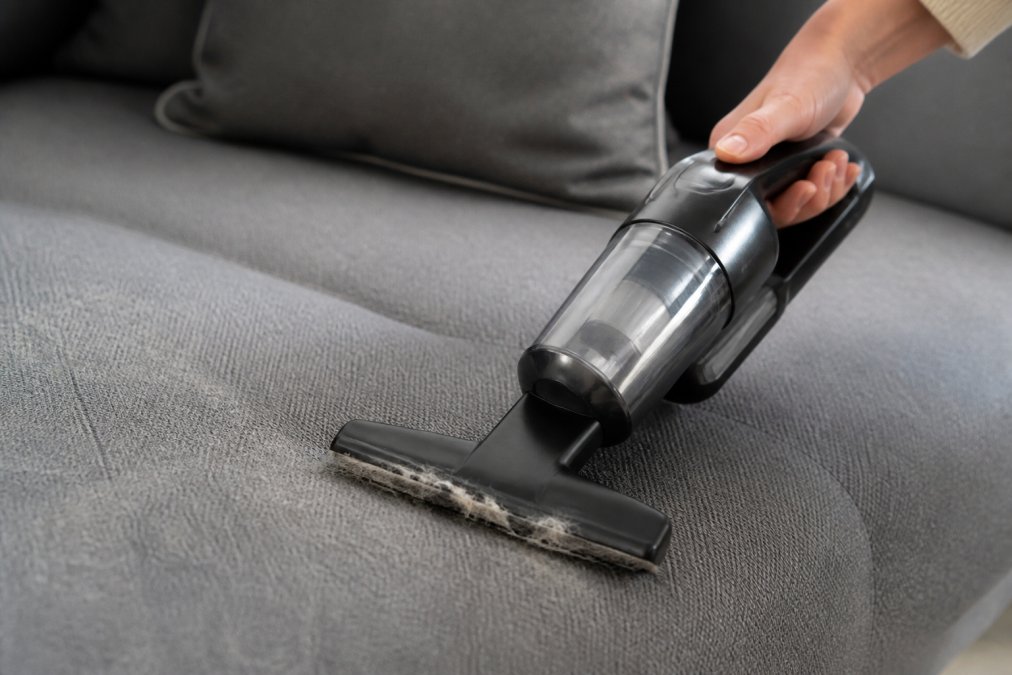
Rubber vs. Bristle Attachments for Pet Hair
Rubber attachments win on short, tightly woven fabric because static electricity and friction lift the hair cleanly. Bristle attachments win on plush or textured upholstery where hair works its way deep into the pile.
Best Vacuum Brush for Delicate Fabrics: Matching Tools to Textiles
The best vacuum brush for delicate fabrics is a soft-bristle dusting brush used with reduced suction. Stiff bristles and high airflow are the two biggest causes of fabric damage, so both need to come down before you touch velvet, silk blends, or loose linen weaves.
The Three Variables That Actually Matter
Every fabric decision comes down to three properties:
- Nap direction and pile height. Velvet, velour, chenille, and corduroy have a raised nap that lies in one direction. Brushing against the nap crushes fibers and leaves track marks. Brushing with the nap is safe but lifts less dust, so you trade cleaning power for appearance.
- Fiber tenacity (how easily threads snag). Loose linen weaves, boucle, and tweed have floating threads that catch on bristles. Tightly woven microfiber and performance fabric have short, locked fibers that resist snagging.
- Moisture sensitivity. Silk blends, some rayons, and low-quality leather can bleed dye or water-spot. This matters because a damp brush concentrates moisture at the bristle tips.
Fabric-by-Fabric Attachment Guide
| Fabric | Safest Attachment | Suction Setting | Pressure | Watch Out For |
|---|---|---|---|---|
| Velvet / velour | Soft dusting brush, brush with nap | Lowest | Feather-light | Crushed nap, track marks |
| Chenille | Soft dusting brush or bare upholstery nozzle | Low | Light | Snagging the tufted pile |
| Linen / cotton blends | Medium-soft bristle brush | Medium | Light | Loose threads pulling |
| Microfiber / performance fabric | Soft brush or rubber pet hair tool | Medium | Moderate | Stiff bristles polishing the surface |
| Wool / tweed | Upholstery nozzle with brush strip | Medium | Light | Fuzzing and pilling |
| Leather / faux leather | Wide-mouth nozzle only, no brush | Low | Light | Scratches, moisture rings |
| Silk blends | Bare nozzle or soft brush over a cloth | Lowest | None | Dye bleed, water spots |
| Boucle | Bare nozzle, no brush | Low | None | Pulling looped yarns |
How to Test an Attachment Before You Commit
Before running any brush across a visible cushion, do a 10-second test on a hidden area, the back of the sofa, the underside of a seat cushion, or an inside seam flap.
- Set suction to its lowest setting.
- Make one slow pass with the brush in the direction of the nap.
- Look at the fabric under raking light (a phone flashlight held at a low angle works).
- Check for fuzzing, pulled threads, or a flattened stripe.
The Nap-Direction Trick Most People Miss
On velvet and velour, always brush with the nap, not against it. Run your palm across the cushion, one direction feels smooth, the other feels rough. Brush in the smooth direction. This lifts dust without disturbing the fibers' lay, and it's the single biggest reason some people clean velvet successfully while others ruin it.
Choosing the Right Attachment for Your Vacuum Type
Attachment compatibility comes down to two things: hose diameter and the fitting style. Most upright, canister, and handheld vacuums use one of a few standard diameters, and a mismatched tool either won't seal or falls off mid-clean.
| Vacuum Type | Typical Hose Fit | Best Attachment Style |
|---|---|---|
| Upright | Wider collar, friction fit | Wide upholstery nozzle |
| Canister | Standard friction fit | Full brush kit |
| Handheld | Small diameter | Compact pet hair brush |
| Cordless stick | Brand-specific click | Universal adapter needed |
Universal Adapter Compatibility and Hose Diameters
Universal adapters bridge the gap between one brand's hose and another brand's tools. They work well when the diameter difference is small, but a large gap means air leaks and weak suction at the fabric.
Maintenance and Care of Vacuum Tools for Upholstery Cleaning
Clean attachments outperform dirty ones, every time. Hair, lint, and dust build up on the brush strip and block airflow, which is the real reason your suction feels weak after a few months of use.
A simple routine keeps tools working:
- Pull hair off the brush strip after every use
- Rinse rubber attachments in warm water and dry fully
- Check the hose collar for cracks or loose fittings
- Clear the crevice tool with a thin wire or skewer
- Replace worn bristle strips before they scratch fabric
DIY Cleaning Solutions vs. Attachment Performance
Use a DIY solution as a supplement, not a substitute. Apply it lightly, let it dry, then vacuum with the right attachment. Wet fabric plus a stiff brush is how you create a permanent stain ring.
One caveat: test any solution on a hidden area first. Some fabrics react badly to moisture, and the attachment won't save you from a dye bleed.
Troubleshooting Common Suction Issues with Upholstery Attachments
Weak suction usually traces back to the attachment, not the vacuum. A clogged brush strip, a loose hose collar, or a mismatched fitting will choke airflow before the motor ever struggles.
Work through the likely causes in order:
- Clogged tool: clear hair and lint from the brush strip and nozzle
- Loose fit: reseat the collar or add a universal adapter
- Full bag or bin: empty it before suction drops further
- Clogged hose: run a plumber's snake or a broom handle through it
- Worn brush strip: replace it, since flattened bristles stop agitating
Conclusion
Getting upholstery genuinely clean comes down to matching the right attachment to the fabric and the mess, then keeping that tool in working order. Grab the wrong brush and you either leave dirt behind or damage the textile you're trying to protect.
Frequently Asked Questions
Do all vacuum attachments fit all vacuum cleaners?
No, attachments are not universally compatible. Hose diameters vary between brands and models, and connection types differ. Universal adapter kits can bridge the gap for many vacuums, but you need to check the hose diameter and connection style first. Some brands use proprietary fittings that require brand-specific tools. Measuring your hose diameter before buying an attachment saves returns and frustration.
What is the best vacuum attachment for cleaning a fabric sofa?
A wide upholstery nozzle with soft bristles works well for general fabric sofa cleaning. For pet hair, a rubber-tipped or bristle brush attachment creates friction that lifts embedded hair. Delicate fabrics need a brush with soft bristles and suction control to prevent damage. The right upholstery cleaning attachment depends on your fabric type and what you are removing.
How do I clean upholstery with a vacuum without damaging the fabric?
Use a low suction setting and a brush attachment with soft bristles. Test on a hidden area first. Move the attachment in overlapping passes rather than pressing hard. For delicate fabrics, skip rotating brush rolls and use a static or rubber tool instead. Regular upholstery maintenance with the right attachment prevents deep-set dirt and extends fabric life.
Can I use DIY cleaning solutions with my vacuum attachment?
DIY solutions work best as a pre-treatment before vacuuming, not during. Applying a spray and then vacuuming with an upholstery nozzle can pull moisture into your vacuum, causing damage. Let any solution dry completely or use a wet-dry vacuum designed for liquids. For dry debris and pet hair, attachments alone handle the job without solutions.