

Table of Contents
- What Makes Curated Home Essentials for Families Different
- Family-Friendly Home Decor Ideas That Work With Kids
- Durable Home Essentials for Families: Materials and Choices That Last
- How to Organize a Family Home for Daily Function
- Building a Cohesive Home Environment on Your Budget
- Quality Over Quantity: The Case for Intentional Living
- Frequently Asked Questions
Last Updated: August 31, 2026
What Makes Curated Home Essentials for Families Different
Curated home essentials for families aren't about having the most stuff. They're about choosing the right pieces that actually work with your life instead of against it. At WowHaul, we understand that busy families need products that balance beauty with durability, function with affordability. The difference between a curated approach and random shopping is intention: every piece serves a purpose, fits your aesthetic, and lasts long enough to justify its place in your home.
Most families approach home design by accumulating whatever catches their eye. You end up with mismatched decor, furniture that breaks under normal use, and shelves crowded with items you don't actually need. A curated approach flips this. You start by defining what matters to your family, your style, your budget, your lifestyle, then build from there. This means fewer purchases overall but significantly higher satisfaction with what you own.
The practical reality is that families with kids need items that withstand wear and tear. That means choosing materials and designs built for real life, not Pinterest perfection. It means understanding which pieces are worth the investment and which are better as affordable basics. It means knowing how to organize your space so everything has a home and daily routines actually function.
Family-Friendly Home Decor Ideas That Work With Kids
Creating a beautiful home while raising kids requires a different design philosophy than decorating for adults alone. Family-friendly home decor ideas focus on durability and washability without sacrificing style. Your living space needs to accommodate toys, spills, and the occasional wall scribble while still feeling intentional and put-together.
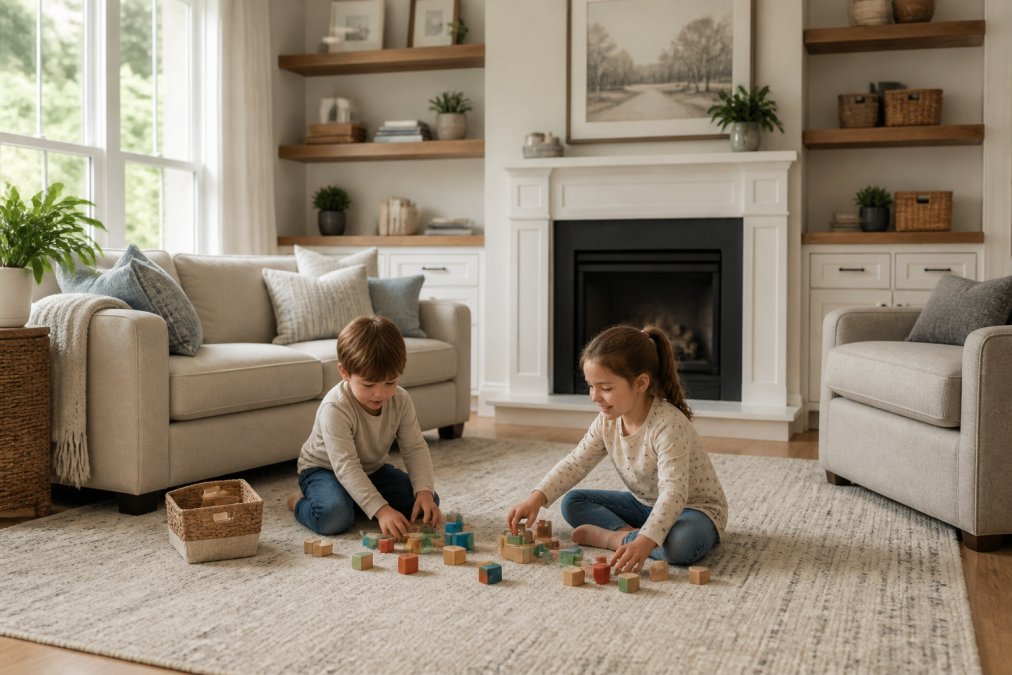
Start with textiles you can actually clean. Throw pillows in performance fabrics, area rugs in natural fibers that hide dirt, and slipcovers on seating that take beating from daily life. Wall art should hang high enough that curious hands can't reach it, or choose pieces that aren't precious. Consider removable wallpaper or paint colors in warm, forgiving tones that don't show fingerprints.
Storage becomes decor in a family home. Open shelving with baskets, labeled bins, and cubbies keeps toys accessible while maintaining a cohesive look. This approach teaches kids where things belong while keeping your living room from looking like a toy explosion. Furniture should have rounded edges, sturdy construction, and finishes that handle bumps and spills. Avoid glass tabletops and anything with small parts that could become hazards.
The secret to family-friendly spaces is choosing items that improve with age rather than deteriorate. Solid wood pieces develop character. Natural fiber rugs soften with use. Quality upholstery holds up to years of jumping and snuggling. This is where intentional curation pays off: you're not replacing decor every two years because it fell apart.
Lighting matters more in family spaces than people realize. Bright, even lighting helps you spot messes and keeps the space feeling open. Dimmer switches let you adjust ambiance for different times of day. Avoid dangling cords and opt for wall-mounted or table lamps that won't tip over during roughhousing.
Durable Home Essentials for Families: Materials and Choices That Last
The foundation of a curated home is choosing materials that actually survive family life. Durable home essentials for families start with understanding which materials hold up and which don't. Solid wood beats particleboard. Natural fibers outperform synthetics. Quality hardware outlasts cheap alternatives.
Upholstery fabric matters more than most people realize. Synthetic performance fabrics resist staining better than natural fibers, but they can feel plasticky. Natural fibers like linen and cotton breathe better and age beautifully, though they stain more easily. The best choice depends on your tolerance for maintenance. If you're willing to treat stains promptly and have things professionally cleaned occasionally, natural fabrics work. If you need set-it-and-forget-it durability, performance fabrics win.
Wood finishes tell a similar story. Matte finishes hide fingerprints and dust better than glossy ones. Darker woods show less wear than light woods. Reclaimed or hand-finished wood develops character as it ages. Engineered wood with a veneer looks great initially but can't be refinished if it gets damaged. Solid wood costs more upfront but can be sanded and restained when needed.
Flooring choices define how much maintenance your home requires. Hardwood is beautiful but needs refinishing every decade or so (peer-reviewed research). Luxury vinyl plank mimics wood without the refinishing requirement and handles moisture better. Natural stone is durable but cold and can be slippery with kids running around. Sealed concrete works in modern spaces and is nearly indestructible. Area rugs over hard flooring soften the space and protect the underlying surface.
Hardware and hinges on furniture and cabinets are worth the investment in quality. Cheap hinges sag and stick. Good hinges operate smoothly for years. Drawer slides matter too. Full-extension slides cost more than budget alternatives but make accessing items easier and prevent jams.
How to Organize a Family Home for Daily Function
Organization systems only work if they're simple enough that your family actually uses them. How to organize a family home starts with understanding your family's daily rhythms and pain points. Where do backpacks pile up? Where do shoes end up? Where does paperwork accumulate? Build your organization system around these realities instead of fighting them.
Zone your home by activity. A homework zone near the kitchen with supplies and good lighting. A coat and shoe zone near the entry. A toy zone contained to one area with clear boundaries. A laundry zone with sorting, washing, and folding stations close together. These zones don't need to be fancy, they just need to exist and be accessible to whoever uses them.
Label everything. Kids are more likely to put things away if they know where things go. Use pictures and words on bins for younger children. Color-coding works too. Make it obvious rather than subtle. The goal is making the right choice the easy choice.
Vertical storage maximizes space in family homes. Wall-mounted shelving, pegboards, and hooks get items off the floor and create visual interest. Floating shelves display both functional items and decorative pieces. Over-the-door organizers add storage without taking up floor space. Tall, narrow bookcases fit into corners and hold more than you'd expect.
Rotation systems keep toy overload from happening. Store some toys away and rotate them every few weeks. Kids find "new" toys they've already seen, and you reduce daily clutter. This works for seasonal decor too. Store off-season items in labeled bins that you can easily grab when needed.
Daily habits beat perfect systems every time. A five-minute pickup before bed. A launch pad by the door where tomorrow's necessities gather. A mail sorting station that prevents paper from spreading everywhere. These small routines prevent chaos from building up.
Building a Cohesive Home Environment on Your Budget
Creating a curated home on a family budget requires patience and strategy. Building a cohesive home environment on your budget means prioritizing investment pieces and filling in with affordable basics. You don't need everything to be expensive. You need everything to work together.
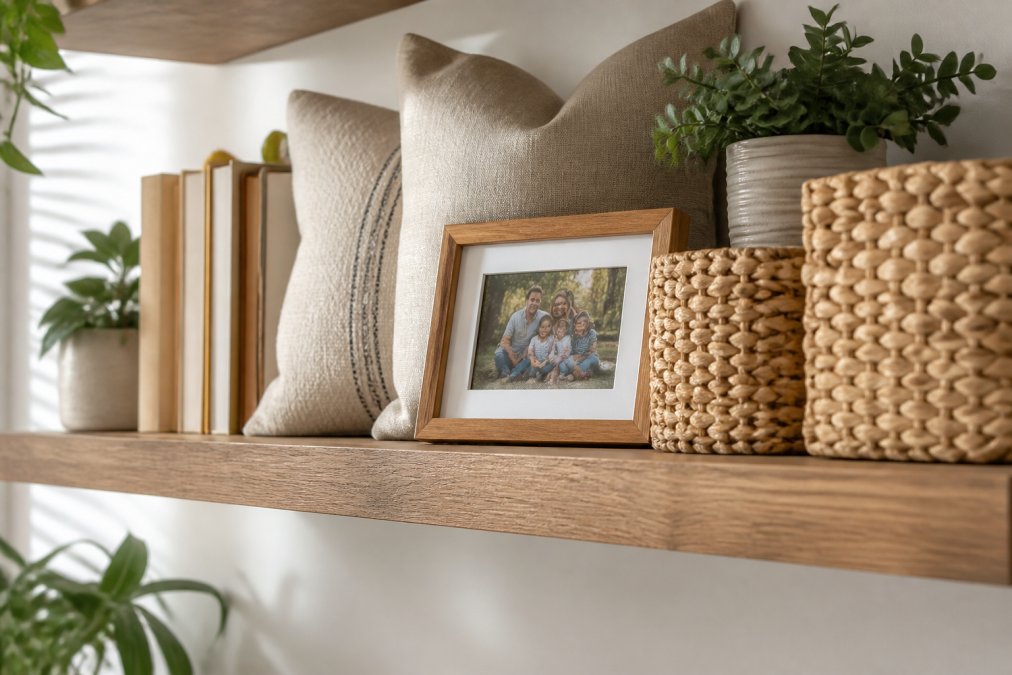
Start with a color palette. Choose three to four colors that will appear throughout your home. This doesn't mean everything is the same color. It means your accent colors, neutrals, and artwork all reference the same palette. Cohesion happens when a visitor can move through your home and feel like they're in the same space, not a collection of different rooms.
Invest in foundational pieces that anchor each room. A quality sofa, a good bed frame, a sturdy dining table. These items take the most wear and get used daily. Spend more here and less on trendy accessories that you'll replace in two years. A $1,500 sofa that lasts ten years is cheaper than three $500 sofas over the same period (the FTC).
Fill in with affordable basics from retailers that understand your budget. Throw pillows, area rugs, wall art, and plants create visual interest without breaking the bank. These are the pieces you can swap out when you want a refresh or when they wear out. Quality basics from stores like WowHaul let you change the feel of a space without major investment.
Thrift stores and secondhand marketplaces offer incredible finds if you know what to look for. Solid wood furniture, vintage decor, and unique pieces cost a fraction of retail. The key is being selective. Don't buy something just because it's cheap. Buy it because it fits your vision and it's actually well-made.
DIY finishing touches personalize your space without cost. Paint old frames. Rearrange artwork. Create gallery walls. Refinish thrifted furniture. These projects take time but cost almost nothing and make your home feel uniquely yours.
Quality Over Quantity: The Case for Intentional Living
The shift toward intentional living reflects a growing understanding that more stuff doesn't equal more happiness. Quality over quantity means owning fewer items but choosing each one carefully. It means your home reflects your values instead of your impulses.
Intentional living starts with asking hard questions before you buy. Do I actually need this? Does it fit my aesthetic? Will it last long enough to justify the cost? Will I use it regularly? If you can't answer yes to most of these questions, don't buy it. This discipline prevents accumulation and keeps your home from becoming cluttered.
Fewer items make cleaning and organizing easier. You have less to dust, less to store, and less to manage. Your daily routines run smoother because you're not navigating around unnecessary stuff. Families report that reducing clutter actually reduces stress and improves family dynamics (apa.org).
Intentional purchasing also means knowing your suppliers. WowHaul curates practical finds designed to simplify everyday living. When you shop from retailers who think carefully about what they sell, you're more likely to get items that actually work. You avoid the trap of buying something just because it's on sale or trendy.
Quality items tell a story. They show wear in ways that add character instead of looking shabby. A worn leather chair looks better than a worn polyester one. Solid wood with scratches looks authentic. Natural fibers that soften with age feel lived-in and real. These items improve with time instead of deteriorating.
The financial case for quality is straightforward. A $400 pair of shoes that lasts five years costs $80 per year. A $100 pair that lasts one year costs $100 per year. The quality purchase is cheaper. This math applies to furniture, decor, and home essentials. Intentional curation means you're buying smart, not just buying less.
Creating curated home essentials for families requires balancing aesthetics with practicality, investment pieces with budget-friendly finds, and personal style with family function. The approach WowHaul champions, thoughtful selection of quality items designed for everyday living, removes the stress from home design. Start with your vision, invest in foundational pieces that last, fill in with affordable basics, and trust that intentional choices create homes that work as beautifully as they look. Your family deserves a space that supports daily life while reflecting who you are.
Frequently Asked Questions
What are the best durable materials for family-friendly home essentials?
Look for materials that withstand daily wear: microfiber and performance fabrics for upholstery, sealed wood or laminate for tables, and washable wall paint. Natural latex and quality neoprene offer durability without sacrificing comfort. Avoid delicate fabrics and choose stain-resistant finishes. These choices reduce maintenance and replacement costs over time, making intentional purchasing habits pay off for families managing multiple users and activities in shared spaces.
How do I balance aesthetics and functionality in a family home?
Start with functional pieces that serve your family's daily needs, then add decor accents that reflect your style. Choose multi-use items: ottomans with storage, wall art that coordinates with your color scheme, and decorative pillows in washable fabrics. Invest in quality core pieces (seating, tables, storage) and rotate smaller accessories seasonally. This approach creates a cohesive design while keeping your home practical for kids, pets, and busy schedules. Prioritize durability in high-traffic areas and save lighter aesthetic touches for spaces with less wear.
How can I curate a home that grows with my children?
Choose neutral base colors and timeless furniture shapes that adapt as your kids age. Invest in quality, adjustable pieces like posture corrector belts ($29.99) for wellness routines or foldable yoga mats ($47.60) that support family fitness activities together. Use modular storage and avoid character-themed decor that dates quickly. Select wall art and accessories you genuinely love rather than trendy pieces. This intentional approach means your home evolves with your family without constant replacement, supporting both aesthetic consistency and budget-conscious curation over years.
What is the difference between the 70/30 rule and 3-5-7 rule in decorating?
The 70/30 rule means 70% of your decor should be neutral or muted tones, with 30% in accent colors or bold pieces. This creates visual calm while allowing personality to show. The 3-5-7 rule suggests grouping decorative items in odd numbers (3, 5, or 7) for visual interest, three pillows on a sofa, five books on a shelf, seven wall art pieces in a gallery. Both rules support intentional living by preventing clutter while building cohesive design. For families, these frameworks help you choose fewer, higher-quality pieces that work together rather than filling spaces with random items.
This article was written using GrandRanker