

Table of Contents
- Start With a Daily Reset Routine
- Decluttering Tips for Busy Parents
- How to Organize Toys in Living Room
- Create Designated Storage Zones
- Build a Daily Cleaning Schedule for Working Parents
- Set Up a Family Command Center
- Make Organization Stick: Systems That Last
Last Updated: August 25, 2026
Start With a Daily Reset Routine
A daily reset routine is the foundation of simple home organization for parents. It's a 10-15 minute wind-down at the end of each day where you return items to their designated places, clear surfaces, and prepare for tomorrow (peer-reviewed research). Without this habit, clutter accumulates faster than you can contain it, and mornings become chaotic.
The daily reset works because it prevents the snowball effect. One pile of mail becomes three. Three becomes a stack on the counter. That stack becomes background noise you stop noticing. A reset routine catches this before it starts.
Here's how to build one that actually sticks:
- Set a specific time. Choose the same time every evening, right after dinner, before bed, or when kids finish homework. Consistency matters more than the exact hour.
- Clear one surface at a time. Start with the kitchen counter, then the dining table, then entryway. Don't try to reset the entire house at once.
- Return items to their homes. Every toy, paper, and object gets placed back where it belongs. No "I'll deal with this later" piles.
- Wipe down surfaces. A quick wipe with a cloth takes 30 seconds and makes the space feel intentional.
- Prepare for tomorrow. Lay out school clothes, pack backpacks, set out breakfast items. This removes friction from your morning.
The key insight most busy parents miss: a reset routine doesn't require perfection. It requires consistency. Five minutes of daily effort beats a weekend spent excavating clutter.
Decluttering Tips for Busy Parents
Decluttering and organizing are not the same thing. You can organize clutter beautifully, and still have too much. Decluttering means removing what you don't need so that home organization for parents becomes manageable.
Most parents hesitate to declutter because it feels like a massive project. The solution is to declutter in 15-minute sprints, one category at a time, rather than attempting a whole-house purge.
Here's a practical approach:
- Start with toys. Kids accumulate toys constantly. Set a rule: if a toy hasn't been played with in three months, it goes (apa.org). Be honest, your child won't miss 90% of what you remove.
- Handle papers ruthlessly. School papers, permission slips, and old mail pile up fast. Keep one folder per child for artwork and important documents. Recycle everything else within a month of receipt.
- Clothes rotation. Children outgrow clothes quickly. As soon as something doesn't fit, donate it. Don't keep it "just in case."
- Duplicate items. How many scissors do you need? How many measuring spoons? Keep one functional set and donate the rest.
- Broken items. If it's been broken for more than a month and you haven't fixed it, throw it away. It's clutter pretending to be useful.
A common mistake is keeping items "for someday." Someday rarely arrives. If you haven't used something in a year, it's not a future need, it's past clutter.
How to Organize Toys in Living Room
Toy organization fails when parents treat it as a one-time setup. It succeeds when the system is simple enough that kids can help maintain it without constant reminders.
The living room is high-traffic and visible, so toy organization here has to be both functional and aesthetically tolerable. Baskets, bins, and labeled containers work better than elaborate shelving systems that require constant fussing.
Here's a system that works:
- Use clear bins or labeled baskets. Kids can see what's inside and return items to the right place. Label bins with pictures and words so even pre-readers understand where things go.
- Group by type, not by toy brand. Keep all building blocks together, all action figures together, all stuffed animals together. This makes cleanup faster and prevents toys from spreading across multiple containers.
- One basket per category. If you have five baskets of Lego, consolidate to one. Excess containers encourage excess toys.
- Store off the floor. Wall-mounted shelves or low bookcases keep toys visible and accessible without creating a floor obstacle course.
- Rotate toys seasonally. Keep some toys in storage and rotate them every 2-3 months. Kids rediscover old toys and you reduce the volume in active play areas.
The mistake most parents make: they buy expensive toy storage systems before decluttering. You end up with a beautiful organizational system holding too much stuff. Declutter first, then invest in storage.
Create Designated Storage Zones
Designated storage zones are specific areas where categories of items live permanently. A zone for school supplies. A zone for winter coats. A zone for pet care items. This prevents items from migrating throughout the house.
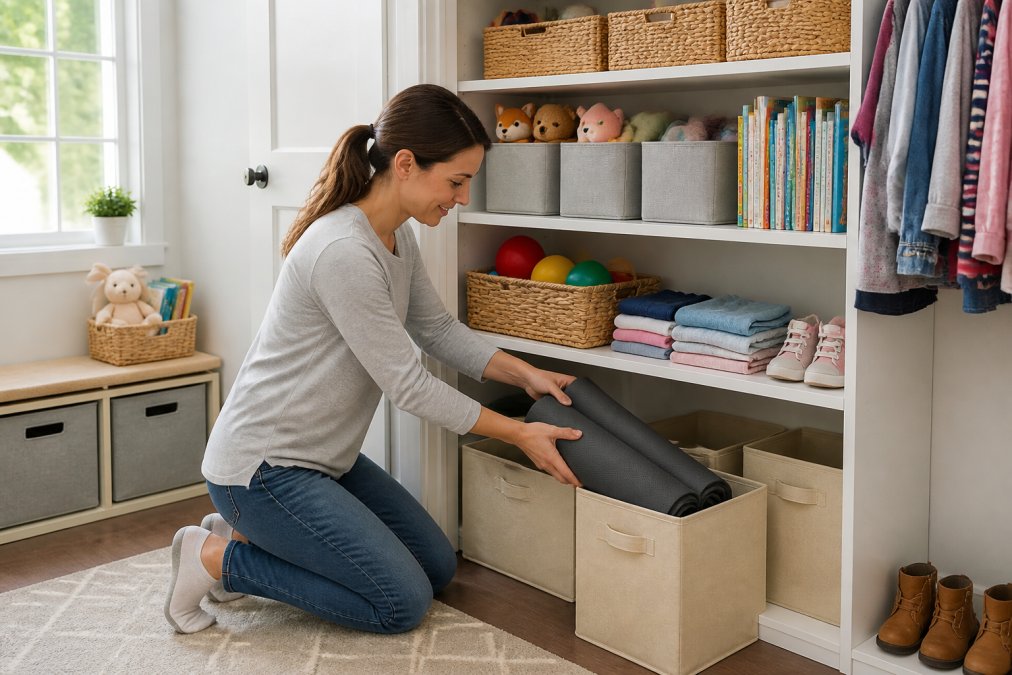
When every item has a home, simple home organization for parents becomes automatic. Kids know where to find things. You know where to look. Clutter doesn't accumulate in random spots because there are no random spots.
Here's how to establish zones:
- Identify your categories. School supplies, outdoor gear, pet care, cleaning supplies, seasonal decorations, first aid, batteries, and important documents are common zones for families.
- Choose accessible locations. Put items kids use frequently at kid height. Keep items you use daily in visible, easy-to-reach spots. Seasonal items can go higher or deeper in storage.
- Label everything. Use a label maker or write on tape. Labels prevent the "I forgot where this goes" excuse and help kids learn where items belong.
- Use vertical space. Wall hooks, shelves, and pegboards maximize storage without taking up floor space. This is especially important in smaller homes.
- Keep zones contained. If your school supply zone starts expanding into three drawers and a shelf, you've kept too many supplies. Trim back to what fits in the designated space.
A practical tip: use clear containers for zones you access frequently. You can see what's inside without opening them, which speeds up both finding and restocking.
Build a Daily Cleaning Schedule for Working Parents
A daily cleaning schedule for working parents is not about having a spotless house. It's about distributing small tasks across the week so nothing becomes overwhelming.
Most working parents fail at cleaning because they try to do it all on weekends. By Sunday night, you're exhausted. By Monday, the house is messy again. A daily schedule spreads the load.
Here's a realistic structure:
- Monday: Kitchen deep clean. Wipe down appliances, clean the microwave, organize the fridge. Takes 20 minutes.
- Tuesday: Bathrooms. Scrub toilets, sinks, and mirrors. Takes 15 minutes per bathroom.
- Wednesday: Floors. Vacuum high-traffic areas and sweep the kitchen. Takes 15 minutes.
- Thursday: Bedrooms. Change sheets, dust surfaces, organize closets. Takes 20 minutes.
- Friday: Entryway and living areas. Wipe down surfaces, organize clutter zones, prepare for the weekend. Takes 15 minutes.
- Saturday and Sunday: Maintenance only. Do laundry, dishes, and the daily reset. No deep cleaning.
The key is doing one task per day rather than everything at once. This daily cleaning schedule for working parents prevents the Sunday night panic and keeps your home functional throughout the week.
Set Up a Family Command Center
A family command center is a wall or cabinet where all household information lives in one place. Permission slips, calendars, chore charts, and important documents are visible and accessible. This eliminates the chaos of searching for papers and helps everyone know what's happening.
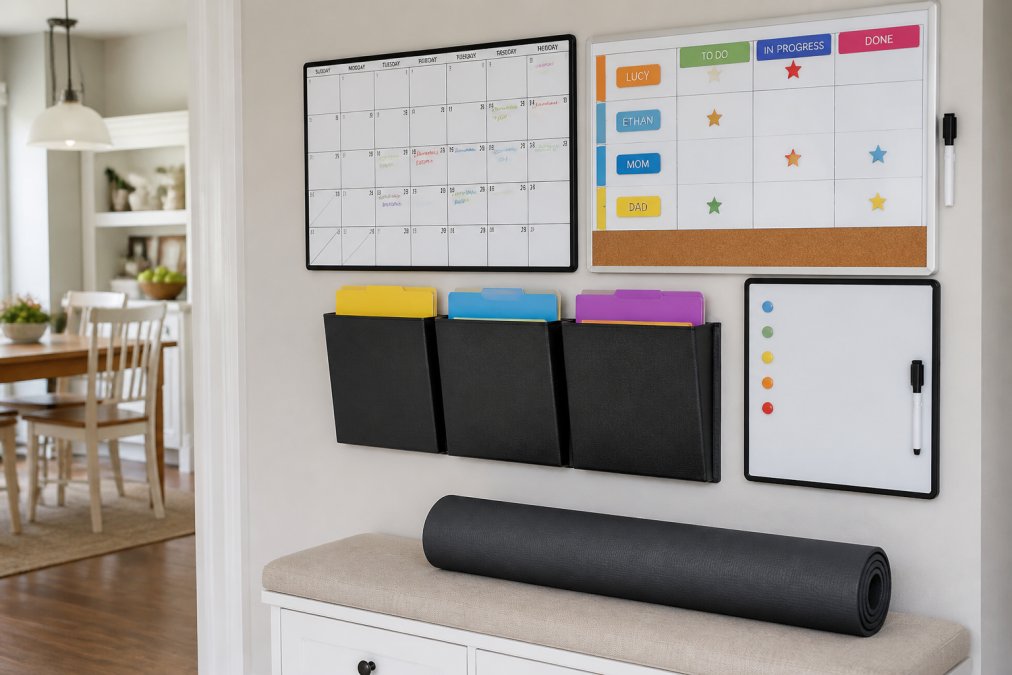
The command center works because it creates a single source of truth. Instead of papers scattered across the kitchen counter, backpacks, and car seats, everything has a designated spot.
Here's what to include:
- Family calendar. Use a large wall calendar where everyone can see upcoming events, appointments, and school dates. Color-code by family member if you have multiple kids.
- Chore chart. Display weekly chores and who's responsible. Update it every Sunday so everyone knows their tasks.
- Permission slip folder. Create a labeled folder or file box where permission slips live until signed and returned. Check it daily.
- School papers. Designate a folder for each child's current schoolwork, test results, and teacher notes.
- Important documents. Keep a file for medical records, insurance information, and emergency contacts. Not all on the wall, but referenced from the center.
- Whiteboard or notepad. Use it for daily reminders, grocery lists, and quick messages between family members.
A practical detail: laminate the calendar or use a dry-erase version so you can update it without printing new copies constantly.
Make Organization Stick: Systems That Last
The difference between a home that stays organized and one that reverts to chaos is maintenance. Most parents build a system, follow it for two weeks, then abandon it when life gets busy. The systems that last are the ones that require minimal daily effort.
Here's what makes a system stick:
- Keep it simple. The more complicated your system, the more likely you'll abandon it. Simple systems survive contact with real life.
- Involve kids from the start. Kids who help create the system are more likely to maintain it. Ask them where they think toys should go. Let them help label bins.
- Build in accountability. A weekly family meeting where you review what's working and what isn't keeps the system alive. Spend 10 minutes on Sunday discussing organization.
- Adjust as you go. Systems that work in January might not work in April. As kids grow, toys change, and seasons shift, your organization needs to adapt.
- Celebrate small wins. When your kid remembers to put toys away without being asked, acknowledge it. When you complete a daily reset for two weeks straight, that's a win.
The maintenance phase is where most systems fail. You build something beautiful, it works for a month, then real life happens and you stop maintaining it. Expect that. Plan for it. Build systems that survive neglect for a few days and still function.
At WowHaul, we understand that simple home organization for parents isn't about perfection, it's about creating systems that work with your life, not against it. Our curated collection of practical organization tools, storage solutions, and household products are designed to support stronger routines and less daily friction. Whether you're implementing a command center, establishing designated zones, or building a daily reset routine, the right tools make the difference between a system that lasts and one that falls apart after two weeks. Explore our selection of functional storage solutions and home organization products that help busy parents build systems that actually stick.
Simple home organization for parents solves a real problem: the constant battle against clutter, chaos, and the mental load of household management. The systems in this guide, daily resets, decluttering sprints, toy zones, and command centers, work because they're built for real families with real constraints. Start with whichever system addresses your biggest pain point. Once that's working, add the next one. Over time, these habits compound into a home that functions smoothly, even on your hardest days.
Frequently Asked Questions
What's the best way to start home organization for parents with limited time?
Begin with a single room or zone rather than tackling your entire home at once. Pick one area, like a closet or the kitchen junk drawer, and spend 30 minutes sorting items into keep, donate, or discard piles. This creates momentum and gives you a quick win. Once you see results, apply the same method to other spaces. Many busy parents find that starting small prevents burnout and makes the process feel manageable alongside their daily responsibilities.
How do I maintain an organized home with kids without it becoming clutter again?
Establish a daily reset routine: spend 10-15 minutes each evening returning items to designated spaces. Involve your children by assigning age-appropriate tasks, younger kids can put toys in bins, older ones can sort mail and papers. Use visual cues like labeled folders and color-coded bins so everyone knows where things belong. The key is consistency: a brief tidy-up each day prevents clutter from accumulating and keeps your home functional for your family's busy schedule.
What decluttering tips work best for families with multiple kids?
Use the 12-12-12 rule: find 12 items to donate, 12 to trash, and 12 to relocate to proper storage. Involve kids in the process by letting them choose which toys to donate, this teaches them about minimalism and ownership. Set a timer for 20-30 minutes so the task feels finite. Focus on categories one at a time (toys, books, clothes) rather than mixing everything. This approach prevents overwhelm and helps your family understand that organizing is an ongoing habit, not a one-time project.
Are budget-friendly storage solutions effective for home organization?
Yes. Repurpose items you already own: shoe boxes hold small toys, mason jars store buttons and office supplies, and baskets from thrift stores cost $2-5 and work as well as expensive organizers. Label everything with a label maker or tape to create visual cues that help your family maintain the system. The Foldable Yoga Mat from WowHaul ($47.60) is an example of multi-purpose storage, it folds away compactly when not in use, freeing up space in small apartments or homes. Effective organization isn't about spending more; it's about choosing the right tools for your space and lifestyle.
This article was written using GrandRanker