

Table of Contents
- Understand What Greenwashing Really Means
- Step 1: Identify Marketing Buzzwords and Vague Claims
- Step 2: Verify Third-Party Sustainability Certifications for Home Goods
- Step 3: Research the Brand's Supply Chain and Ingredient Transparency
- Step 4: Recognize Common Greenwashing Marketing Tactics
- Step 5: Check FTC Green Guides Compliance and Regulatory Standards
- Step 6: Use Digital Tools and Read Verified Labels
- Conclusion
- Frequently Asked Questions
Last Updated: September 4, 2026
Understand What Greenwashing Really Means
Greenwashing is the practice of making misleading or unsubstantiated claims about a product's environmental benefits to appear more sustainable than it truly is. When you shop for home goods, this deceptive marketing can make it nearly impossible to tell a genuinely eco-friendly item from one that simply uses the right vocabulary. Before you spend money on products claiming to be "green," you need a verification strategy.
Sustainability claims are largely unregulated, and the terms brands use most often have the least legal meaning. This guide helps you cut through the noise with practical verification strategies.
Step 1: Identify Marketing Buzzwords and Vague Claims
The fastest way to avoid greenwashing in home product choices is to treat certain words as red flags until proven otherwise. Terms like "natural," "eco-friendly," and "green" are unregulated marketing buzzwords that any brand can slap on a label without evidence.
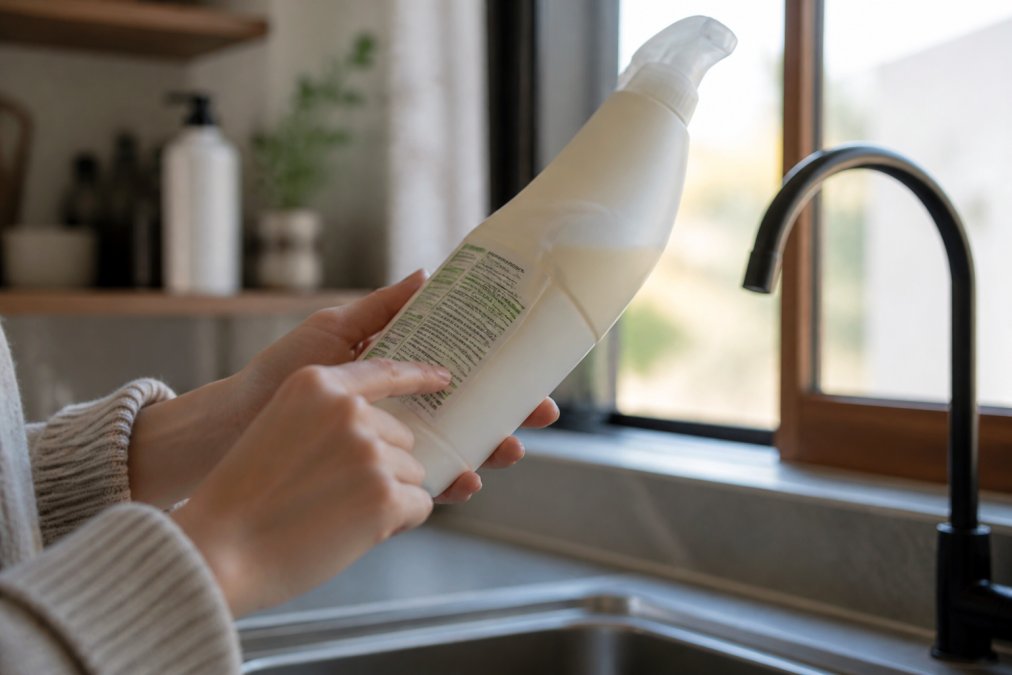
"Natural" tells you nothing about environmental impact, arsenic and petroleum are natural. "Non-toxic" has no legal definition in product labeling for most home goods.
Ask: What specific claim is made? Is there evidence (certification, data sheet)? Does it address the full lifecycle? If a label says "eco-friendly" without explanation, the claim is designed to sell, not inform.
Step 2: Verify Third-Party Sustainability Certifications for Home Goods
Third-party certifications are your most reliable shortcut. Independent certifiers have no financial incentive to approve products, making their verification far more credible than brand marketing.
Look for certifications that audit the entire supply chain. For textiles and furniture, Greenguard or OEKO-TEX verify low chemical emissions. For cleaning products, EPA Safer Choice confirms ingredients meet strict safety standards.
EPA Safer Choice program standards provide a useful model for understanding what rigorous certification looks like. The program reviews every ingredient against strict human health and environmental criteria before a product can carry the label.
The key is to check whether the certifying body is independent and what exactly they tested. Some "certifications" are created by the brands themselves, which defeats the purpose entirely.
Step 3: Research the Brand's Supply Chain and Ingredient Transparency
Responsible brands disclose where materials come from and how products are made. Ingredient disclosure and supply chain transparency are foundational to environmental responsibility.
Look for a sustainability report with specific data on emissions, resource management, and environmental performance. Reports full of photos but lacking numbers are suspect.
Ask: Does the brand name suppliers or describe sourcing regions? Can you find information about factory conditions and environmental compliance? Does it discuss carbon footprint reduction? Watch for the "hidden trade-off" fallacy, a brand advertising biodegradability while ignoring manufacturing pollution. Genuine sustainability addresses the whole lifecycle.
Step 4: Recognize Common Greenwashing Marketing Tactics
Common greenwashing tactics appear across all product categories in different forms.
Common tactics include using green imagery and earth tones to imply sustainability without specific claims, and vague language like "better for the planet" without defining the standard.
Irrelevant claims like "CFC-free" (banned for decades) create false impressions. The "lesser of two evils" tactic highlights one small improvement while ignoring larger environmental problems.
The most deceptive tactic is fabrication, inventing certifications or using lookalike labels. Always verify by checking the certifying body's own database, not the package label.
How greenwashing tactics differ by home product category:
Cleaning products: Brands claim "natural" or "plant-based" without disclosing that natural does not mean safe. They highlight "phosphate-free" (a decades-old regulation) while using persistent surfactants. Vague claims like "made from renewable resources" lack specifics. The EPA Safer Choice database shows many "natural" cleaners contain aquatic toxins.
Furniture and textiles: A sofa advertised as "made from recycled polyester" may have an uncontrolled frame and high water use in dyeing. "Low-VOC" claims often lack third-party verification. Genuine low-emission furniture names specific certifications like Greenguard Gold.
Paper and wood products: "Forest-friendly" claims without FSC certification are common. Brands use pristine forest imagery while sourcing from plantations. "Sustainably harvested" without specifying the standard is vague; FSC is the only widely audited U.S. standard. "Recycled" products may contain minimal post-consumer waste.
General home goods: Brands sell plastic storage as "eco-friendly" for durability alone, ignoring production carbon footprint and disposal. LED lighting is marketed as "green" without acknowledging that benefits depend on regional electricity sources.
Red flags by category:
- Cleaning products: "Natural," "plant-based," or "non-toxic" without ingredient disclosure or EPA Safer Choice certification.
- Furniture and textiles: "Low-VOC" or "eco-friendly" without Greenguard, OEKO-TEX, or similar third-party testing; claims about recycled content without specifying percentage.
- Paper and wood: "Forest-friendly" or "sustainably harvested" without FSC certification; "recycled" without disclosure of the percentage of post-consumer content.
- General home goods: "Durable" or "long-lasting" presented as environmental benefits without addressing production impact or end-of-life options.
Step 5: Check FTC Green Guides Compliance and Regulatory Standards
The FTC Green Guides are the primary regulatory framework governing environmental marketing claims in the United States. While these guides are not binding laws, the FTC can take enforcement action against companies that make deceptive claims under truth in advertising rules.
The Green Guides prohibit unqualified claims like "eco-friendly" and require transparency about whether certifications involve payment or are self-created.
Recent updates emphasize that "made with recycled materials" must specify the percentage if it is small.
Regulatory compliance provides a standard for evaluating claims. The FTC requires evidence that recycling facilities exist for "recyclable" products in areas where they are sold.
Step 6: Use Digital Tools and Read Verified Labels
Digital tools help verify claims and check certifications. The key is knowing which tools to use for each product type.
Searchable certification databases:
The UL Product Lens database and similar resources let you search for products that have undergone third-party environmental certification. These databases are searchable by product category and certification type, making them useful when you are comparing options in a store or online. To use them effectively:
- Identify the certification name from the label.
- Go to the certifying body's official website.
- Search for the product in their database.
- Confirm the product appears and review the certification date and scope.
- Check if the certification is current.
For example, if a furniture brand claims Greenguard Gold certification, visit the Greenguard certification database, search for the product, and verify the certification is active. If the product does not appear in the database, the claim is false.
Browser extensions and label-scanning apps:
Apps that scan barcodes or labels provide instant sustainability information by cross-referencing certifications. However, they are only as reliable as their databases. Use them as a first filter, but always verify with the certifying body's own database.
Reading labels for verification markers:
A genuine certification includes: the certifying body's name (not just a logo), a specific standard tested, a certification number, the certification date, and a verification method. Vague labels with leaves or globes but no certifier name are meaningless.
Category-specific verification approaches:
Cleaning products: Search the EPA Safer Choice product database by product name or brand. The EPA lists every ingredient in products that carry the Safer Choice label, so you can see exactly what is in the product and why it was approved. This is far more transparent than any brand-created label.
Furniture and textiles: Use the Greenguard product directory to verify low-VOC claims. Search by product category (e.g., "upholstered furniture") and brand name. The database shows the certification date and the specific standard met (Greenguard or Greenguard Gold; Gold is more stringent). For textiles, check the OEKO-TEX certified products database to verify claims about chemical safety.
Paper and wood products: The FSC product database allows you to search by brand or product type. FSC certification is the most rigorous standard for responsible forestry in the United States. If a wood or paper product claims to be "sustainably sourced" but does not appear in the FSC database, the claim is unverified.
General home goods: For products without a specific certification category, check the UL ECOLOGO database for products certified to have reduced environmental impact across their lifecycle. This certification is more rigorous than single-attribute claims.
Creating a verification workflow:
Follow this sequence when shopping:
- Identify the claim.
- Find the certification name.
- Go to the certifier's database (not the brand's website).
- Search for the product.
- Check the certification scope.
- Verify the date.
This process takes two to three minutes and eliminates guesswork. Bookmark databases for your most-purchased categories.
| Product Category | Key Certifications to Look For | Verification Database |
|---|---|---|
| Cleaning products | EPA Safer Choice | epa.gov/saferchoice |
| Furniture and textiles | Greenguard, OEKO-TEX | greenguard.org, oeko-tex.com |
| Paper and wood goods | FSC certification | fsc.org |
| General home goods | UL ECOLOGO | ul.com/en/us |
Conclusion
Avoiding greenwashing requires verifying claims rather than trusting labels. The six steps provide a practical framework for evaluating sustainability claims and finding products that match their environmental promises.
At WowHaul, we apply the same scrutiny to our curated collection. We focus on practical finds that are designed to last, reducing the need for frequent replacements and the waste that comes with them. Products like our foldable EVA yoga mat are chosen for durability and everyday utility, because a product that stays in use is inherently more sustainable than one that ends up in a landfill.
Consumer research is your most powerful tool. Every time you question a vague claim or verify a certification, you signal that deceptive marketing will not win your business.
Frequently Asked Questions
How can I tell if a home product is actually eco-friendly or just greenwashing?
Look for third-party certifications from recognized bodies like Green Seal, EcoLogo, or Cradle to Cradle, which verify environmental claims through independent testing. Check the product label for specific environmental benefits (e.g., 'reduces water usage by 30%') rather than vague terms like 'eco-friendly.' Research the brand's sustainability report and supply chain transparency. If a company won't disclose ingredients or manufacturing practices, that's a red flag. Real eco-friendly products back up claims with measurable data and third-party proof.
What are the most common greenwashing marketing tactics in home goods?
Brands use several deceptive tactics: hidden trade-offs (emphasizing one green attribute while ignoring larger environmental impacts), vague language ('natural' or 'sustainable' without specifics), false imagery (green colors or leaf logos with no substance), and unsubstantiated claims without certification. Some use 'greenwashing by omission,' disclosing only positive information while hiding sourcing or production methods. Others rely on unregulated terms like 'non-toxic' that have no legal definition. Always demand proof: certifications, ingredient lists, carbon footprint data, and transparent supply chain information.
Are there specific certifications I should look for when buying home products?
Yes. For cleaning and personal care products, look for Green Seal, EcoLogo, or EPA Safer Choice labels. For textiles and furniture, check for GOTS (Global Organic Textile Standard) or FSC (Forest Stewardship Council) certification. For overall environmental performance, Cradle to Cradle certification is rigorous. B Corp certification indicates corporate social responsibility, though it's broader than environmental claims alone. Always verify certifications on the official certifier's website, greenwashers sometimes use fake or outdated logos. A product with multiple recognized certifications is more trustworthy than one with a single unverifiable claim.
How do I research a brand's sustainability claims effectively?
Start by visiting the brand's website and looking for a detailed sustainability report, legitimate companies publish these annually. Check their supply chain transparency: can you identify where materials come from and how products are manufactured? Search for independent reviews or audits of the brand's environmental practices. Look up the company on the FTC's website to see if they've faced truth-in-advertising complaints. Read customer reviews on trusted platforms to see if products deliver on durability claims (longer-lasting products reduce waste). Finally, compare the brand's claims against third-party certifications. If a brand makes big environmental promises but has no certifications or published data, approach with skepticism.
This article was written using GrandRanker